
Female Hairline Lowering
✔ Medically reviewed by Dr. Ashutosh Shah — M.B., M.S., M.Ch., D.N.B., Board-Certified Plastic & Cosmetic Surgeon, Director of Elegance Clinic, Surat (22+ years’ experience).
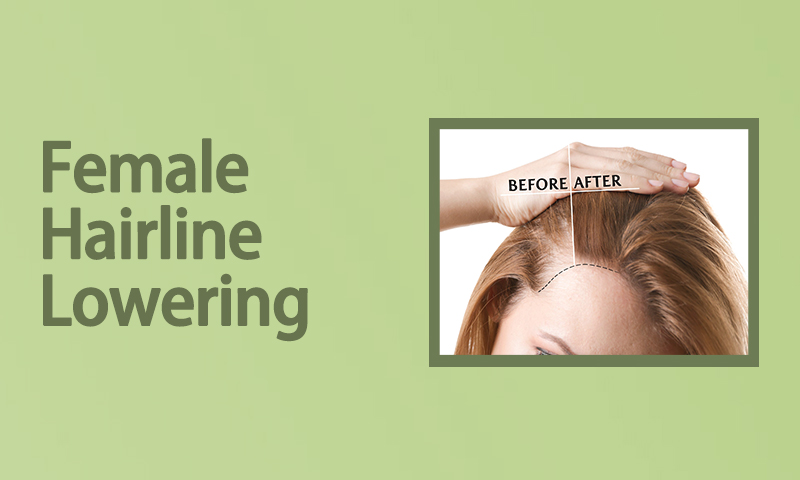
Hairline lowering surgery in Surat reduces the height of a high forehead by moving the hairline forward, either by removing a strip of forehead skin (forehead reduction) or by transplanting hair follicles in front of the existing hairline. At Elegance Clinic, plastic surgeon Dr. Ashutosh Shah recommends the method that suits your scalp, hair and goals.
What Is Hairline Lowering?
Many women are born with a naturally high hairline or a large forehead, which can make the face look longer or out of proportion. Others have a hairline that has moved back slightly over time. Hairline lowering-also called forehead reduction or forehead shortening-brings the hairline forward so the forehead is in better balance with the rest of the face.
There are two main ways to do this, and some patients benefit from both.
| Surgical hairline lowering | Hair transplant lowering | |
|---|---|---|
| How it works | A strip of forehead skin is removed and the hair-bearing scalp is moved forward | Hair follicles from the back of the scalp are planted in front of the current hairline (FUE or DHI) |
| Result | Immediate—visible the same day | Gradual—final result in 9–12 months |
| Typical lowering | About 1–3 cm in one surgery, depending on scalp flexibility | Depends on available donor hair; may need more than one session |
| Scar | Fine scar hidden at the hairline; hair grows through it over time | Tiny dot scars in the donor area |
| Best for | Congenitally high forehead with a stable hairline and a flexible scalp | Shaping the hairline, rounding temple corners, or when the scalp is tight |
For most women with a naturally high forehead and no hair loss, surgical hairline lowering gives the fastest and most noticeable result in a single procedure. A hair transplant can later soften and refine the hairline shape if needed.
Who Is a Good Candidate for Hairline Lowering?
- Women with a naturally high hairline or large forehead
- Those with a stable hairline and good hair density along the front
- People with a flexible (lax) scalp, which allows more advancement in surgery
- Women with uneven or rounded-back temple corners
- Transgender women seeking a softer, more feminine hairline as part of facial feminisation
- Adults in good general health with realistic expectations
Who should wait: if you have active or progressive hair loss, the hairline may continue to move back after surgery. This needs to be assessed and treated first-see female hair loss treatment.
What Happens During Hairline Lowering Surgery?
- Consultation: forehead measurement, scalp flexibility check and hair-loss assessment
- Hairline design: the new hairline is marked with you before surgery
- Anaesthesia: usually local anaesthesia with sedation
- Incision: placed along the natural hairline using a special technique that lets hair grow through the scar
- Advancement: a strip of forehead skin is removed and the scalp is gently moved forward
- Duration: typically about 2–3 hours
- Same-day discharge: most patients go home the same day
Recovery timeline (surgical hairline lowering)
| Time after surgery | What to expect |
|---|---|
| First 2–5 days | Swelling of the forehead, sometimes around the eyes; mild tightness and headache |
| 7–10 days | Stitches removed; most women return to work and can style hair to cover the incision |
| 2–3 weeks | Incision well healed; light exercise usually resumes |
| 3–6 months | Numbness behind the hairline gradually improves; any temporary shedding near the incision regrows |
| 6–12 months | Scar matures and becomes hard to see as hair grows through it |
If you choose a hair transplant instead, the transplanted hair sheds in the first few weeks, starts to regrow at 3-4 months and reaches its final look at 9-12 months. Dr. Shah will give you a personalised aftercare plan.
Is Hairline Lowering Surgery Safe?
Hairline lowering is a well-established procedure, but like any surgery it carries risks. These include swelling, temporary numbness of the scalp behind the incision, temporary hair shedding near the incision (shock loss), a visible scar in some cases, infection and, rarely, poor wound healing. Careful hairline design, a hair-friendly incision technique and an experienced surgeon reduce these risks.
Why Choose Elegance Clinic for Hairline Lowering in Surat?
Dr. Ashutosh Shah, plastic surgeon for hairline lowering surgery in Surat- Plastic surgeon and hair restoration under one roof: Dr. Ashutosh Shah (M.B., M.S., M.Ch., D.N.B. - Plastic Surgery) performs both surgical lowering and hair transplants, so you get an unbiased recommendation.
- 22+ years of experience: practising in Surat since 2004.
- Natural hairline design: shaped to suit a female face, including softer temple corners-see also hairline creation.
- Combined options: surgery for immediate lowering, with a female hair transplant to refine shape and density where needed.
- Two Surat locations: Adajan (Trinity Business Park, LP Savani Road) and Vesu (Times Square, Canal Road).
Find Out How Much Your Hairline Can Be Lowered
Meet Dr. Ashutosh Shah at our Adajan or Vesu clinic in Surat for a forehead and scalp assessment.
Book Consultation WhatsApp UsCall: +91 83205 00350