
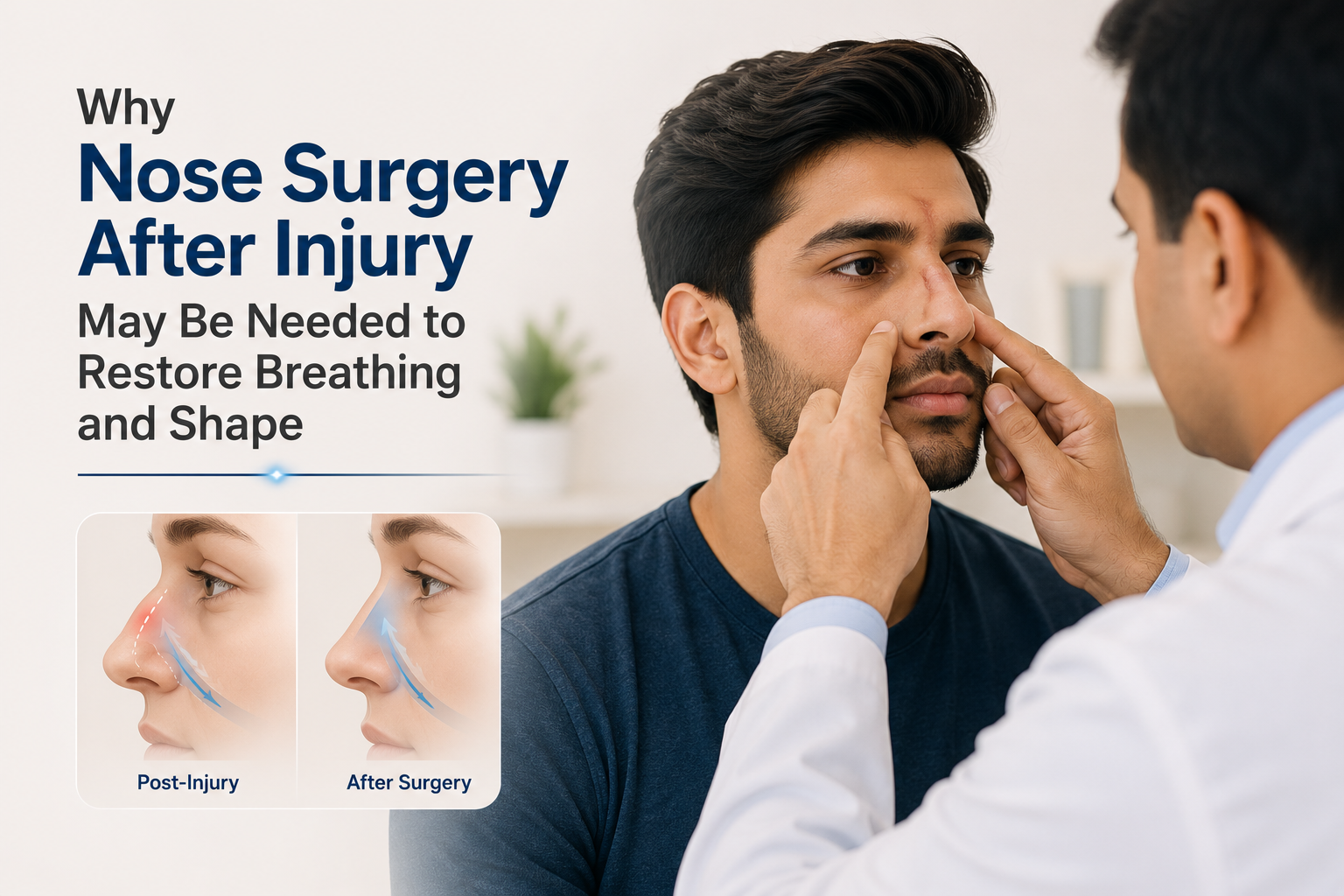
Why Nose Surgery After Injury May Be Needed to Restore Breathing and Shape
✔ Medically reviewed by Dr. Ashutosh Shah - M.B., M.S., M.Ch., D.N.B., Board-Certified Plastic & Cosmetic Surgeon, Director of Elegance Clinic, Surat (22+ years’ experience).
A nose injury can cause more than temporary swelling or bruising. A fracture or significant trauma may change the shape of the nose, affect the nasal airway, or lead to ongoing difficulty breathing. In some cases, the nose may heal in a crooked or altered position, making surgical correction necessary.
Nose Surgery After Injury in Surat may help address both functional concerns, such as blocked breathing, and structural or cosmetic changes caused by trauma. The appropriate treatment depends on the type of injury, how the nasal bones and cartilage have healed, and the patient's symptoms.
How Can a Nose Injury Affect Breathing and Appearance?
The nose contains delicate bones, cartilage, and internal structures that can be displaced after an accident, fall, sports injury, or other trauma. Even when an injury initially appears minor, swelling can hide changes in the underlying structure.
After healing, some people may notice:
- A crooked or shifted nose
- Persistent nasal blockage
- Difficulty breathing through one or both nostrils
- Changes in the bridge or tip of the nose
- Nasal asymmetry
- Ongoing tenderness or discomfort
- A visible deformity following a fracture
When structural changes interfere with breathing or significantly alter the appearance of the nose, an evaluation by a qualified specialist can help determine whether surgery is appropriate.
When Is Nose Surgery After Injury Needed?
Not every broken or injured nose requires surgery. Minor injuries may improve with observation and appropriate medical care. Surgery may be considered when trauma causes a significant structural problem that does not resolve naturally.
Nose surgery after injury may be recommended when:
- The nose remains visibly crooked
Displaced nasal bones or cartilage can cause a persistent change in the nose's alignment. - Breathing remains difficult
Injury can narrow the nasal airway and make it harder to breathe comfortably through the nose. - A fracture heals incorrectly
When fractured structures heal in an altered position, corrective surgery may be needed. - There is significant nasal deformity
Trauma can change the bridge, tip, or overall proportions of the nose. - Internal nasal structures are affected
Damage or displacement involving structures inside the nose can contribute to long-term obstruction. - Previous treatment did not fully correct the problem
Some patients may continue to experience functional or structural concerns after an earlier injury or treatment.
What Happens If a Broken Nose Heals Crooked?
A nose that heals in an abnormal position may develop a lasting deformity. The change may be mainly cosmetic, but it can also affect airflow.
For example, displacement of the nasal framework may narrow one side of the nasal passage. This can make breathing through the nose more difficult, particularly during exercise, sleep, or when congestion occurs.
If the injury has already healed, treatment may require a more structured surgical approach rather than simply repositioning the nose. The exact procedure depends on the location and severity of the structural changes.
Can Nose Surgery Improve Breathing After an Injury?
Yes, nose surgery after injury can sometimes improve nasal breathing when obstruction is caused by structural damage or deformity.
The surgeon first needs to determine what is contributing to the obstruction. Possible factors include displaced nasal bones, cartilage changes, septal deviation, or narrowing of the nasal airway.
The goal of functional nasal surgery is not simply to change the appearance of the nose. It is to restore or improve the structure needed for comfortable nasal airflow while maintaining an appropriate nasal shape.
Can Surgery Also Restore the Shape of the Nose?
In appropriate cases, reconstructive or rhinoplasty techniques can address changes in the external appearance caused by trauma.
Depending on the injury, treatment may involve correcting:
- Nasal bone alignment
- Crookedness
- Bridge irregularities
- Cartilage displacement
- Tip asymmetry
- Structural support
- Changes affecting the overall nasal contour
The surgical plan should be individualized because every traumatic nasal injury is different.
How Is a Nose Injury Evaluated Before Surgery?
A specialist typically assesses the history of the injury, current symptoms, nasal appearance, and internal nasal structures. The evaluation helps determine whether the problem is primarily cosmetic, functional, or a combination of both.
Depending on the circumstances, assessment may include:
- Medical history and details of the injury
- External examination of the nose
- Internal nasal examination
- Evaluation of nasal airflow
- Assessment of nasal bone and cartilage alignment
- Imaging when clinically indicated
This evaluation is important because symptoms such as nasal obstruction can have more than one cause.
Nose Surgery After an Accident: Why Timing Matters
The timing of treatment depends on the nature of the injury.
Some acute nasal fractures can be treated relatively soon after trauma, while other patients are evaluated after the swelling has reduced. If the nose has already healed in a displaced position, corrective surgery may be planned later.
Therefore, there is no single recovery or surgery timeline that applies to everyone. A specialist examination is the best way to determine the appropriate treatment window.
What Is Recovery Like After Nose Surgery?
Recovery varies according to the procedure performed and the extent of reconstruction required. Temporary swelling, bruising, nasal congestion, or discomfort can occur after surgery.
Patients are generally advised to follow their surgeon's postoperative instructions carefully, including guidance about:
- Keeping the nose protected
- Managing swelling and discomfort
- Avoiding pressure or trauma to the nose
- Attending follow-up appointments
- Resuming exercise and normal activities gradually
The final appearance and functional improvement may take time to become fully apparent as the tissues heal.
Why Choose Specialist Care for Nose Surgery After Injury in Surat?
Traumatic nasal problems can involve both function and appearance, so treatment requires careful structural assessment rather than focusing only on the visible deformity.
For patients seeking Nose Surgery After Injury in Surat, a specialist consultation can help identify whether the problem is related to a previous fracture, cartilage displacement, nasal obstruction, or another structural issue.
At Elegance Clinic, Dr. Ashutosh Shah can evaluate trauma-related nasal concerns and discuss suitable surgical options based on the individual's nasal structure, symptoms, and treatment goals.
Key Takeaways
- A nasal injury can affect both the shape and function of the nose.
- Not every nose fracture requires surgery.
- Persistent crookedness or difficulty breathing may indicate an underlying structural problem.
- Previously healed nasal injuries may require corrective or reconstructive surgery.
- Treatment should be planned after a detailed examination of the external and internal nasal structures.
- Nose Surgery After Injury in Surat can be considered when trauma has caused lasting functional or structural concerns.
Conclusion: When Should You Consider Nose Surgery After Injury?
A nose injury should not be judged only by its initial appearance. If the nose remains crooked, breathing continues to feel restricted, or a noticeable deformity develops after healing, a specialist assessment can help identify the underlying problem.
The right treatment depends on the severity and location of the injury and whether the primary concern is breathing, appearance, or both. If you have experienced a nasal injury and continue to notice changes after healing, consider consulting Dr. Ashutosh Shah at Elegance Clinic for an individualized evaluation.
Looking for Nose Surgery After Injury in Surat? Schedule a consultation to discuss your symptoms, nasal structure, and possible treatment options.
Frequently Asked Questions
When is nose surgery needed after an injury?
Can a broken nose cause breathing problems?
Can a crooked nose after an accident be corrected?
Is surgery always required after a nose fracture?
About the Author