
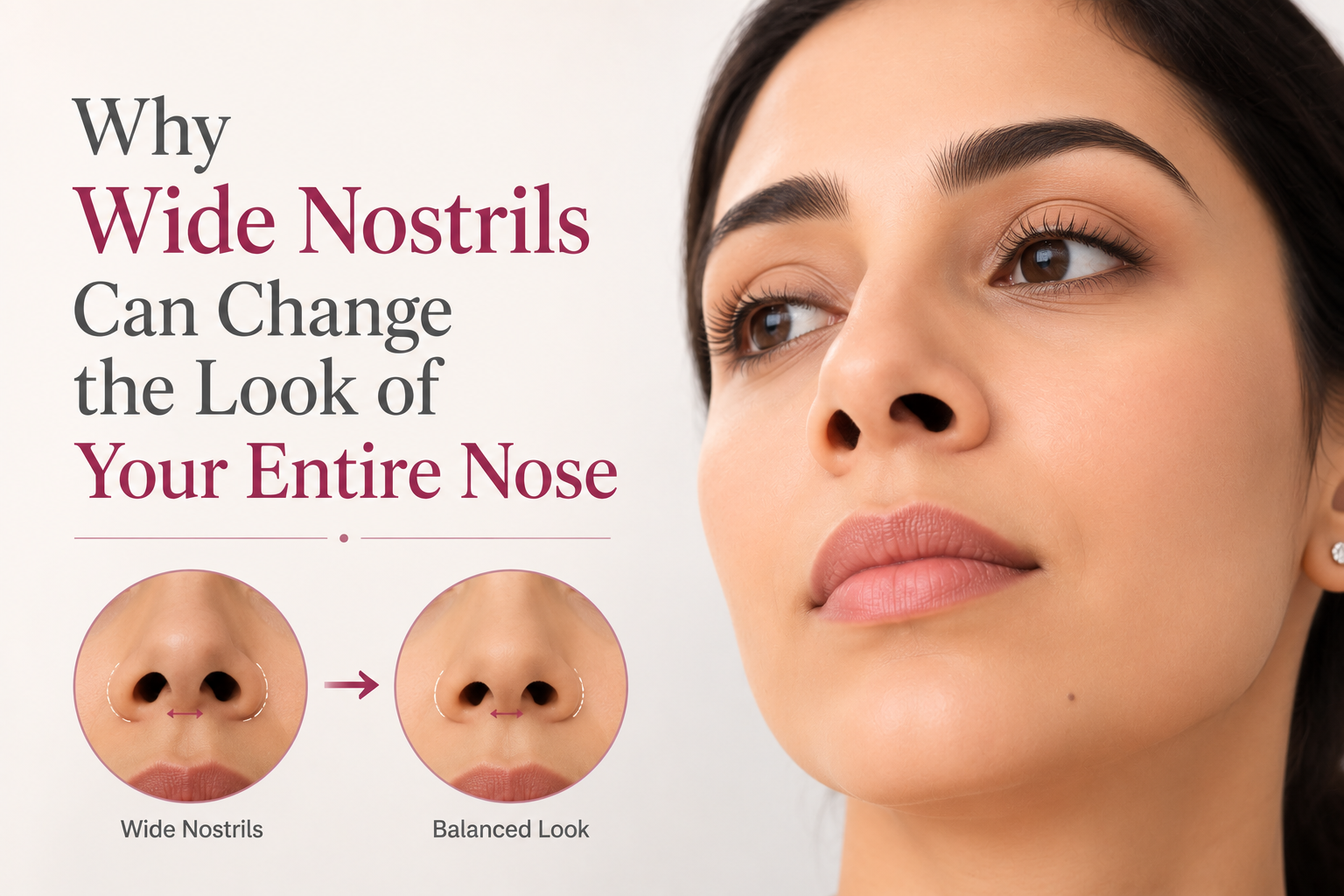
Why Wide Nostrils Can Change the Look of Your Entire Nose
✔ Medically reviewed by Dr. Ashutosh Shah - M.B., M.S., M.Ch., D.N.B., Board-Certified Plastic & Cosmetic Surgeon, Director of Elegance Clinic, Surat (22+ years’ experience).
The nose is one of the most noticeable features of the face, and even a small difference in nostril width can influence overall facial balance. Alar Reduction Surgery is a cosmetic procedure designed to reduce excessive nostril width or reshape the alar base while aiming to maintain natural-looking proportions.
At Elegance Clinic, Dr. Ashutosh Shah evaluates the relationship between the nostrils, nasal tip, bridge, and surrounding facial features before recommending an appropriate approach.
Why Do Wide Nostrils Affect the Appearance of the Nose?
Nostril width contributes significantly to how the nose looks from the front. When the nostrils appear disproportionately wide compared with the nasal tip or bridge, the nose may look broader even when the overall nasal structure is not particularly large.
Several factors can influence nostril appearance, including:
- Natural facial anatomy
- Genetics
- Nasal cartilage structure
- Alar flare
- Changes associated with aging
- Previous nasal procedures or trauma
- The relationship between nose width and facial proportions
This is why simply judging the nose by its overall size may not tell the whole story.
What Is Alar Reduction Surgery?
Alar Reduction Surgery, also called alarplasty, is a cosmetic nasal procedure that focuses specifically on the outer portion of the nostrils, known as the alar base.
Depending on the individual's anatomy and goals, the procedure may reduce:
- Excessive nostril width
- Prominent alar flare
- The appearance of overly wide nostrils
- Disproportion between nostril width and the rest of the nose
The objective is generally not to create extremely narrow nostrils. Instead, the goal is to create better harmony between the nose and the rest of the face.
Why Making the Nostrils Smaller Is Not Always Better
One common misconception is that a smaller nostril automatically means a better-looking nose.
In reality, excessive narrowing can make the nose look unnatural or disproportionate. The surgeon needs to consider the existing nasal anatomy, facial proportions, nostril shape, and desired aesthetic outcome.
A balanced result may involve only a subtle change in nostril width.
Natural-looking Alar Reduction Surgery is therefore more about proportion than simply removing tissue.
How Is Alar Reduction Different From Rhinoplasty?
Although both procedures involve the nose, their purposes can be different.
Alar reduction primarily addresses the width or flare of the nostril area.
Rhinoplasty can address several aspects of nasal appearance, including:
- Nasal bridge
- Nasal tip
- Nose length
- Overall nasal shape
- Nasal width
- Certain structural concerns
Some patients may need only alar reduction, while others may benefit from combining it with rhinoplasty. The appropriate approach depends on individual anatomy and aesthetic goals.
Who May Consider Alar Reduction Surgery?
Alar Reduction Surgery may be considered by adults who feel that their nostrils appear disproportionately wide or that excessive alar flare affects their facial balance.
A consultation is particularly important if you have:
- Wide or prominent nostrils
- Significant alar flare
- Nostril width that appears disproportionate to your facial features
- Previous nasal surgery
- Concerns about nasal symmetry
- A desire for a more balanced nose appearance
Not everyone with wide nostrils necessarily needs surgery. An assessment can help determine whether alar reduction is appropriate.
What Happens During the Procedure?
The exact technique depends on the patient's nasal anatomy and the amount of correction required.
During consultation, the surgeon typically assesses:
- Nostril width
- Alar flare
- Nasal tip proportions
- Overall nose-to-face relationship
- Nostril symmetry
- Skin and soft-tissue characteristics
- The patient's desired outcome
If surgery is appropriate, carefully planned tissue removal and closure can be used to modify the alar base.
The incision placement is an important part of the planning process because the goal is to achieve the desired contour while making the resulting scars as inconspicuous as reasonably possible.
Can Alar Reduction Change the Shape of the Whole Nose?
Yes, even though the procedure focuses on the nostrils, changing the alar width can alter how the entire nose is perceived.
For example, reducing excessive nostril flare may make the nasal tip appear more defined and can create a more proportionate relationship between the nose and the cheeks.
However, alar reduction does not reshape every part of the nose. If someone also wants changes to the bridge, tip projection, or overall nasal structure, another procedure may need to be considered.
Recovery After Alar Reduction Surgery
Recovery varies from person to person. Mild swelling, tenderness, tightness, or temporary changes around the nostrils can occur following surgery.
Your surgeon may provide instructions regarding:
- Keeping the surgical area clean
- Wound care
- Physical activity
- Sleeping position
- Follow-up appointments
- When makeup can be used
- Signs that require medical attention
The final appearance may take time to settle as swelling decreases and the tissues heal.
Does Alar Reduction Leave Scars?
Because alar reduction involves an incision, some scarring is possible.
The visibility of a scar depends on factors such as:
- Surgical technique
- Incision location
- Individual healing
- Skin characteristics
- Aftercare
Proper surgical planning aims to place incisions in relatively inconspicuous areas where possible. Your surgeon should discuss scar expectations during consultation rather than promising that scars will be completely invisible.
Why Individual Planning Matters
There is no universal measurement that determines the ideal nostril width for everyone.
A nose that looks balanced on one person may look too narrow or too wide on another. Facial width, cheek structure, nasal tip shape, and overall facial proportions all contribute to the final appearance.
For this reason, Alar Reduction Surgery should be planned around your individual anatomy rather than a fixed cosmetic template.
Key Takeaways
- Wide nostrils can influence how the entire nose appears from the front.
- Alar Reduction Surgery focuses on reducing excessive nostril width or flare.
- Smaller nostrils are not automatically more attractive; facial proportion is important.
- Alar reduction is different from full rhinoplasty.
- Some patients may benefit from alar reduction alone, while others may require a combined approach.
- Individual anatomy and realistic expectations are essential for natural-looking results.
- A qualified consultation is the best way to determine whether the procedure is suitable.
Alar Reduction Surgery in Surat
If you are considering Alar Reduction Surgery in Surat, an individualized consultation can help you understand whether nostril reduction is appropriate for your facial anatomy and aesthetic goals.
At Elegance Clinic, Dr. Ashutosh Shah can assess your nasal proportions and discuss suitable treatment options, expected results, recovery, and potential risks before you make a decision.
Conclusion
Alar Reduction Surgery is not simply about making wide nostrils smaller it is about improving the relationship between the nostrils, nose, and overall face. A carefully planned approach can help address excessive alar flare while maintaining natural-looking proportions.
If you are concerned about wide nostrils or feel that your nose appears broader than you would like, consider a professional evaluation to understand which approach may be suitable for you.
Interested in learning whether Alar Reduction Surgery in Surat is right for you? Book a consultation at Elegance Clinic to discuss your nasal proportions, treatment options, expected recovery, and realistic aesthetic goals.
Frequently Asked Questions
What is Alar Reduction Surgery?
Can Alar Reduction make wide nostrils narrower?
Is Alar Reduction the same as rhinoplasty?
Does Alar Reduction Surgery leave scars?
How long does Alar Reduction Surgery take to heal?
Is Alar Reduction Surgery permanent?
About the Author