
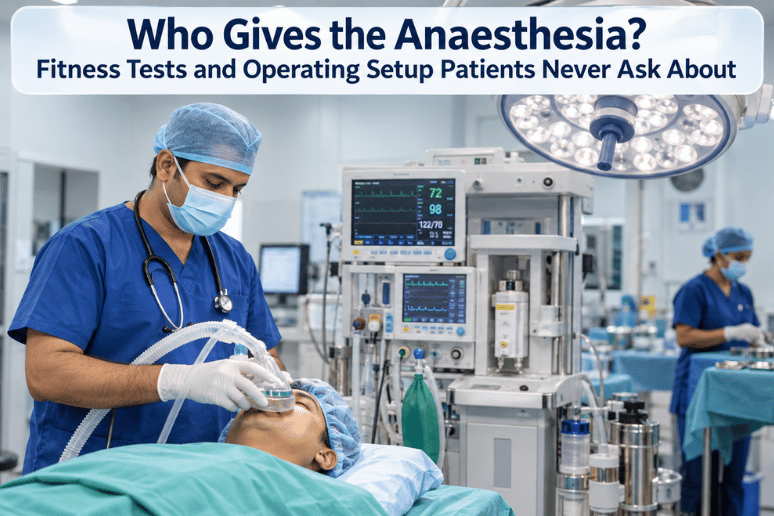
Who Gives the Anaesthesia? Fitness Tests and Operating Setup Patients Never Ask About
✔ Medically reviewed by Dr. Ashutosh Shah - M.B., M.S., M.Ch., D.N.B., Board-Certified Plastic & Cosmetic Surgeon, Director of Elegance Clinic, Surat (22+ years’ experience).
During cosmetic surgery, anaesthesia should be administered and monitored by a qualified anaesthetist according to the procedure and type of anaesthesia required. Anaesthesia safety in cosmetic surgery begins with a pre-anaesthetic checkup, appropriate fitness tests and medical-history review, followed by continuous monitoring during the procedure and careful observation during recovery.
Most patients preparing for cosmetic surgery naturally focus on the surgeon, expected results, scars and recovery. However, the anaesthesia team and operating setup are equally important parts of surgical planning.
At Elegance Clinic, Dr. Ashutosh Shah emphasizes appropriate pre-operative assessment and coordinated surgical and anaesthesia planning as part of preparing patients for cosmetic and plastic surgery. Knowing who will administer the anaesthesia, which fitness tests are required and how you will be monitored can help you better understand the complete surgical setup.
Local, Sedation or General - Who Decides and Why?
Not every cosmetic procedure requires the same type of anaesthesia. The appropriate option depends on the procedure, its duration and extent, the patient's general health and other clinical considerations.
The main approaches include:
Local anaesthesia: A specific area is numbed while the patient remains awake. This may be suitable for selected smaller procedures.
Sedation: Medicines are given to help the patient feel relaxed and drowsy. The depth of sedation varies according to the procedure and anaesthesia plan.
General anaesthesia: Anaesthetic medicines are used to produce a controlled state of unconsciousness. Breathing, circulation and other vital functions are appropriately managed and monitored throughout the procedure.
The decision should be individualized rather than based simply on patient preference.
Before choosing an anaesthetic technique, the surgical and anaesthesia teams may consider:
- Type and extent of surgery
- Expected operating time
- Patient's age and general health
- Existing medical conditions
- Previous experiences with anaesthesia
- Current medicines
- Airway assessment
- Expected postoperative requirements
A small procedure performed under local anaesthesia has very different requirements from a longer body-contouring operation.
Patients should therefore ask what type of anaesthesia is planned, why it is appropriate and who will be responsible for administering and monitoring it.
Patients preparing for surgery can also review the Patient guide before surgery for additional information about surgical preparation.
Why Must a Qualified Anaesthetist Be Present Rather Than the Operating Surgeon?
The surgeon and anaesthetist have separate responsibilities during an operation.
The surgeon concentrates on performing the surgical procedure. The anaesthesia professional administers and manages the planned anaesthesia while monitoring the patient's physiological condition according to the operation and anaesthetic technique.
During surgery, monitoring may include:
- Heart rate
- Blood pressure
- Oxygen saturation
- Breathing
- ECG
- Temperature
- Ventilation and carbon dioxide levels when required
The anaesthesia professional may also manage intravenous fluids, anaesthetic medicines, airway support and other aspects of perioperative care.
This separation of responsibilities becomes particularly important when sedation or general anaesthesia is required. The surgeon needs to concentrate on the operation while another appropriately qualified professional manages anaesthesia and physiological monitoring.
Before confirming your procedure, ask a simple question:
Who will administer and monitor my anaesthesia throughout the operation?
Patients can also learn about the surgical and anaesthesia team before undergoing a procedure.
What Does a Pre-Anaesthetic Checkup Cover?
A pre anaesthetic checkup before cosmetic surgery helps identify medical factors that could affect the anaesthesia plan, surgery or recovery.
It is not simply a standard package of laboratory tests.
The assessment may cover several important areas.
Your Medical History
Tell the medical team about diagnosed conditions such as:
- Diabetes
- High blood pressure
- Asthma or respiratory disease
- Heart disease
- Thyroid disorders
- Kidney disease
- Liver disease
- Bleeding or clotting disorders
- Previous serious illnesses
Having a medical condition does not automatically prevent someone from undergoing cosmetic surgery. However, the condition may need further assessment or better control before an elective procedure.
Medicines and Supplements
Give your medical team an accurate list of everything you currently take.
This includes prescription medicines, over-the-counter medicines and supplements.
Certain medicines may affect bleeding, blood pressure, blood sugar or other aspects of surgery and anaesthesia.
Do not independently stop a prescribed medicine because surgery is approaching. The relevant doctors should advise whether it should be continued, adjusted or temporarily withheld.
Allergies
Tell the anaesthesia team about known medication allergies and previous suspected reactions.
Relevant latex or other significant allergies should also be mentioned.
Previous Anaesthesia
If you have undergone surgery previously, mention any significant problems associated with anaesthesia.
These may include severe postoperative nausea, unusual difficulty recovering, airway-related problems or another previously identified reaction.
Relevant anaesthesia problems in close family members should also be discussed when known.
Smoking and Alcohol
Smoking and alcohol consumption may affect perioperative planning.
Patients should give accurate information rather than hiding these details because they are worried their surgery could be postponed.
Which Blood Tests, ECG and Clearances Are Required?
There is no universal list of investigations required for every cosmetic surgery patient.
Tests should be selected according to factors such as:
- Age
- Medical history
- Existing health conditions
- Current medicines
- Examination findings
- Planned procedure
- Type of anaesthesia
Depending on the individual situation, selected blood investigations may be advised. An ECG or additional medical evaluation may also be appropriate for some patients.
For example, a patient with diabetes may require assessment of glucose control. Someone with an existing heart condition may require additional evaluation according to their individual circumstances.
This individualized approach is an important part of anaesthesia safety in cosmetic surgery. Tests should have a clinical purpose rather than simply being ordered because another patient had them.
Pre-Operative Fitness Checklist
| Test or assessment | Why it is done | When it is done | Who reviews it |
|---|---|---|---|
| Medical history and examination | Identifies health factors relevant to surgery and anaesthesia | During pre-operative assessment | Surgeon/anaesthesia professional |
| Blood investigations | Evaluates relevant blood parameters | Before surgery as advised | Treating medical team |
| Blood sugar assessment | Assesses glucose control when relevant | Before surgery | Treating doctor/anaesthesia professional |
| ECG | Evaluates heart rhythm and electrical activity when clinically indicated | Before surgery as advised | Appropriate medical professional |
| Additional medical evaluation | Assesses an existing condition or abnormal finding | Before elective surgery | Relevant physician/specialist |
| Medicine review | Determines whether perioperative medicine instructions are required | During pre-operative assessment | Treating medical team |
The timing of these investigations can also vary. Follow the instructions provided by your medical team rather than arranging a generic test package yourself.
What Monitoring and Recovery-Room Care Should the Setup Have?
Anaesthesia safety in cosmetic surgery depends on more than choosing an anaesthetic medicine. The operating environment, monitoring equipment, trained professionals and recovery arrangements all form part of perioperative care.
Depending on the procedure and anaesthetic technique, monitoring during surgery may include:
- Blood pressure
- Heart rate
- Oxygen saturation
- ECG
- Breathing and ventilation
- Carbon dioxide monitoring when appropriate
- Temperature when required
Monitoring allows the anaesthesia professional to follow important physiological parameters throughout the operation.
Patients should therefore ask where their surgery will take place and what monitoring and postoperative recovery arrangements are available.
This is particularly important for longer procedures.
For example, tummy tuck surgery can involve different anaesthesia and postoperative requirements from a small procedure performed under local anaesthesia.
Similarly, more complex procedures such as facial bone injury and reconstruction surgery require planning appropriate to the nature and extent of the operation.
What Happens After Anaesthesia?
Anaesthesia-related care does not necessarily finish when the operation ends.
After surgery, the patient is moved to an appropriate recovery area where the team observes recovery from anaesthesia.
Depending on the procedure and anaesthetic technique, observation may include:
- Level of consciousness
- Breathing
- Oxygen saturation
- Heart rate
- Blood pressure
- Pain
- Nausea or vomiting
- General stability
Some patients may be suitable for discharge after an appropriate observation period. Others may require longer monitoring or hospital admission.
The expected recovery pathway should ideally be discussed before surgery.
What Should You Ask About the Operating Setup?
Patients often ask about the surgeon's experience and expected cosmetic results but forget to ask about the environment in which the surgery will actually take place.
Before booking, consider asking:
- Where will my surgery be performed?
- What type of anaesthesia will I receive?
- Why is that anaesthesia appropriate for my procedure?
- Who will administer the anaesthesia?
- Who will monitor me throughout the operation?
- Do I need a pre-anaesthetic checkup?
- Which fitness tests are required for me?
- What monitoring will be used during surgery?
- Where will I recover immediately afterwards?
- How long will I be observed?
- Is the procedure planned as day-care surgery or will admission be required?
- What should my family do if there is a concern after discharge?
These questions provide more useful information than simply asking whether an operation is “safe.”
Why Your Medical History Should Never Be Hidden
Some patients worry that disclosing diabetes, hypertension, previous anaesthesia problems or regular medicines might cause their operation to be delayed.
This information should never be hidden.
Cosmetic surgery is generally elective, which provides an opportunity to identify relevant health issues and address them before proceeding.
Give the surgical and anaesthesia teams accurate information about:
- Existing illnesses
- Previous operations
- Current medicines
- Supplements
- Allergies
- Previous anaesthesia experiences
- Smoking
- Alcohol use
- Recent changes in your health
If additional assessment or optimisation is required, addressing it before an elective operation is an important part of surgical planning.
Anaesthesia Safety Starts Before the Day of Surgery
Anaesthesia safety in cosmetic surgery begins well before the patient enters the operating room. It involves appropriate patient assessment, review of medical history and medicines, necessary investigations, selection of a suitable anaesthetic technique, qualified professionals, appropriate intraoperative monitoring and postoperative observation.
For patients considering cosmetic or plastic surgery with Dr. Ashutosh Shah at Elegance Clinic, the consultation is also an opportunity to ask about these practical aspects of the planned procedure rather than focusing only on the cosmetic result.
Ask who will perform your surgery, who will manage your anaesthesia, what fitness assessment is necessary, where the procedure will take place and how your recovery will be monitored.
Understanding these details gives you a clearer picture of the complete surgical setup before you decide to proceed.
Frequently Asked Questions
Can the operating surgeon give the anaesthesia himself?
Which tests are needed before general anaesthesia?
How long before surgery must blood thinners be stopped?
Is sedation safer than general anaesthesia?
Can surgery be done if my sugar is uncontrolled?
How long will I be observed after waking up?
About the Author