
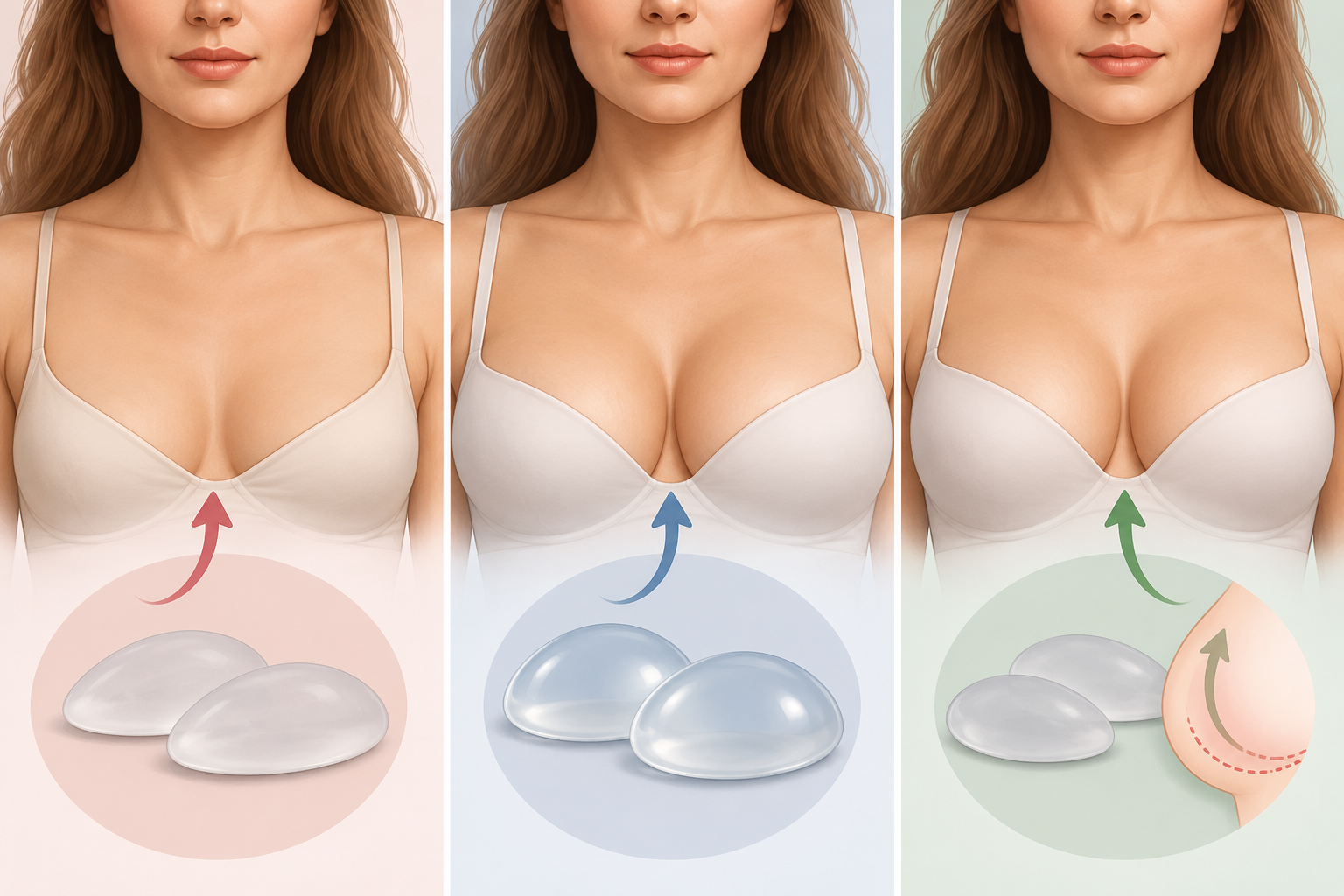
Breast Implants After 15 or 20 Years: Remove, Replace or Remove and Lift?
✔ Medically reviewed by Dr. Ashutosh Shah - M.B., M.S., M.Ch., D.N.B., Board-Certified Plastic & Cosmetic Surgeon, Director of Elegance Clinic, Surat (22+ years’ experience).
<style type="text/css"> </style> Breast implants do not have a fixed expiry date, so old implants without symptoms do not automatically need removal. Removal or replacement is advised for rupture, capsular contracture, pain, shape change or personal choice. After 15 to 20 years many women choose removal with a breast lift, because skin and breast tissue have changed since the original surgery.
If you had breast augmentation many years ago, you may now be wondering whether the implants are still safe, whether they need replacing or what your breasts would look like without them.
Ageing, pregnancy, weight changes and skin stretching can alter breast shape even when the implants themselves remain intact.
For women considering breast implant removal after 20 years, the decision is not simply about how old the implants are. It involves implant condition, symptoms, breast tissue, skin quality and personal goals.
This guide explains when older implants need attention, how rupture is detected and how to choose between removal, replacement and removal with a lift.
Published: 27 October 2026
Key Takeaways
-
Breast implants do not have a mandatory replacement date.
-
The longer implants remain in place, the greater the cumulative possibility of complications.
-
Silicone implant rupture can occur without noticeable symptoms.
-
The FDA recommends ultrasound or MRI screening for silicone implant rupture beginning 5–6 years after placement and every 2–3 years thereafter.
-
Pain, hardening, swelling or shape changes require medical assessment.
-
Implant removal alone may leave loose skin or reduced breast fullness.
-
A breast lift can improve sagging after removal but does not restore the volume provided by implants.
-
Capsule removal is not automatically necessary in every case.
Do Breast Implants Need to Be Changed After 15 or 20 Years?
A common misconception is that breast implants must be replaced every 10 years.
There is no universal rule requiring replacement at that interval.
Modern breast implants are medical devices that are not considered lifetime devices, but their actual lifespan varies.
Some women develop complications within a few years, while others have implants for considerably longer without major problems.
When Can Older Implants Be Left in Place?
Continued observation may be reasonable when:
-
There is no significant breast pain.
-
Breast shape remains acceptable.
-
No concerning swelling or hardening is present.
-
Appropriate imaging shows no evidence of rupture.
-
The patient is satisfied with the implants.
-
A surgeon finds no other reason for removal.
The decision should follow individual assessment rather than implant age alone.
When Should Removal or Replacement Be Considered?
A surgeon may recommend treatment for:
-
Confirmed implant rupture.
-
Painful capsular contracture.
-
Significant implant displacement.
-
Unwanted breast shape changes.
-
Persistent discomfort.
-
Certain implant-related complications.
-
A personal decision to stop having implants.
Patients considering breast implant removal after 20 years should have their implant history and current breast condition reviewed before choosing surgery.
How Is a Silent Rupture Found in an Old Silicone Implant?
Silicone implant rupture may not produce obvious symptoms.
This is called a silent rupture.
Unlike saline implants, which usually become noticeably smaller when they deflate, silicone implants can retain much of their shape after rupture.
What Are the Signs of Implant Leakage?
Possible implant leakage symptoms include:
-
Changes in breast shape.
-
New asymmetry.
-
Breast discomfort.
-
Hardening.
-
Swelling.
-
Unusual lumps.
-
Changes in breast sensation.
However, these symptoms can have causes other than rupture, and some ruptures produce no symptoms.
Is Ultrasound or MRI Better?
Ultrasound and MRI are commonly used to assess silicone implant integrity.
The US Food and Drug Administration recommends ultrasound or MRI screening for asymptomatic silicone gel implants beginning 5–6 years after placement, followed by imaging every 2–3 years.
If symptoms develop or ultrasound findings are uncertain, MRI may be recommended.
These recommendations concern silicone implant rupture surveillance and do not replace routine breast cancer screening.
What Happens if an Implant Has Ruptured?
A confirmed rupture generally leads to a discussion about removal of the affected implant and management of any silicone outside the implant shell.
The surgeon may also assess the surrounding capsule.
Whether to replace the implant depends on the patient's preferences, tissue condition and surgical findings.
Replace, Remove Only or Remove and Lift: Which Is Better?
There is no single best choice for everyone.
The right procedure depends on implant condition, natural breast volume, skin elasticity, sagging and the desired breast size.
Breast Implant Removal Decision Table
| Situation | Replace implants | Remove only | Remove and lift | Fat transfer option |
|---|---|---|---|---|
| No symptoms and implants intact | Usually not necessary solely because of age | Optional if desired | Consider if sagging is present | May be considered for selected contour goals |
| Confirmed rupture | Option if patient wants implants | Common option | Consider if significant sagging exists | Possible in selected cases |
| Painful capsular contracture | May be considered with capsule treatment | Often considered | Possible when skin is loose | Depends on tissue condition |
| Significant breast sagging | May restore volume but not always correct sagging | May leave loose skin | Often worth discussing | Limited lifting effect |
| Wants smaller breasts | Smaller implants may be suitable | Suitable for some patients | Often considered when skin is stretched | May restore modest volume |
| Wants no future implants | Not aligned with goal | Suitable | Suitable if reshaping is desired | Optional for selected patients |
A detailed consultation is important because the same problem can require different treatment in different patients.
For an overview of the available procedures, see Breast implant removal and replacement.
Option 1: Remove the Old Breast Implants Only
Implant removal without replacement is often called explant surgery.
The surgeon removes the implants and manages the surrounding capsule according to the findings.
Who May Prefer Removal Only?
This option may suit women who:
-
No longer want implants.
-
Prefer a smaller breast size.
-
Have adequate natural breast tissue.
-
Accept that the breasts may look less full.
-
Do not want additional breast reshaping.
What Will the Breasts Look Like Afterwards?
The breasts may appear:
-
Smaller.
-
Less full in the upper portion.
-
Softer.
-
More relaxed or sagging.
-
Different in shape or symmetry.
The degree of change depends on implant size, original breast tissue, skin elasticity and the length of time implants were present.
Some skin contraction can occur after surgery, but the amount is unpredictable.
Large implants and significant skin stretching may make sagging more noticeable.
Option 2: Replace Old Implants With New Ones
Some women remain happy with their augmented breast size but need surgery because of rupture, contracture or implant displacement.
In these cases, the surgeon may replace old implants with new devices.
What Happens During Replacement?
Depending on the situation, the procedure may involve:
-
Removing the existing implants.
-
Examining the implant pockets.
-
Treating abnormal capsule tissue when necessary.
-
Adjusting implant position.
-
Selecting an appropriate replacement implant.
-
Closing the incisions.
Replacement does not guarantee that future complications will never occur.
New implants also require long-term monitoring.
Can I Choose a Different Implant Size?
Yes, in many cases.
However, the safest and most suitable size depends on breast width, tissue thickness, skin condition and the existing implant pocket.
Women considering a different size can read How implant size is chosen.
Option 3: Remove the Implants and Have a Breast Lift
After 15 or 20 years, some women notice that their breasts have become lower or less firm.
This can happen because of ageing, pregnancy, weight changes and stretching of the skin.
Removing implants reduces volume but does not automatically correct sagging.
What Does a Breast Lift Do?
A breast lift, also called mastopexy, reshapes the breast using existing tissue.
It may involve:
-
Removing excess skin.
-
Reshaping breast tissue.
-
Repositioning the nipple and areola.
-
Improving breast contour.
-
Addressing selected asymmetry.
A lift can improve position and shape but cannot reproduce the fullness of a large implant without additional volume.
Who May Benefit From Removal With a Lift?
This option may be appropriate when:
-
The nipples sit lower than desired.
-
Breast skin is significantly stretched.
-
The breasts have lost upper fullness.
-
The patient wants to remain implant-free.
-
Removal alone is likely to leave substantial loose skin.
The surgeon may recommend simultaneous removal and lifting or a staged approach, depending on tissue quality, blood supply and surgical risk.
For more information, visit the Breast lift service page.
What Happens to the Capsule During Implant Removal?
The body naturally forms scar tissue around a breast implant.
This layer is called the capsule.
Capsule formation is normal, but problems can develop when it becomes thick, tight or abnormal.
What Is Capsular Contracture?
Capsular contracture occurs when the scar tissue around an implant tightens.
It may cause:
-
Breast firmness.
-
Pain.
-
Distorted breast shape.
-
Implant displacement.
-
A hard breast after implants.
Severe contracture may require surgical treatment.
Does the Entire Capsule Always Need Removal?
No.
The surgeon may recommend different approaches.
Capsulotomy: The capsule is released or opened.
Partial capsulectomy: Part of the capsule is removed.
Total capsulectomy: The entire capsule is removed when appropriate and technically feasible.
En bloc resection: The implant and capsule are removed together with a margin of surrounding tissue when indicated for a diagnosed or suspected implant-associated malignancy.
Routine en bloc removal is not necessary for every patient seeking explant surgery.
Complete capsule removal can increase surgical complexity and may introduce additional risks, particularly when the capsule is attached to the chest wall.
The decision depends on the implant condition, capsule findings, symptoms and medical indications.
Breast Implant Removal Near Piplod Surat: When Should You Consult a Surgeon?
Women considering removal or replacement should seek an assessment when their implants become painful, firm, asymmetrical or otherwise concerning.
Dr. Ashutosh Shah, Plastic, Reconstructive and Cosmetic Surgeon at Elegance Clinic, can evaluate implant history, breast changes, imaging and individual treatment goals.
A consultation may include:
-
Reviewing the original implant details.
-
Examining breast shape and skin quality.
-
Assessing pain or firmness.
-
Reviewing ultrasound or MRI reports.
-
Discussing implant removal and replacement.
-
Considering whether a lift is appropriate.
-
Explaining scars, recovery and complications.
Patients should bring any available implant cards, previous surgical records and recent imaging.
The purpose is to choose a treatment that addresses both medical concerns and realistic appearance goals.
Can Fat Transfer Improve Breast Shape After Implant Removal?
Fat transfer uses fat collected from another area of the body and places it into selected breast tissues.
It may be considered when a patient wants modest additional volume without another implant.
What Can Fat Transfer Achieve?
It may help:
-
Improve selected contour irregularities.
-
Add modest fullness.
-
Address minor asymmetry.
-
Soften certain visible transitions.
However, fat transfer does not replace a breast lift when significant sagging is present.
Some transferred fat is naturally reabsorbed, and more than one session may be necessary.
The procedure also requires suitable donor fat and healthy recipient tissues.
It is not appropriate for every patient.
What Is Breast Implant Revision Surgery?
Breast implant revision surgery is a broad term covering procedures performed after an earlier breast augmentation.
Revision may involve:
-
Implant removal.
-
Implant replacement.
-
Implant pocket correction.
-
Capsule treatment.
-
Breast reshaping.
-
Correction of asymmetry.
-
Treatment of selected complications.
Revision surgery can be more complex than the original operation because scar tissue and tissue changes may affect the surgical plan.
Patients can explore Breast revision surgery for further information.
What Is the Recovery Like After Implant Removal?
Recovery varies depending on whether the procedure involves removal alone, capsule surgery, implant replacement or a breast lift.
First Week
Patients may experience swelling, bruising, tightness and discomfort.
A supportive surgical bra may be recommended.
The surgeon will provide instructions about wound care, bathing, medicines and activity.
Weeks 2–4
Many patients gradually return to light routine activities.
However, lifting restrictions and recovery time depend on the extent of surgery.
Weeks 4–6
Some patients may resume more demanding activities after medical clearance.
Healing can take longer after complex revision procedures.
Following Months
Breast shape continues settling as swelling reduces and tissues adapt.
Scars may take 12–18 months or longer to mature.
The final appearance should not be judged immediately after surgery.
Does Implant Age Affect BIA-ALCL Risk?
Breast implant-associated anaplastic large cell lymphoma (BIA-ALCL) is an uncommon lymphoma associated predominantly with textured breast implants.
It is not ordinary breast cancer.
Risk is influenced by implant type and exposure history, rather than implant age alone.
Symptoms may include:
-
Persistent swelling around an implant.
-
Fluid accumulation developing years after surgery.
-
A new breast or capsule mass.
-
Pain or changes in breast shape.
These symptoms require prompt medical evaluation.
The FDA does not recommend routine removal of breast implants solely because of concern about BIA-ALCL in patients without symptoms.
Other rare implant-associated malignancies have also been reported, and unusual late swelling or masses should be investigated rather than assumed to be normal ageing.
Conclusion
Breast implant removal after 20 years is not automatically necessary simply because the implants are old.
If the implants are intact, comfortable and causing no problems, continued monitoring may be appropriate.
However, rupture, painful capsular contracture, shape changes or personal preference can make removal or replacement worth considering.
Women who want to maintain breast volume may choose replacement, while those who prefer to remain implant-free may consider removal alone or removal with a breast lift.
The best choice depends on implant condition, skin quality, natural breast tissue and individual expectations.
A qualified plastic surgeon can explain the likely breast shape after each option, the need for capsule treatment and the risks and recovery involved.
Frequently Asked Questions
What Are the Signs of a Leaking Old Implant?
Is Removal More Difficult if Implants Are Very Old?
Can I Have Fat Transfer After Removing Implants?
Should the Capsule Always Be Removed?
Can Implant Removal Be Done Under Local Anaesthesia?
Does Implant Age Affect BIA-ALCL Risk?
About the Author