
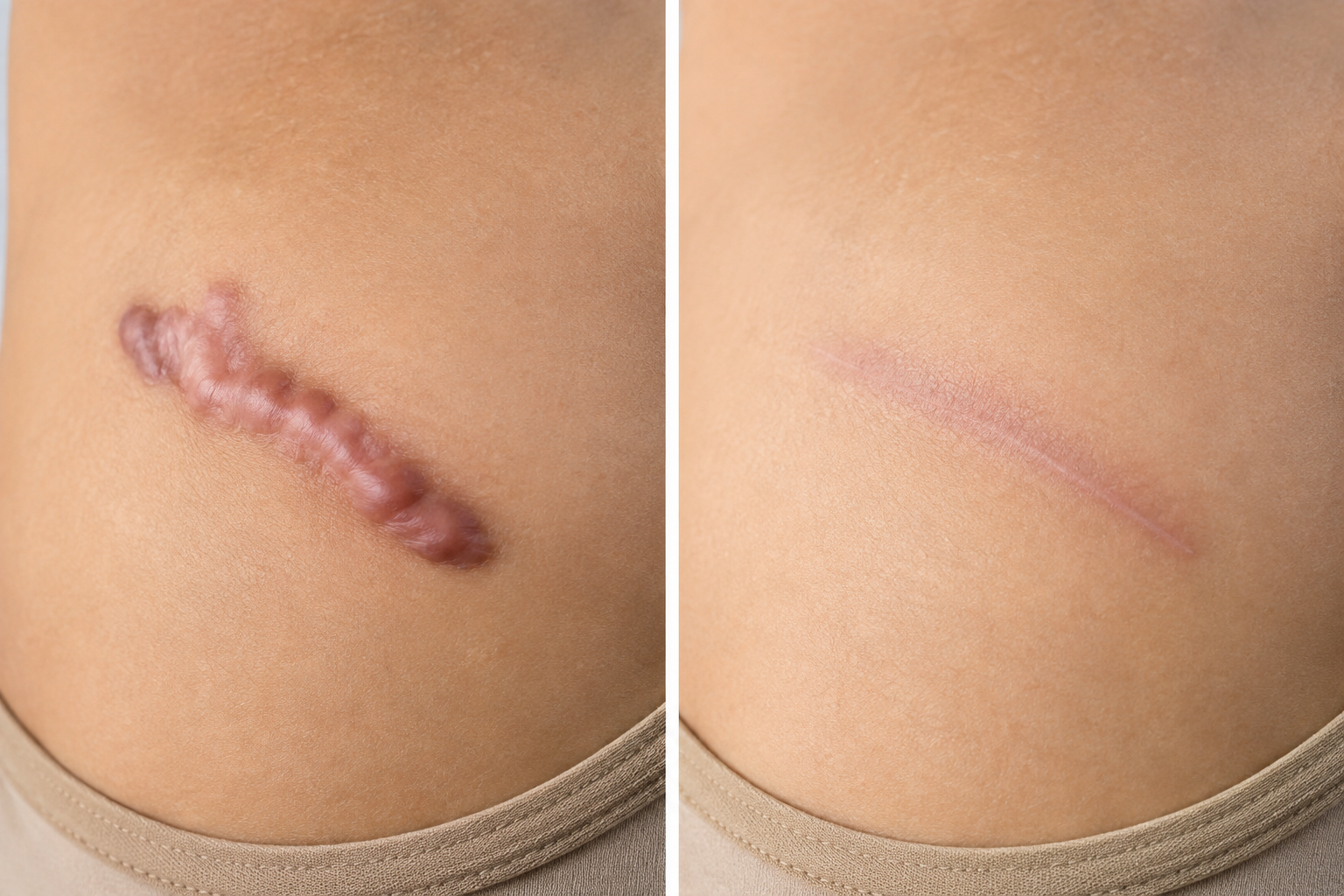
Can Surgery Make a Raised Keloid Scar Less Noticeable?
✔ Medically reviewed by Dr. Ashutosh Shah - M.B., M.S., M.Ch., D.N.B., Board-Certified Plastic & Cosmetic Surgeon, Director of Elegance Clinic, Surat (22+ years’ experience).
A raised keloid can be more than a visible scar. Its thickness, firmness, colour, itching, or location may make some people uncomfortable with their appearance or everyday activities. When creams or other non-surgical approaches do not provide the desired improvement, surgical correction may be considered for selected keloid scars.
So, can surgery remove keloid scars? Yes, surgery can remove the existing bulk of a keloid, making the raised area flatter and potentially less noticeable. However, keloids have a tendency to return after surgical removal, so surgery is often planned as part of a broader treatment strategy rather than as a guaranteed permanent cure.
For patients considering treatment in Surat, an assessment by an experienced plastic surgeon can help determine whether surgical correction is appropriate for the size, location, and characteristics of the keloid.
What Makes a Keloid Scar Look Raised?
A keloid develops when the body produces excessive scar tissue during wound healing. Unlike a normal scar, a keloid can become thick, firm and raised and may extend beyond the original wound.
Common characteristics include:
- A firm, elevated scar
- Growth beyond the original injury
- Pink, red, brown, or darker coloration
- Itching or tenderness
- Gradual enlargement
- Cosmetic concerns because of its visibility
Keloids can develop after surgery, acne, burns, piercings, injections, or even relatively minor skin injuries.
Can Surgery Remove Keloid Scars?
Yes, surgery can physically remove the raised portion of a keloid scar. During surgical correction, the surgeon removes the excess scar tissue and carefully closes the wound to create a flatter and more controlled scar.
However, surgical removal does not automatically mean the keloid will never return.
This is one of the most important things patients should understand before choosing treatment. Keloid formation is related to the way an individual's skin heals. Because of this tendency, simply cutting out a keloid may be followed by recurrence.
For this reason, your surgeon may consider additional measures alongside surgery depending on your individual case.
How Can Surgery Make a Keloid Less Noticeable?
The goal is not always to make the skin completely scar-free. Instead, surgical correction aims to improve the size, thickness, shape, and overall visibility of the raised scar.
Treatment may help by:
1. Removing excess scar tissue
The prominent portion of the keloid is surgically excised, reducing the bulk of the raised scar.
2. Creating a flatter contour
Removing excessive tissue can make the treated area appear more level with the surrounding skin.
3. Improving the scar's shape
Where appropriate, surgical planning can improve the contour and appearance of an irregular or bulky keloid.
4. Reducing discomfort caused by the scar
Some keloids can itch, feel tight, or become uncomfortable because of their size and location. Reducing the bulk may help address these concerns.
5. Combining surgery with additional treatment
Because recurrence is possible, surgical correction may be combined with other treatments designed to reduce the chance of the keloid becoming prominent again.
Is Keloid Surgery Suitable for Everyone?
Not necessarily.
The decision depends on several factors, including:
- Size and thickness of the keloid
- Location of the scar
- How quickly it has grown
- Previous treatments
- Whether the keloid has returned before
- Your individual tendency to form keloids
- Skin characteristics
- Symptoms such as itching or tenderness
A plastic surgeon should evaluate the scar before recommending surgical correction.
What Happens During Keloid Surgical Correction?
The exact procedure varies according to the scar.
Generally, the surgeon:
- Examines the keloid and surrounding skin.
- Determines the appropriate surgical approach.
- Removes the excess keloid tissue.
- Carefully closes the surgical wound.
- Provides aftercare instructions.
- May recommend additional treatment to help reduce recurrence risk.
The treatment plan should be individualized rather than based solely on the size of the keloid.
Can a Keloid Come Back After Surgery?
Yes. A keloid can recur after surgical removal.
This is one of the most important considerations when asking, “Can surgery remove keloid scars?”
Surgery removes the existing scar tissue, but it does not necessarily remove the underlying tendency to form excessive scar tissue. Therefore, recurrence is possible.
Your surgeon may recommend additional treatment after or around the time of surgery depending on your specific risk factors.
How Long Does Keloid Surgery Take to Heal?
Healing varies depending on:
- Size of the keloid
- Location
- Surgical technique
- Individual healing response
- Whether additional treatment is used
The wound may initially appear different from the final scar. Scar maturation can continue for months, so patients should follow their surgeon's wound-care and follow-up instructions carefully.
Keloid Surgery in Surat
If you are searching for keloid surgery in Surat, choosing an experienced plastic surgeon is important because keloid treatment requires more than simply removing visible scar tissue.
A consultation can help assess whether surgical correction is suitable and whether additional measures may be appropriate to reduce the likelihood of recurrence.
At Elegance Clinic in Surat, Dr. Ashutosh Shah can evaluate your keloid and discuss an individualized approach based on its location, size, appearance, previous treatment and recurrence history.
Who May Consider Surgical Keloid Correction?
Surgical correction may be considered when a keloid:
- Is significantly raised or bulky
- Causes persistent cosmetic concerns
- Interferes with movement or clothing
- Causes discomfort, itching, or tightness
- Has not responded adequately to other approaches
- Requires reduction because of its size or location
However, surgery is not automatically the first choice for every keloid.
What Should You Ask Before Keloid Surgery?
Before proceeding, consider asking your surgeon:
- Is surgery appropriate for my keloid?
- How much of the scar can be removed?
- What will the expected scar look like?
- What is my risk of recurrence?
- Will additional treatment be recommended?
- How long will healing take?
- What aftercare will I need?
- What can I realistically expect from the procedure?
These questions can help you understand both the benefits and limitations of treatment.
Final Takeaway
Can surgery remove keloid scars? Yes, surgical correction can remove the raised portion of a keloid and may make the scar flatter, smaller, and less noticeable. However, surgery alone does not guarantee that the keloid will not return.
The most appropriate approach depends on the scar's size, location, previous treatments, symptoms, and your individual tendency to form keloids. A personalized evaluation is therefore important before deciding on treatment.
Considering Keloid Surgery in Surat?
If a raised keloid is affecting your appearance, comfort, or confidence, Dr. Ashutosh Shah at Elegance Clinic, Surat, can assess the scar and discuss suitable treatment options.
Book a consultation to understand whether surgical keloid correction is appropriate for your scar and what results you may realistically expect.
Frequently Asked Questions
Can surgery remove keloid scars?
Can surgery make a raised keloid scar less noticeable?
Can keloids come back after surgery?
Can old keloid scars be removed by surgery?
Does keloid removal surgery leave another scar?
Is surgery suitable for every keloid scar?
About the Author