
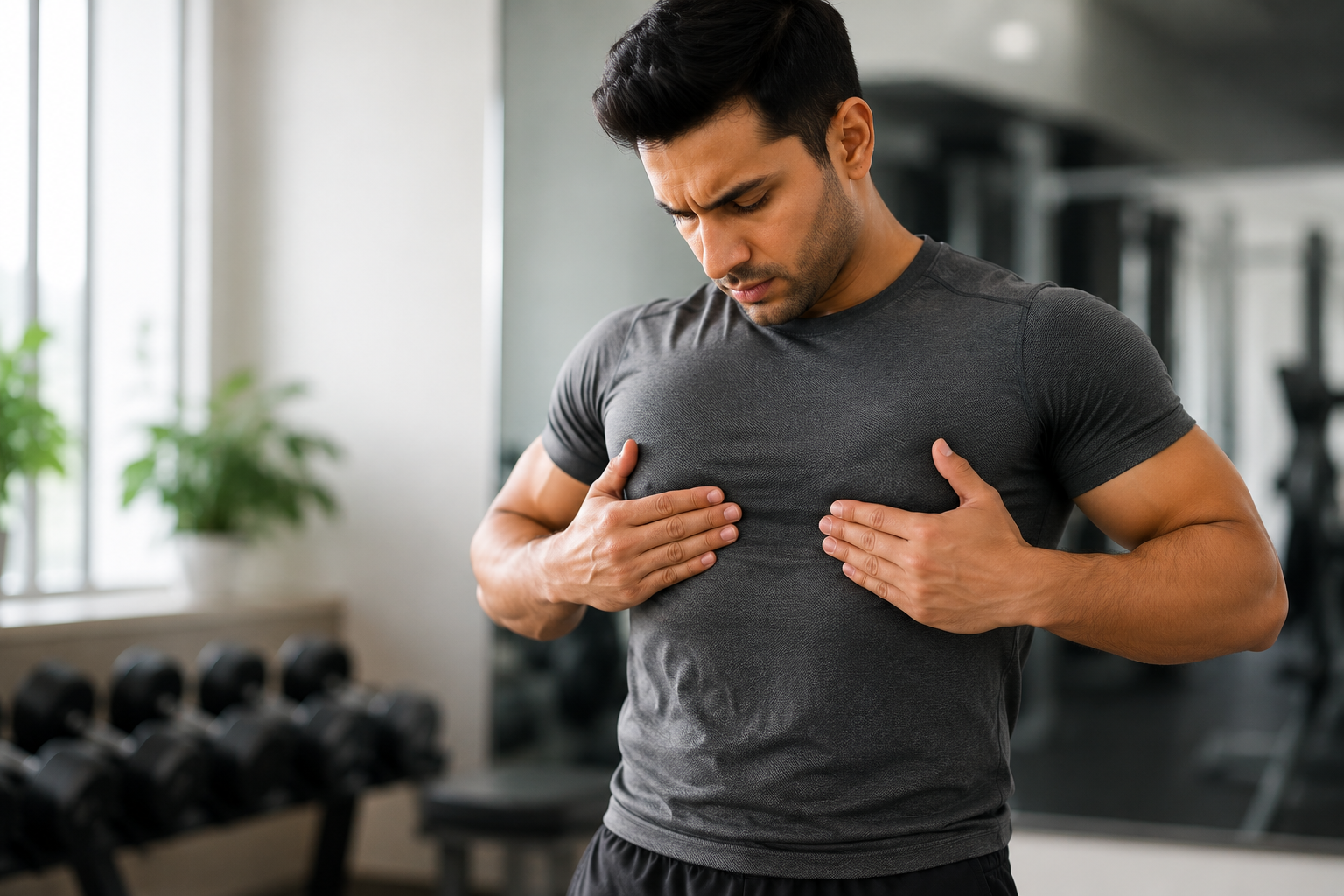
Why Your Chest Still Looks Puffy Despite Regular Workouts
✔ Medically reviewed by Dr. Ashutosh Shah - M.B., M.S., M.Ch., D.N.B., Board-Certified Plastic & Cosmetic Surgeon, Director of Elegance Clinic, Surat (22+ years’ experience).
You train consistently, build your chest muscles, maintain a healthy diet, and still feel that your chest looks unusual or puffy. If you have ever searched “chest looks weird after workout,” you are not alone.
A chest that remains rounded, swollen around the nipples, or disproportionate despite regular exercise is not necessarily a sign that your workout routine is failing. In some men, the appearance can be related to gynecomastia, which involves enlargement of male breast glandular tissue. Even intense exercise and dieting may not remove this type of tissue.
For bodybuilders in particular, hormonal changes and the use of anabolic steroids or certain supplements can contribute to gynecomastia.
Key Takeaways
- A chest that stays puffy after regular workouts is not always caused by excess fat.
- Gynecomastia can create puffy nipples, rounded chest contours, or persistent chest fullness.
- Exercise can improve muscle definition and reduce body fat, but it cannot directly remove firm glandular breast tissue.
- Bodybuilders may develop gynecomastia when hormonal balance is affected, including through anabolic steroid use.
- Chest fat and gynecomastia are different conditions and may require different approaches.
- Persistent or unexplained chest enlargement should be evaluated by a qualified medical professional.
- At Elegance Clinic in Surat, Dr. Ashutosh Shah provides assessment and treatment options for gynecomastia and male chest contour concerns.
Why Does Your Chest Look Weird After Workout?
The phrase “chest looks weird after workout” can describe several different concerns.
You may notice:
- Puffy or protruding nipples
- A rounded chest despite having developed pectoral muscles
- One side appearing larger than the other
- A firm area underneath the nipple
- Chest fullness that remains after losing weight
- A chest shape that looks different in fitted clothing
- Persistent fullness despite months of chest-focused workouts
Not every unusual chest shape means gynecomastia. Muscle development, body-fat distribution, posture, genetics and natural asymmetry can all affect how the chest looks.
However, when the fullness remains despite getting leaner and stronger, it may be worth determining whether breast glandular tissue is contributing to the appearance.
1. Your Chest May Have Muscle but Also Extra Tissue
Building the pectoral muscles does not necessarily eliminate tissue above them.
If glandular breast tissue is present underneath the nipple or areola, your stronger chest muscles can sometimes make the surrounding fullness more noticeable.
This is one reason some men become frustrated after progressing significantly in the gym but still notice puffy nipples or an unusual chest contour.
Gynecomastia is different from simply having excess body fat because it involves enlargement of glandular breast tissue.
A simple way to think about it
Workout → builds chest muscle
Fat loss → reduces excess body fat
Gynecomastia → may involve persistent glandular tissue
These are different factors, so increasing your bench press does not necessarily solve every cause of chest enlargement.
2. Why Puffy Nipples Can Remain After Getting Fit
One of the most frustrating situations for a bodybuilder is having a relatively lean physique while the nipple area still looks raised or puffy.
This can happen when tissue is concentrated beneath the areola.
Elegance Clinic describes Type 1 gynecomastia as a mild form in which tissue is primarily located beneath the nipple/areola and creates a puffy nipple appearance. It is also seen in thin young men and bodybuilders.
This means that becoming leaner may improve the overall chest, but the nipple area can remain prominent if glandular tissue is present.
3. Can Steroids or Supplements Affect Chest Appearance?
For some bodybuilders, this is an important consideration.
Anabolic steroids and certain hormone-related substances can affect the body's hormonal balance. The American Society of Plastic Surgeons identifies anabolic steroid use among factors that can contribute to gynecomastia.
The bodybuilder gynecomastia information from Dr. Ashutosh Shah also highlights that steroids and some medicines can cause hormonal fluctuations that contribute to excess breast tissue.
This does not mean every bodybuilder with puffy nipples has gynecomastia or that every supplement causes the condition.
The important point is that persistent chest enlargement deserves an individual assessment rather than assuming that more exercise will solve it.
4. Chest Fat vs Gynecomastia: What's the Difference?
This distinction is important because the treatment approach can differ.
| Chest Fat | Gynecomastia |
|---|---|
| Primarily excess fat | Enlargement of glandular breast tissue |
| Often associated with overall weight gain | Can occur even in lean men |
| May improve with weight loss | Glandular tissue may persist despite exercise |
| Usually softer and more diffuse | May feel firmer beneath the nipple |
| Appearance may change significantly with weight | Puffy nipples or localized fullness may remain |
There can also be pseudogynecomastia, where increased chest volume is primarily due to fat rather than glandular tissue.
Because these conditions can overlap, a physical examination is more reliable than trying to diagnose the cause from appearance alone.
5. Why More Chest Exercises May Not Fix the Problem
If your chest looks unusual despite regular workouts, your first instinct may be to add more:
- Bench presses
- Push-ups
- Incline presses
- Cable flys
- Dumbbell presses
These exercises can strengthen and develop your pectoral muscles, but they do not specifically remove gynecomastia tissue.
In persistent gynecomastia, medical treatment may involve removing excess glandular tissue, fatty tissue, or both, depending on the individual's anatomy.
So if you have already made substantial progress in the gym but your chest still looks puffy, doing even more chest exercises may not address the underlying cause.
6. What Signs May Suggest Gynecomastia?
You may want to seek professional evaluation if you notice:
Persistent puffy nipples
The nipple or areola remains prominent even when you are lean.
A firm area behind the nipple
Some men notice a firm or rubbery area underneath the areola.
Chest fullness despite weight loss
Your body becomes leaner, but the chest remains enlarged.
Rounded chest contour
Instead of looking primarily muscular, the chest has a persistent rounded appearance.
Uneven chest
One side may appear more prominent than the other. Asymmetrical gynecomastia can occur when one breast is larger than the other.
Tenderness or discomfort
Some forms of gynecomastia may be associated with tenderness or pain.
These signs do not automatically confirm gynecomastia. A doctor needs to assess the tissue and determine the likely cause.
7. When Should You Consider a Medical Evaluation?
Consider consulting a qualified doctor if your chest enlargement:
- Persists despite exercise and weight management
- Is associated with a noticeable lump
- Becomes painful or tender
- Develops suddenly
- Is significantly asymmetric
- Is affecting your confidence or clothing choices
- Remains prominent despite achieving your desired body composition
A medical evaluation can help determine whether the concern is primarily fat, glandular tissue, skin, muscle shape, or a combination of factors.
Dr. Ashutosh Shah's bodybuilder gynecomastia guidance also emphasizes medical examination to identify potential underlying causes rather than assuming the problem is purely cosmetic.
How Is Bodybuilder Gynecomastia Treated?
Treatment depends on the cause, severity and composition of the chest.
Liposuction
When excess fatty tissue contributes significantly to chest fullness, liposuction may be considered as part of chest contouring.
Gland Excision
If firm glandular tissue is responsible for persistent enlargement, surgical removal of the gland may be necessary.
Combined Treatment
Some men have both excess fat and glandular tissue. In such cases, a combination of liposuction and gland excision may provide better contouring.
Elegance Clinic notes that gynecomastia surgery can involve removing excess fat and glandular tissue and reshaping the chest for a more masculine contour.
The appropriate technique should be decided after an examination rather than based solely on online symptoms.
Can Gynecomastia Surgery Help Bodybuilders?
For appropriately selected patients, gynecomastia surgery can help reduce persistent chest fullness and improve the contour of the male chest.
This can be particularly relevant for bodybuilders because a small amount of tissue around the nipple can become more noticeable when the surrounding chest muscles are well developed. The American Society of Plastic Surgeons has also reported favorable surgical outcomes in bodybuilders with gynecomastia.
However, results vary from person to person, and maintaining a stable weight and addressing contributing factors is important for long-term results.
Why Professional Assessment Matters
Searching “chest looks weird after workout” can lead to many explanations online, but your chest appearance cannot be accurately diagnosed from a search query alone.
A specialist can assess:
- Whether the enlargement is fat or glandular tissue
- The degree of chest enlargement
- Nipple and areola position
- Skin quality
- Chest symmetry
- Whether additional causes need investigation
- Which treatment, if any, is appropriate
This is especially important for bodybuilders who may have a low body-fat percentage but persistent chest fullness.
Gynecomastia Treatment in Surat
If you are in Surat and your chest still looks puffy despite regular workouts, consider getting a professional assessment rather than simply increasing your workout volume.
At Elegance Clinic, Dr. Ashutosh Shah, Plastic, Reconstructive & Cosmetic Surgeon, provides evaluation and treatment options for different forms of gynecomastia, including puffy nipples, rounded chest, asymmetrical gynecomastia and bodybuilder gynecomastia.
The goal is not simply to make the chest smaller. Treatment planning focuses on understanding the underlying tissue and creating a proportionate chest contour appropriate to the individual's anatomy and goals.
Conclusion
If your chest looks weird after workout, it does not necessarily mean that you need to train harder. Persistent puffiness, prominent nipples, or chest fullness can sometimes be related to gynecomastia rather than a lack of muscle development.
The first step is understanding what is actually causing the chest appearance fat, glandular tissue, muscle structure, skin, or a combination.
If your chest remains puffy despite regular workouts, book a consultation with Dr. Ashutosh Shah at Elegance Clinic, Surat, to understand whether gynecomastia or another cause is affecting your chest contour.
Frequently Asked Questions
Why does my chest look weird after workout?
Why does my chest still look puffy despite working out?
Can chest workouts get rid of gynecomastia?
Is a puffy chest always gynecomastia?
Can steroids cause gynecomastia in bodybuilders?
About the Author