Can Keloids Be Treated Without Surgery? Conservative Treatment Explained
✔ Medically reviewed by Dr. Ashutosh Shah - M.B., M.S., M.Ch., D.N.B., Board-Certified Plastic & Cosmetic Surgeon, Director of Elegance Clinic, Surat (22+ years’ experience).
A raised scar that becomes thick, firm, itchy, or uncomfortable may be a keloid rather than a typical scar. The good news is that not every keloid requires surgical removal. Depending on its size, location, age, symptoms, and previous treatments, conservative keloid treatment in Surat may help flatten the scar, reduce discomfort, and control further growth.
At Elegance Clinic in Surat, Dr. Ashutosh Shah evaluates the keloid and recommends a treatment approach based on the individual scar rather than using the same treatment for everyone.
What Is a Keloid?
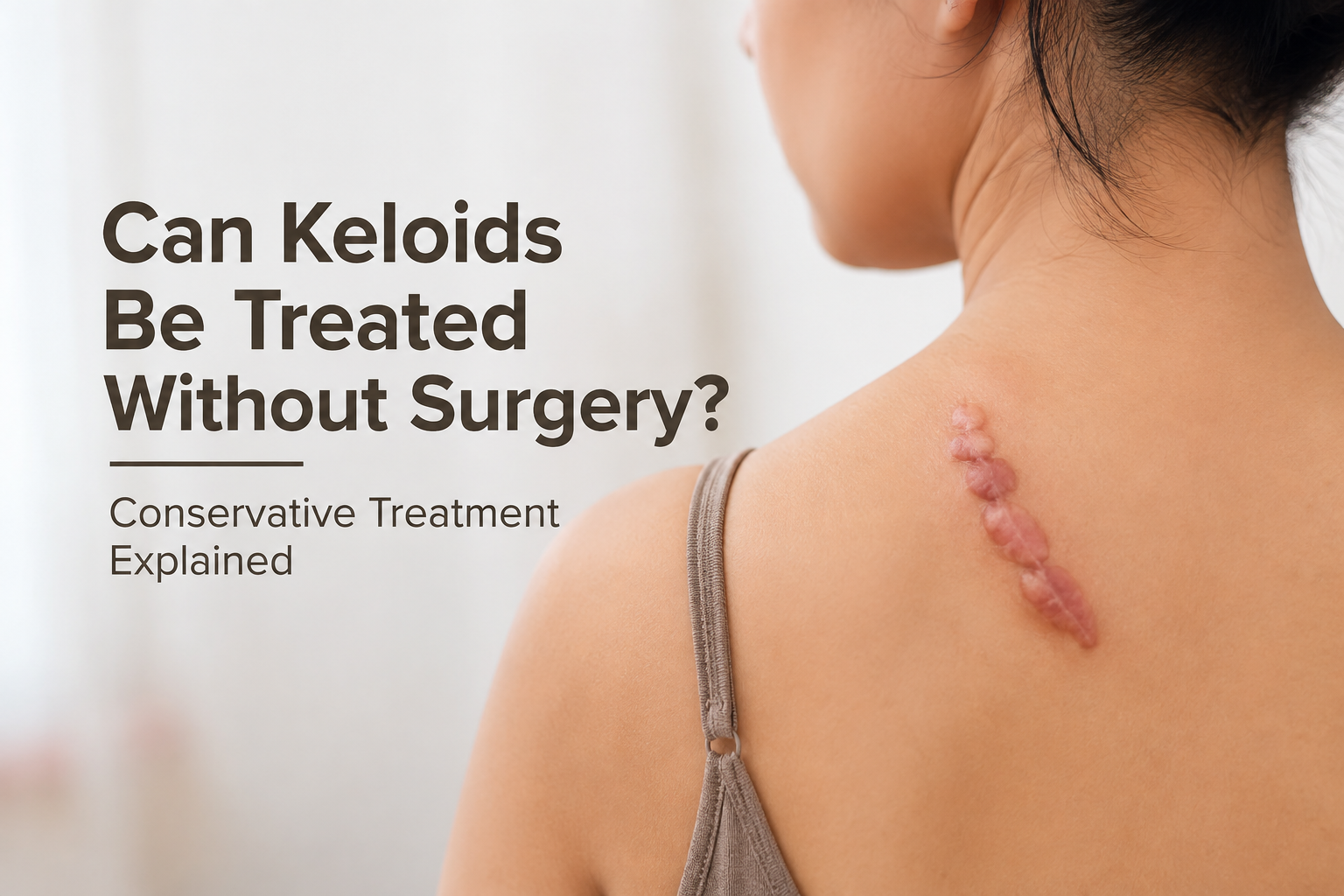
A keloid is an overgrown scar that extends beyond the original wound. It can develop after:
- Surgery
- Ear or body piercing
- Acne or chickenpox
- Burns
- Cuts or injuries
- Insect bites or other skin trauma
Unlike a normal scar, a keloid may continue growing after the wound has healed.
Common symptoms include raised skin, firmness, itching, tenderness, redness, and gradual enlargement.
Can Keloids Be Treated Without Surgery?
Yes. Some keloids can be managed with non-surgical or conservative treatments.
The goal is usually not simply to remove the visible scar but to control excess scar formation and prevent the keloid from becoming larger.
The most appropriate option depends on factors such as:
- Size and thickness of the keloid
- Location on the body
- How long it has been present
- Whether it is growing
- Previous treatment history
- Skin type and individual healing response
What Does Conservative Keloid Treatment Include?
Conservative management may involve one or more approaches depending on the individual case.
1. Steroid Injections
Intralesional corticosteroid injections may be used to soften and flatten certain keloids. They can also help reduce symptoms such as itching and discomfort.
Several treatment sessions may sometimes be required.
2. Silicone-Based Treatment
Silicone sheets or silicone-based products may be recommended for selected scars. They can help improve scar texture and may reduce excessive scar formation when used consistently.
3. Pressure Therapy
Pressure treatment can be useful for certain keloids, particularly in areas where an appropriate pressure device can be comfortably used.
The aim is to help control excessive scar activity and reduce recurrence risk.
4. Cryotherapy
Cryotherapy uses controlled cold treatment to target keloid tissue. It may be considered for selected smaller or suitable keloids.
The technique and number of sessions depend on the characteristics of the scar.
5. Combination Treatment
Keloids can behave differently from person to person. For this reason, a combination of conservative methods may sometimes provide better control than relying on a single approach.
Is Conservative Keloid Treatment Better Than Surgery?
There is no single treatment that is best for every keloid.
Surgery may be considered for selected large, resistant, or problematic keloids. However, surgical removal alone does not guarantee that a keloid will not return.
For suitable patients, conservative management can be an important way to control the scar without immediately removing it surgically.
A plastic surgeon can assess the scar and explain whether non-surgical management, surgery, or a combination approach is more appropriate.
Why Should You Treat a Keloid Early?
Waiting for a keloid to become significantly larger can make management more challenging.
Early evaluation is particularly useful if a scar is:
- Increasing in size
- Becoming thicker
- Frequently itchy
- Painful or tender
- Restricting movement
- Becoming cosmetically concerning
- Developing after a recent injury, piercing, or surgery
Getting professional advice early can help determine whether conservative treatment is appropriate.
Conservative Keloid Treatment in Surat: What to Expect
If you are considering conservative keloid treatment in Surat, the process generally begins with a clinical examination.
Dr. Ashutosh Shah may assess:
- The appearance and thickness of the scar
- Its location and size
- Whether it extends beyond the original wound
- Previous scar treatments
- Symptoms such as itching or pain
- Your likelihood of developing recurrent or excessive scars
Based on this assessment, an individualized treatment plan can be discussed.
Can Keloids Come Back After Treatment?
Keloids have a tendency to recur, even after successful treatment. This is why keloid management often focuses on long-term control rather than simply removing visible scar tissue.
Following the recommended treatment schedule and aftercare instructions is important for achieving better scar control.
Why Choose Dr. Ashutosh Shah for Keloid Management in Surat?
Keloid treatment requires careful assessment because aggressive treatment is not always the right first step.
At Elegance Clinic, Surat, Dr. Ashutosh Shah can evaluate your scar and discuss appropriate conservative or surgical options based on its characteristics.
The goal is to create a treatment plan that addresses both the appearance and behaviour of the keloid.
When Should You See a Keloid Specialist?
Consider a professional consultation if you notice a scar that is:
- Growing beyond the original injury
- Raised and firm
- Persistently itchy
- Painful or sensitive
- Becoming increasingly noticeable
- Returning after previous treatment
Early assessment can help identify the most suitable management approach.
Conclusion
Conservative keloid treatment in Surat can offer a non-surgical approach for selected patients with raised or overgrown scars. Depending on the keloid, treatment may include steroid injections, silicone therapy, pressure therapy, cryotherapy, or a combination of methods.
Because every keloid behaves differently, the right treatment should be determined after an individual assessment. If you have a growing, itchy, painful, or cosmetically concerning keloid, consult Dr. Ashutosh Shah at Elegance Clinic in Surat to understand your treatment options.
Book a Keloid Consultation in Surat
Concerned about a raised or growing scar? Get a professional evaluation and learn whether conservative keloid treatment may be suitable for you.
Consult Dr. Ashutosh Shah at Elegance Clinic, Surat, for personalized keloid management.
Frequently Asked Questions
Can keloids be treated without surgery?
What is conservative keloid treatment in Surat?
Do steroid injections flatten keloids?
Can a keloid disappear completely without surgery?
Can keloids come back after treatment?
About the Author