
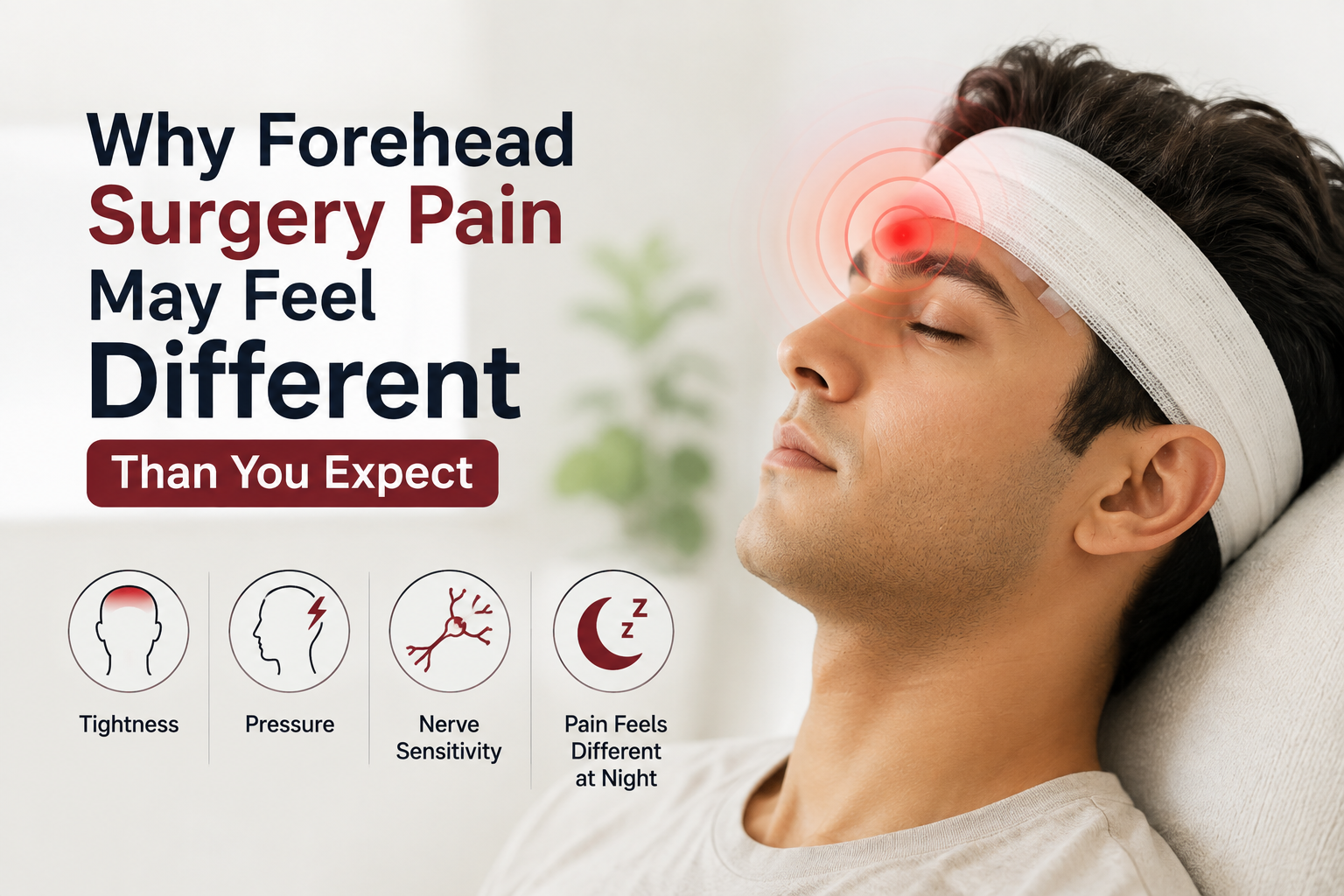
Why Forehead Surgery Pain May Feel Different Than You Expect
✔ Medically reviewed by Dr. Ashutosh Shah - M.B., M.S., M.Ch., D.N.B., Board-Certified Plastic & Cosmetic Surgeon, Director of Elegance Clinic, Surat (22+ years’ experience).
Forehead surgery can sound intimidating, especially when the procedure involves reshaping the underlying bone. One of the most common questions patients have before forehead contouring or forehead feminization is: “How painful is forehead surgery?”
The reality is that forehead surgery pain varies from person to person and depends on the exact procedure performed. During surgery, anesthesia prevents pain. Afterward, patients may experience soreness, pressure, tightness, swelling, bruising or temporary numbness rather than constant severe pain. Cleveland Clinic notes that most people undergoing facial feminization surgery report minimal pain, although some degree of discomfort, swelling and bruising is expected.
For patients considering forehead shaping as part of facial feminization, understanding what recovery actually feels like can make the process less uncertain.
Is Forehead Surgery Painful?
Yes, some discomfort is expected after forehead surgery, but severe pain is not typical.
Forehead contouring may involve reshaping the bone above the eyebrows and modifying the forehead's overall contour. Depending on the anatomy and surgical plan, the procedure can involve bone reduction, reconstruction or soft-tissue adjustment.
Because anesthesia is used during surgery, the operation itself should not be experienced as painful. The sensations patients notice afterward are more commonly associated with:
- Tenderness around the surgical area
- Forehead pressure or tightness
- Swelling and bruising
- Headache-like discomfort
- Temporary numbness or altered sensation
- Sensitivity around the incision
The amount of discomfort is influenced by the surgical technique, extent of reshaping, individual pain tolerance and healing response.
Why Can Forehead Surgery Pain Feel Different From Expected?
One reason is that pain is not the only sensation experienced during recovery.
After forehead surgery, swelling and tissue tension can create a feeling of pressure or tightness. Temporary nerve-related changes can also make the forehead feel numb, tingling or unusual rather than simply painful.
Research involving 220 facial feminization surgery patients found that temporary numbness in the supraorbital nerve region was commonly reported after forehead reconstruction, with spontaneous recovery occurring in many cases.
This distinction matters because a patient may describe the recovery as “uncomfortable” even when the actual pain level is relatively low.
What Does Forehead Surgery Recovery Feel Like?
The first part of recovery is generally when swelling, bruising and tenderness are most noticeable.
Patients may experience:
Pressure: Swelling can make the forehead feel full or tight.
Tenderness: The incision and surrounding tissues may feel sore when touched.
Numbness: Sensation can temporarily change around the forehead or scalp.
Swelling: Swelling can extend toward the brow and eye area.
Bruising: Discoloration can occur around the forehead and nearby facial tissues.
University Hospitals reports that mild discomfort, swelling and bruising around the forehead and eyes are common immediately after forehead and eyebrow bone contouring.
Forehead Surgery Pain vs. Numbness: What Is the Difference?
This is an important distinction for anyone researching forehead surgery pain.
Pain is generally described as soreness, aching or tenderness. Numbness is different and may occur when sensory nerves around the surgical area are temporarily affected.
Some patients may initially worry that numbness means something has gone wrong. However, temporary changes in forehead sensation are recognized after forehead procedures. Cleveland Clinic also lists temporary forehead or scalp numbness among possible postoperative effects of forehead surgery.
In one published series of facial feminization patients, forehead reconstruction-related numbness commonly improved spontaneously within a few weeks.
However, recovery is individual, so patients should follow their surgeon's specific advice rather than comparing their healing timeline with someone else's.
How Long Does Forehead Surgery Pain Last?
There is no single recovery timeline that applies to every patient.
Pain or tenderness generally improves as the initial swelling settles. However, other sensations such as tightness, numbness or altered sensitivity may remain after the main discomfort has decreased.
For forehead and brow bone contouring, swelling and bruising may take around 2–3 weeks to substantially settle, while deeper healing and final contour refinement can continue for several months.
This is why patients should not judge the final result immediately after surgery.
What Can Help Reduce Forehead Surgery Discomfort?
Your surgeon's postoperative instructions should always take priority. Depending on the procedure, recovery advice may include:
- Taking prescribed pain medication as directed
- Keeping the head elevated while resting
- Avoiding strenuous physical activity during the initial healing period
- Following incision-care instructions
- Using cold compresses only as instructed
- Attending scheduled follow-up appointments
- Avoiding pressure or unnecessary touching of the operated area
Head elevation can help reduce postoperative swelling, while appropriate medication can help control discomfort.
Does More Bone Reshaping Mean More Forehead Surgery Pain?
Not necessarily.
It is tempting to assume that a more extensive procedure automatically means substantially more pain. In reality, postoperative discomfort depends on several variables, including the surgical technique, amount of tissue manipulation, individual healing response and pain sensitivity.
The complexity of the procedure and the amount of recovery required are not identical to the amount of pain experienced.
A personalized surgical assessment is therefore more useful than predicting pain based solely on the name of the procedure.
When Is Forehead Surgery Pain Not Normal?
Some discomfort is expected, but severe, worsening or unusual pain should not simply be ignored.
Contact your surgical team promptly if pain is becoming increasingly severe or is accompanied by symptoms such as:
- Increasing redness or swelling
- Significant drainage
- Fever
- Excessive bleeding
- Worsening tenderness
- Other symptoms that concern you
Cleveland Clinic recommends contacting a healthcare provider when postoperative pain, redness, drainage or swelling increases or when symptoms suggest infection.
Forehead Surgery Pain in Surat: What Should Patients Ask?
If you are considering forehead shaping or facial feminization surgery in Surat, don't focus only on the question “Will it hurt?”
A better consultation should also cover:
- What type of forehead procedure is appropriate for your anatomy?
- Will the surgery involve bone contouring?
- What type of anesthesia will be used?
- How is postoperative pain managed?
- How long might swelling and numbness last?
- When can normal activities resume?
- What symptoms require immediate medical attention?
- What can realistically be expected from the final forehead contour?
At Elegance Clinic, these questions can be discussed as part of an individualized consultation. Dr. Ashutosh Shah can assess your facial structure, aesthetic goals and surgical requirements before recommending an appropriate treatment approach.
Key Takeaways
- Forehead surgery pain is usually manageable, although some discomfort is expected.
- The surgery itself is performed with anesthesia, so patients should not experience normal surgical pain during the procedure.
- Recovery may involve pressure, tightness, tenderness, swelling, bruising and temporary numbness.
- Pain and numbness are different sensations and may follow different recovery timelines.
- Swelling and bruising can take weeks to settle, while deeper healing may continue for several months.
- Severe or worsening pain should be reported to the surgical team.
Conclusion: Understanding Forehead Surgery Pain Before Treatment
Knowing what forehead surgery pain may actually feel like can make the recovery process less intimidating. While some soreness, swelling, pressure and temporary sensory changes are expected, severe or progressively worsening pain should be evaluated by your surgeon.
If you are considering forehead shaping or facial feminization surgery in Surat, a personalized consultation is the best way to understand the procedure, expected recovery, pain management and potential risks for your individual anatomy.
Interested in forehead shaping or facial feminization? Consult Elegance Clinic in Surat to discuss your goals and understand whether forehead surgery is suitable for you.
Frequently Asked Questions
Is forehead surgery very painful?
How painful is forehead feminization surgery?
Does forehead surgery hurt during the procedure?
Is forehead numbness normal after surgery?
How long does forehead surgery pain last?
Does forehead contouring cause swelling?
About the Author