
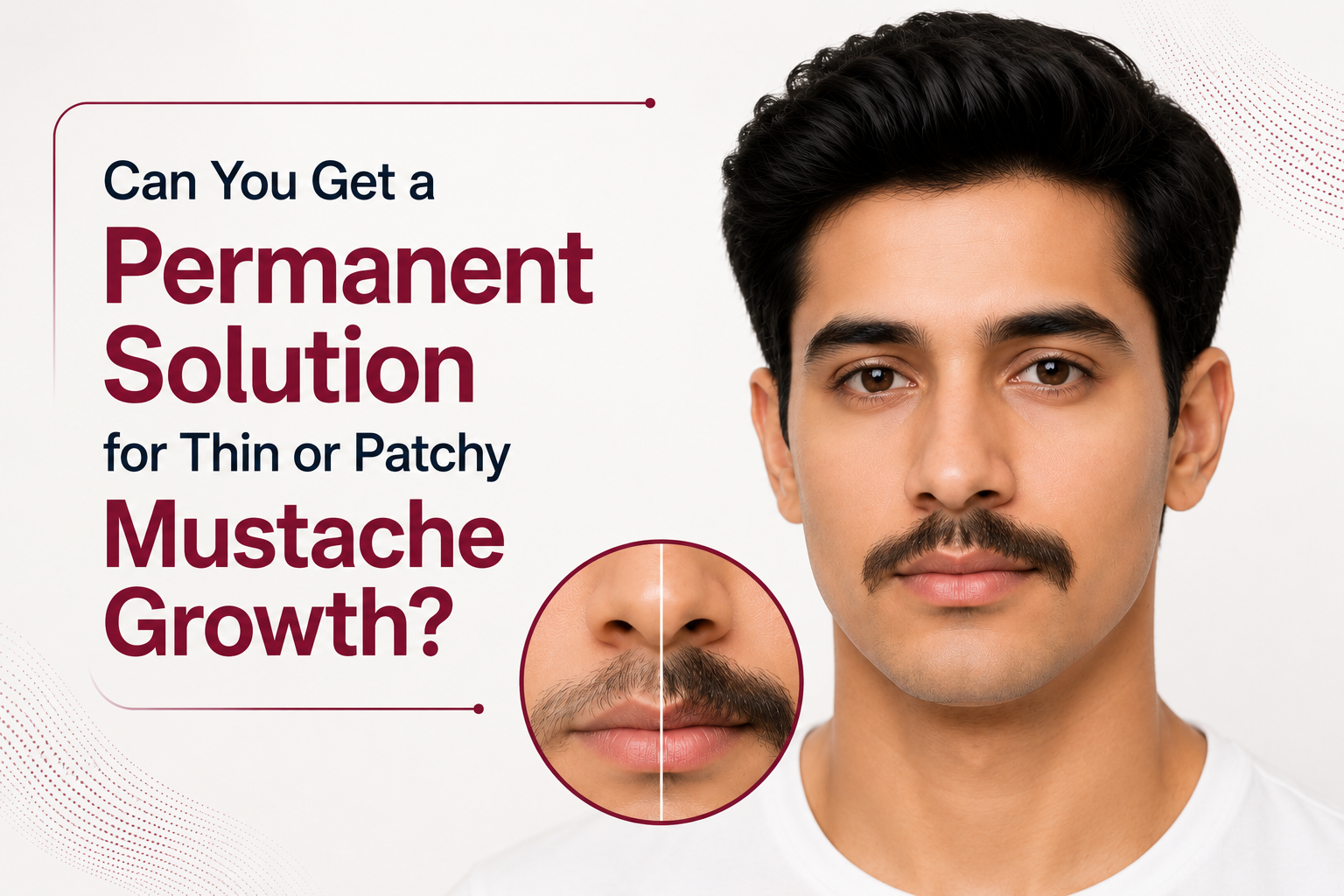
Can You Get a Permanent Solution for Thin or Patchy Mustache Growth?
✔ Medically reviewed by Dr. Ashutosh Shah - M.B., M.S., M.Ch., D.N.B., Board-Certified Plastic & Cosmetic Surgeon, Director of Elegance Clinic, Surat (22+ years’ experience).
A thin, uneven, or patchy mustache can affect facial balance and make it difficult to achieve the appearance you want, even with regular grooming. Genetics, natural follicle density, hormonal factors, previous injuries, and the way facial hair develops can all influence mustache growth.
For people searching for a Mustache Growth Permanent Solution, a mustache hair transplant can be an option when natural growth is insufficient. Unlike temporary cosmetic methods that only camouflage sparse areas, a transplant moves healthy hair follicles into areas where more mustache density is desired. The transplanted follicles can then produce hair over the long term.
What Is a Mustache Growth Permanent Solution?
A Mustache Growth Permanent Solution refers to a treatment designed to provide lasting improvement in mustache density rather than temporarily covering thin or empty areas.
A mustache hair transplant generally uses individual follicular units harvested from a suitable donor area. These follicles are carefully placed into the mustache region according to the desired shape, density, angle, and natural direction of facial hair.
The objective is not simply to add more hair. The goal is to create a mustache that looks natural, balanced, and proportionate to the rest of the face.
Why Does Mustache Growth Become Thin or Patchy?
Before choosing a treatment, it is important to understand why mustache growth is limited.
Common factors include:
- Genetics: Facial hair density and growth patterns are strongly influenced by family genetics.
- Naturally low follicle density: Some men simply have fewer active follicles in the mustache area.
- Uneven hair development: Different areas of the upper lip may develop hair at different rates.
- Hormonal influences: Hormonal factors can affect facial-hair development.
- Previous injury or scarring: Damage to the skin may permanently affect hair follicles.
- Age and individual development: Facial hair can continue changing as a person matures.
If the cause is unclear, an examination is useful before deciding whether transplantation is appropriate. Sudden or unusual changes in facial hair should also be medically evaluated.
Can a Mustache Hair Transplant Provide Permanent Growth?
Yes, a mustache hair transplant can provide long-term and potentially permanent growth when suitable donor follicles are successfully transplanted and survive.
The key difference is that the procedure does not merely place artificial hair or conceal empty areas. It relocates living hair follicles into the recipient area.
Once established, transplanted follicles can continue producing hair. However, individual results vary, and the final appearance depends on factors such as donor-hair quality, graft survival, surgical planning, healing, and aftercare.
Therefore, it is more accurate to describe the treatment as a long-lasting or potentially permanent hair restoration solution, rather than guaranteeing identical results for every patient.
How Does a Mustache Hair Transplant Work?
A typical procedure involves several carefully planned stages.
1. Facial and Hair Assessment
The surgeon evaluates the existing mustache, density, facial proportions, donor hair, skin condition, and the patient's expectations.
2. Mustache Design
The desired shape and density are planned before transplantation. This is important because the mustache needs to complement the upper lip and overall facial structure.
3. Donor Follicle Selection
Suitable follicular units are selected from the donor area. The quality and availability of donor hair play an important role in determining how much density can realistically be achieved.
4. Follicular Extraction
Individual follicular units can be harvested using the FUE technique, which extracts follicles individually rather than removing a strip of skin.
5. Graft Placement
The follicles are carefully inserted into the mustache area. Placement must consider:
- Hair direction
- Growth angle
- Density
- Mustache shape
- Existing facial hair
- Facial symmetry
6. Healing and Growth
The transplanted area needs time to heal and for the follicles to establish themselves. New hair growth does not occur immediately, so patience and appropriate aftercare are important.
Why Is Hair Direction Important for a Natural Mustache?
One of the biggest differences between an ordinary hair transplant and facial-hair restoration is the importance of hair angle and direction.
Mustache hair lies differently from scalp hair. If transplanted follicles are placed at an incorrect angle, the result may look unnatural.
A carefully planned procedure attempts to replicate the existing pattern so the transplanted hair blends with the surrounding mustache.
This is particularly important when treating small gaps because differences between transplanted and existing hair can be more noticeable.
Can a Patchy Mustache Be Made Fuller?
A mustache transplant may help improve the appearance of:
- Thin mustache growth
- Patchy mustache areas
- Uneven density
- Small gaps
- Minimal facial-hair growth
- Certain areas affected by previous injury or scarring
The amount of improvement depends on the available donor follicles and the size of the treatment area.
A realistic treatment plan is therefore more important than simply aiming for maximum density.
Is a Mustache Transplant Better Than Temporary Solutions?
Temporary approaches such as cosmetic fibers, makeup, or styling products can make sparse areas appear fuller, but they do not create new hair follicles.
A hair transplant takes a different approach by transferring follicles into an area with inadequate hair growth.
This makes transplantation particularly relevant for people searching for a permanent solution for mustache growth rather than a short-term cosmetic solution.
What Results Can You Expect?
Results vary from person to person. A successful restoration aims to produce:
- Fuller-looking mustache density
- Better coverage of visible gaps
- More consistent facial-hair distribution
- Natural hair direction
- Improved facial balance
- Long-lasting hair growth
The final result takes time because transplanted follicles need to go through their natural growth cycle. The clinic also notes that patient results can vary and that expectations should be discussed with the treating doctor.
Who May Be a Good Candidate?
You may be considered for a mustache hair transplant if you have:
- Naturally sparse mustache growth
- Patchy or uneven facial hair
- Persistent gaps in the mustache
- Adequate donor hair
- Realistic expectations
- Stable facial-hair concerns
A consultation is important because not everyone with a thin mustache necessarily needs a transplant. The underlying cause, donor availability, skin condition, and desired result should all be assessed.
What About Recovery After Mustache Hair Transplant?
Some temporary effects may occur after the procedure, including:
- Mild redness
- Small crusts
- Temporary swelling
- Sensitivity
- Minor discomfort
Following the surgeon's aftercare instructions can support appropriate healing. Avoiding unnecessary touching or irritation of the newly transplanted area is generally important during the early recovery period.
Mustache Growth Permanent Solution in Surat
If you are searching for a Mustache Growth Permanent Solution in Surat, professional evaluation is an important first step.
At Elegance Clinic, treatment planning focuses on understanding the individual's facial-hair pattern, donor availability, desired density, and aesthetic goals. Dr. Ashutosh Shah provides hair-restoration and facial-hair procedures with an emphasis on natural-looking results.
The clinic has locations in Adajan and Vesu, Surat, making consultation accessible for patients looking for facial-hair restoration in Surat.
Key Takeaways
- A thin or patchy mustache can result from genetics, follicle density, hormonal factors, or previous skin damage.
- A mustache hair transplant can provide a long-lasting and potentially permanent solution by relocating hair follicles.
- FUE can be used to extract individual follicular units for facial-hair restoration.
- Natural-looking results depend heavily on correct hair direction, angle, density, and graft placement.
- Not everyone requires a transplant, so an individual assessment is important.
- Final results take time and can vary between patients.
Conclusion
If you have persistent thin, uneven, or patchy mustache growth, temporary grooming products may not provide the lasting improvement you are looking for. A Mustache Growth Permanent Solution such as mustache hair transplantation can offer a long-term approach by placing suitable hair follicles into areas where additional growth is needed.
The goal should be more than simply increasing hair count. Proper facial-hair design, appropriate graft selection, natural placement, and realistic expectations are essential for an aesthetically balanced result.
Looking for a Mustache Growth Permanent Solution in Surat? Schedule a consultation with Elegance Clinic to discuss your mustache density, donor-hair suitability, expected results, and personalized treatment options.
Frequently Asked Questions
What is the best permanent solution for thin mustache growth?
Is a mustache hair transplant permanent?
Can a hair transplant fix a patchy mustache?
Does a mustache transplant look natural?
How is a mustache hair transplant performed?
About the Author