
Patchy Mustache Problem? Here’s Why Facial Hair Growth Stays Thin
✔ Medically reviewed by Dr. Ashutosh Shah - M.B., M.S., M.Ch., D.N.B., Board-Certified Plastic & Cosmetic Surgeon, Director of Elegance Clinic, Surat (22+ years’ experience).
Many men search for answers about how to grow a thick mustache when facial hair growth remains patchy, thin, or uneven. In many cases, genetics, hormones, lifestyle habits, and poor hair follicle development affect mustache density. Dr Ashutosh Shah performs advanced facial hair restoration procedures that help improve mustache growth and restore fuller facial hair appearance through medically guided treatment options.
A thick mustache often plays an important role in facial aesthetics and masculine appearance. Therefore, understanding the cause of slow facial hair growth helps in choosing the right treatment.
Why Some Men Struggle With Mustache Growth
Facial hair growth differs from person to person. While some men naturally develop thick facial hair early, others experience thin, patchy, or uneven mustache growth for several reasons.
Because hair growth depends on multiple biological factors, identifying the cause becomes important before starting treatment.
Common Causes of Poor Mustache Growth
There are several reasons why facial hair may not grow properly.
Genetics
Genetics remains one of the biggest factors affecting facial hair thickness. If family members naturally have lighter facial hair, mustache growth may also remain limited.
Low Testosterone Levels
Hormones directly influence facial hair development. When testosterone levels remain lower, facial hair may grow slowly or appear thinner.
As a result, mustache density may remain poor even in adulthood.
Poor Hair Follicle Development
Sometimes hair follicles in the upper lip area remain underdeveloped.
Because of weak follicles, hair growth may appear sparse or patchy.
Nutritional Deficiency
Deficiency of important nutrients can affect hair growth quality.
Important nutrients include:
- Protein
- Biotin
- Iron
- Zinc
- Vitamin D
Without proper nutrition, hair strength often decreases.
Stress and Lifestyle Factors
Excess stress can interfere with hormone balance.
Additionally, poor sleep habits and smoking may negatively affect hair growth patterns.
Skin Conditions
Certain skin conditions affecting the upper lip area may damage hair follicles and slow facial hair growth.
Therefore, medical evaluation may sometimes be necessary.
Symptoms of Poor Mustache Growth
Men with facial hair growth problems usually notice visible signs over time.
Common symptoms include:
- Thin mustache hair
- Patchy hair growth
- Slow facial hair growth
- Uneven mustache thickness
- Areas without hair growth
- Weak hair strands
- Reduced facial hair density
Although some men naturally develop facial hair slowly, persistent patchiness often requires evaluation.
Diagnosis Before Choosing Treatment
Proper diagnosis helps identify why mustache growth remains poor.
Because different causes require different solutions, doctors usually evaluate several factors.
Medical History Review
Lifestyle habits, nutrition, and family history are reviewed carefully.
Hormonal Assessment
Hormonal imbalance may contribute to poor facial hair growth. Therefore, testing may sometimes be recommended.
Hair Follicle Examination
Doctors examine the density and strength of facial hair follicles.
Skin Evaluation
Underlying skin conditions affecting hair growth are carefully assessed.
This evaluation helps determine the most suitable treatment approach.
Natural Ways to Improve Mustache Growth
Many men first prefer natural methods before considering advanced treatment.
Maintain Balanced Nutrition
A protein-rich diet helps support healthy hair development.
Important foods include:
- Eggs
- Nuts
- Fish
- Green vegetables
- Fruits
Improve Sleep Quality
Good sleep helps maintain a healthy hormone balance.
As hormone levels improve, hair growth may improve gradually.
Exercise Regularly
Regular exercise supports better blood circulation and hormonal balance.
Consequently, hair follicles may receive better nourishment.
Reduce Stress
Stress management helps reduce hormonal imbalance.
Meditation and regular physical activity may help improve overall health.
Maintain Skin Care
Healthy skin supports better hair follicle health.
Keeping facial skin clean reduces irritation and follicle blockage.
However, natural methods may not always solve genetic or follicle-related issues.
Advanced Treatment Options for Thick Mustache Growth
When natural methods fail, advanced medical treatment may help improve facial hair density.
Medications
In some cases, doctors may recommend treatments that stimulate hair growth.
However, results vary between individuals.
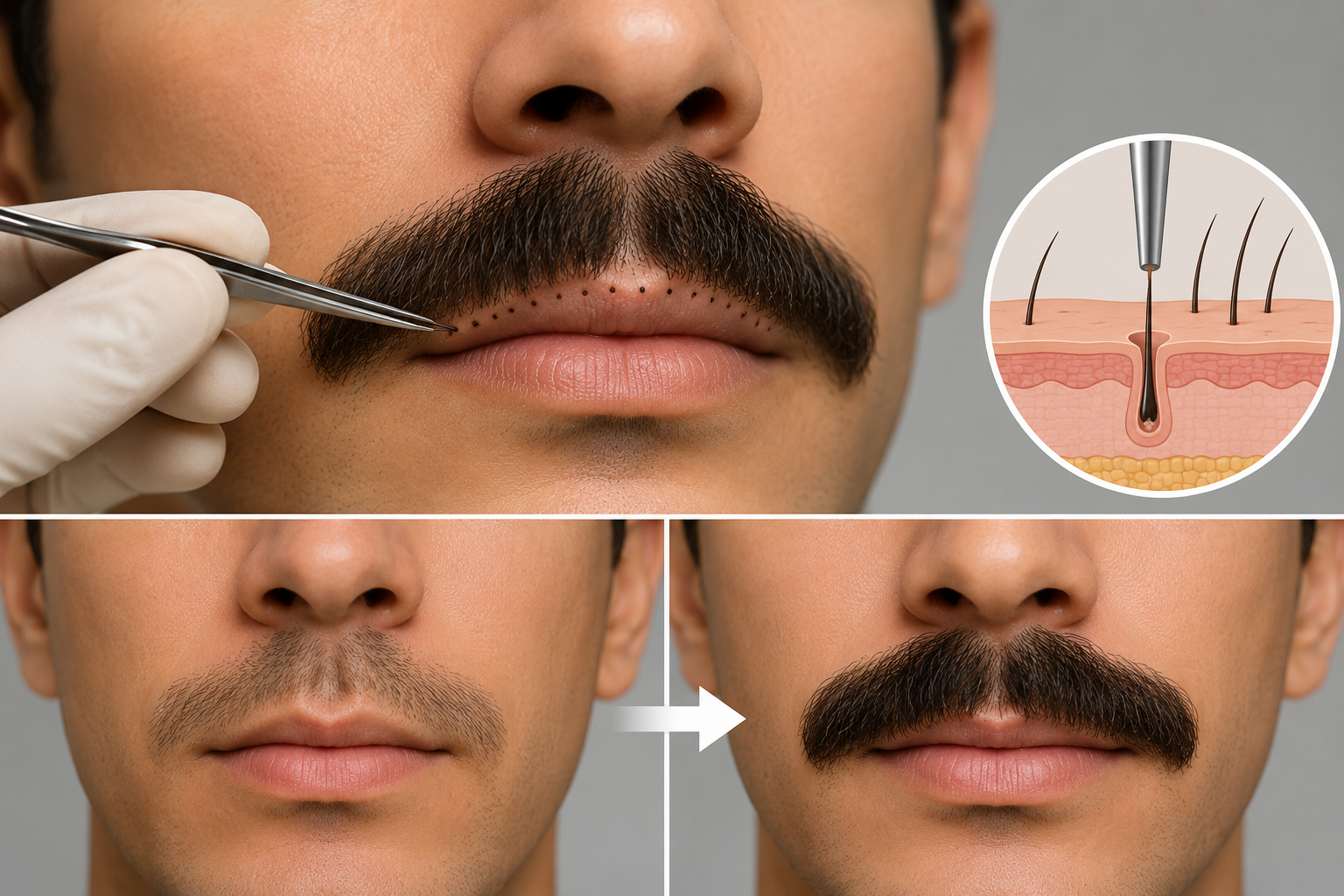
Mustache Hair Transplant
For permanent correction, Mustache Hair Transplant remains one of the most effective treatment options.
This procedure transfers healthy hair follicles into the mustache area to create fuller growth.
As a result, facial hair density improves significantly.
How Mustache Hair Transplant Works
The procedure is carefully planned according to facial structure and desired density.
Step 1: Consultation and Planning
Doctors evaluate facial hair patterns and determine ideal mustache design.
Step 2: Donor Hair Selection
Healthy hair follicles are usually taken from the scalp.
The donor area is selected carefully to match facial hair texture.
Step 3: Hair Follicle Extraction
Individual hair follicles are carefully extracted using advanced techniques.
Step 4: Recipient Area Preparation
Small channels are created in the mustache area.
Proper angle placement remains important for natural results.
Step 5: Implantation
Hair follicles are implanted carefully to create natural-looking mustache growth.
Because facial aesthetics matter greatly, precision becomes extremely important.
Recovery After Mustache Hair Transplant
Recovery usually remains smooth when aftercare instructions are followed properly.
Patients may notice:
- Mild redness
- Temporary swelling
- Small crust formation
- Mild sensitivity around the treated area
Most temporary symptoms improve gradually over the next several days.
Aftercare Following Treatment
Proper aftercare helps improve healing and long-term results.
Avoid Touching the Area
Newly implanted follicles need protection during early healing.
Avoid Heavy Sweating
Excess sweating may irritate the treated area.
Follow Cleaning Instructions
Proper cleaning helps reduce infection risk.
Avoid Smoking
Smoking may affect blood circulation and delay healing.
Attend Follow-Up Visits
Regular follow-up helps monitor hair growth progress.
Because hair follicles require time to settle, patience remains important.
Benefits of Mustache Hair Transplant
This treatment offers long-term cosmetic improvement.
Permanent Hair Growth
Transplanted follicles usually continue growing permanently.
Fuller Mustache Appearance
Mustache density improves significantly.
Natural Looking Results
Hair placement follows natural facial hair direction.
Better Facial Aesthetics
A thicker mustache often improves overall facial balance.
Improved Confidence
Many men feel more confident with fuller facial hair.
Risks Associated With Treatment
Like any procedure, certain risks may exist.
Possible temporary risks include:
- Mild swelling
- Temporary redness
- Minor infection risk
- Small crust formation
- Temporary sensitivity
However, proper surgical planning significantly reduces complications.
Who Is a Good Candidate?
Treatment may help men who experience:
- Thin mustache hair
- Patchy facial hair growth
- Poor hair follicle development
- Uneven mustache density
- Minimal facial hair because of genetics
Professional evaluation helps determine suitability.
Conclusion
Understanding how to grow a thick mustache starts with identifying the reason behind patchy or slow facial hair growth. Genetics, hormones, poor follicle development, and lifestyle factors commonly affect mustache density. While natural methods may help in some cases, advanced treatment options often provide more predictable improvement.
At Elegance Clinic, advanced facial hair restoration procedures and mustache hair transplant treatments help patients achieve fuller facial hair growth and long-lasting aesthetic improvement.
Frequently Asked Questions
Can genetics affect mustache growth?
Can exercise increase facial hair growth?
Is a mustache hair transplant permanent?
How long does recovery take after treatment?
About the Author