
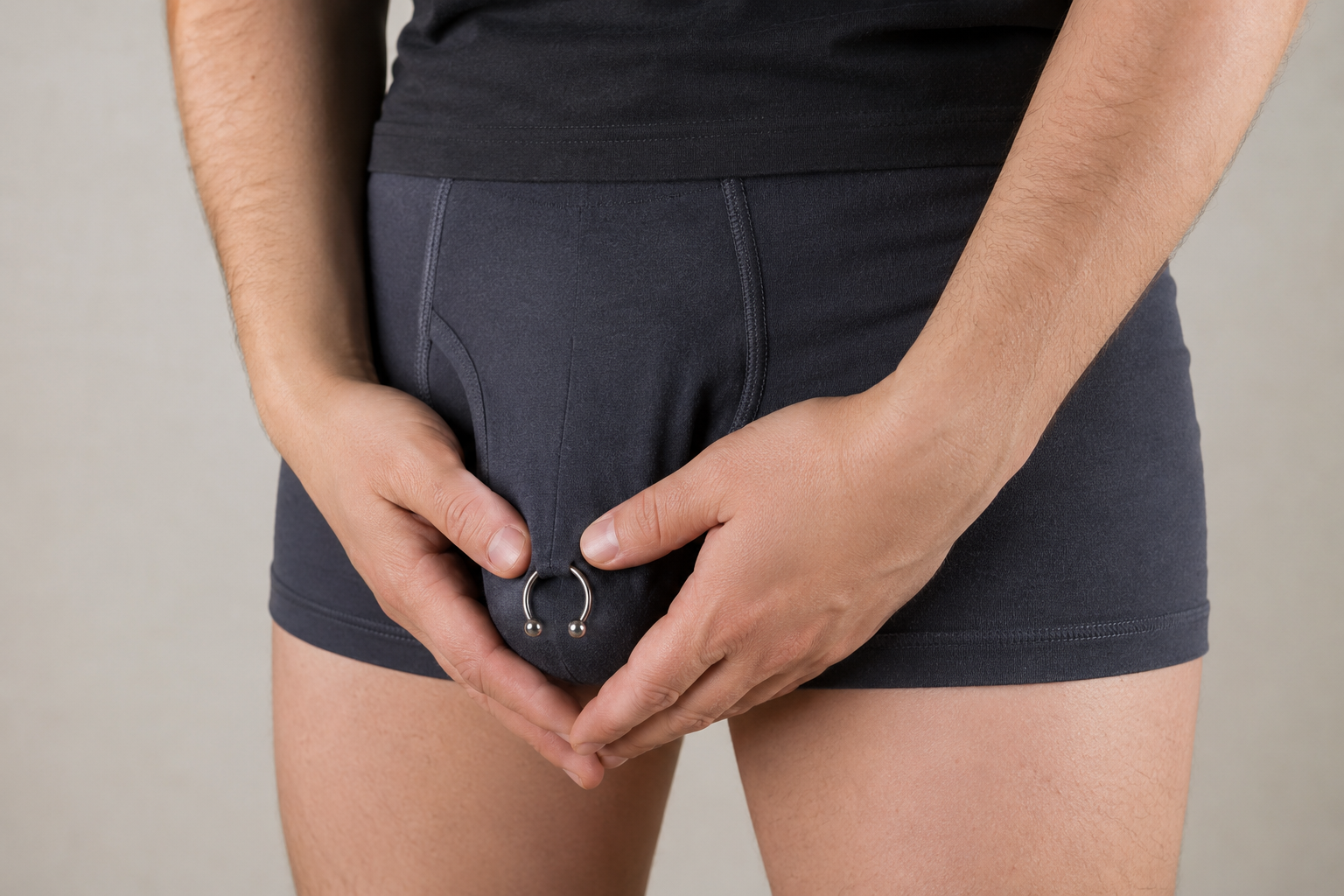
Testicular Piercing Risks Most People Never Hear About
✔ Medically reviewed by Dr. Ashutosh Shah - M.B., M.S., M.Ch., D.N.B., Board-Certified Plastic & Cosmetic Surgeon, Director of Elegance Clinic, Surat (22+ years’ experience).
Testicular piercing is a type of genital piercing that can cause complications beyond temporary pain or swelling. The lesser-known risks of testicular piercing include nerve or tissue injury, jewelry migration, skin tearing, persistent scarring, allergic reactions, delayed healing, and infection. In some cases, complications may require professional medical evaluation and treatment.
If you are considering a piercing or experiencing unusual symptoms afterward, understanding the warning signs can help you decide when to seek medical care. In Surat, Dr. Ashutosh Shah at Elegance Clinic can evaluate concerns related to genital and scrotal health and provide appropriate medical guidance.
What Is Testicular Piercing?
Testicular piercing generally involves placing jewelry through the skin or superficial tissue of the scrotum. It is a form of Genital Piercing that may be chosen for personal, aesthetic, or body-modification reasons.
The scrotal area differs from many common piercing locations because it is exposed to movement, moisture, sweating, friction, and contact with clothing. These factors can make healing more challenging and may increase the possibility of irritation or complications.
What Are the Risks of Testicular Piercing?
The Risks of Testicular Piercing can include:
- Infection
- Bleeding and bruising
- Pain and swelling
- Nerve or tissue injury
- Persistent scarring
- Jewelry migration or rejection
- Accidental skin tearing
- Allergic reactions
- Delayed healing
- Deeper tissue injury in cases of improper placement or trauma
Not everyone will experience these complications. Risk can vary according to piercing technique, hygiene, jewelry material, placement, aftercare, and individual healing.
1. Infection: A Common but Important Risk
Can a testicular piercing become infected? Yes. Any piercing creates an opening in the skin, allowing bacteria to enter.
Possible signs of infection include:
- Increasing redness
- Worsening pain
- Swelling or warmth
- Pus or unusual discharge
- Foul-smelling discharge
- Fever or chills
An infection that is getting worse rather than improving should be assessed by a healthcare professional.
2. Bleeding and Bruising
The scrotum contains numerous blood vessels, so bleeding or bruising can occur after piercing.
Minor bleeding may occur immediately following the procedure. However, persistent or heavy bleeding requires medical evaluation, particularly if it does not stop with appropriate first aid.
3. Nerve Injury and Changes in Sensation
One of the risks people may not always consider is nerve irritation or injury.
Improper placement or trauma may contribute to:
- Persistent pain
- Numbness
- Tingling
- Increased sensitivity
- Altered sensation
If a change in sensation continues after the expected healing period or is becoming worse, consult a qualified doctor.
4. Jewelry Migration or Rejection
Jewelry migration occurs when jewelry gradually moves away from its original position. In some cases, the body may attempt to push the jewelry toward the surface, which is known as rejection.
Possible warning signs include:
- Thinning skin around the jewelry
- Increasing irritation
- Visible movement
- Persistent tenderness
- Skin breakdown
Significant migration or tissue damage should be professionally assessed.
5. Accidental Skin Tearing
Another lesser-known concern is accidental tearing.
Jewelry can become caught on underwear, clothing, towels, or other objects. A sudden pull can damage the surrounding tissue and cause:
- Bleeding
- Pain
- Skin tearing
- Additional trauma
- Delayed healing
If a piercing is accidentally pulled or torn, medical assessment may be necessary depending on the severity of the injury.
6. Persistent Scarring
A piercing can leave a scar even after the jewelry is removed.
Repeated irritation, infection, trauma, or individual healing characteristics can contribute to more noticeable scar formation. Some people may also develop excessive scar tissue.
If a scar becomes painful, raised, increasingly prominent, or repeatedly irritated, discuss it with a medical professional.
7. Allergic Reaction to Piercing Jewelry
Some individuals can react to metals used in body jewelry.
Possible symptoms include:
- Itching
- Redness
- Rash
- Swelling
- Persistent irritation
An allergic reaction can sometimes resemble an infection, so persistent symptoms should be evaluated rather than self-diagnosed.
8. Delayed Healing
Why can genital piercings take longer to heal? The area is regularly exposed to movement, sweat, moisture, friction, and clothing.
Repeated irritation can interfere with healing and may increase the risk of inflammation or infection.
Following appropriate aftercare instructions and avoiding unnecessary manipulation can help support healing.
9. Pain and Swelling: When Is It Concerning?
Some localized tenderness and swelling can occur following a piercing. However, symptoms that become increasingly severe should not be ignored.
Seek medical advice if pain is:
- Severe
- Increasing instead of improving
- Associated with significant swelling
- Accompanied by fever
- Associated with pus or unusual discharge
- Associated with severe testicular pain
The cause may be infection, tissue injury, inflammation, or another condition that requires assessment.
Can Testicular Piercing Damage the Testicles?
A superficial scrotal piercing is intended to involve the skin or superficial tissue rather than the testicle itself. However, improper placement, excessive depth, or accidental trauma can potentially injure deeper structures.
Severe testicular pain, sudden swelling, significant bruising, or a noticeable change in the appearance or position of a testicle should be evaluated promptly.
These symptoms should not simply be assumed to be a normal part of piercing recovery.
What Should You Do If a Testicular Piercing Becomes Infected?
If you suspect an infection, avoid squeezing, cutting, or aggressively manipulating the piercing site.
A doctor can examine the area and determine whether symptoms are caused by infection, allergic reaction, tissue injury, irritation, or another problem. Treatment depends on the underlying cause and may involve appropriate wound care, medication, or other medical management.
Do not rely solely on home remedies when symptoms are worsening or severe.
When Should You See a Doctor After Testicular Piercing?
You should seek professional medical evaluation if you develop:
- Severe or worsening pain
- Significant swelling
- Persistent or heavy bleeding
- Pus or foul-smelling discharge
- Fever or chills
- Spreading redness
- Significant skin discoloration
- Severe testicular pain
- Sudden testicular swelling
- Changes in the position or appearance of a testicle
- Persistent numbness or altered sensation
Early evaluation can help identify complications and determine appropriate treatment.
How Can You Reduce the Risks of Testicular Piercing?
Although complications cannot be completely eliminated, certain precautions may reduce the likelihood of problems:
- Choose an experienced professional who follows appropriate hygiene practices.
- Ensure proper sterilization procedures are followed.
- Use suitable body-safe jewelry.
- Follow recommended aftercare instructions.
- Wash your hands before touching the area.
- Avoid unnecessary touching or rotating the jewelry.
- Minimize friction and trauma during healing.
- Avoid activities that cause pain or excessive pressure.
- Monitor the area for changes.
- Seek medical advice if symptoms become worse.
Testicular Piercing Risks in Surat: When Should You Seek Care?
If you live in Surat and develop persistent pain, swelling, bleeding, discharge, skin changes, or other unusual symptoms after a genital or scrotal piercing, consider seeking professional medical evaluation.
A doctor can examine the affected area, identify possible complications, and recommend appropriate management based on your symptoms.
For individuals seeking medical evaluation in Surat, Elegance Clinic can provide professional consultation for concerns involving genital and scrotal health.
Conclusion
The Risks of Testicular Piercing can extend beyond temporary discomfort. Infection, bleeding, nerve or tissue injury, jewelry migration, accidental tearing, scarring, allergic reactions, and delayed healing are possible complications.
Some warning signs particularly severe pain, significant swelling, persistent bleeding, pus, fever, severe testicular pain, or changes involving the testicles should not be ignored.
If you experience concerning symptoms following a piercing in Surat, professional medical evaluation can help determine the cause and appropriate treatment.
Medical Consultation in Surat
Concerned about pain, swelling, infection, bleeding, or another complication after a testicular piercing?
Contact Elegance Clinic to schedule a consultation and discuss your concerns with the medical team.
Frequently Asked Questions
Is testicular piercing safe?
What are the risks of testicular piercing?
Can testicular piercing cause infection?
How do I know if my testicular piercing is infected?
Can testicular piercing cause permanent damage?
Can testicular piercing cause nerve damage?
What should I do if my testicular piercing is swollen?
About the Author