Big Red Nose Problem: Causes, Symptoms, and Treatment
✔ Medically reviewed by Dr. Ashutosh Shah - M.B., M.S., M.Ch., D.N.B., Board-Certified Plastic & Cosmetic Surgeon, Director of Elegance Clinic, Surat (22+ years’ experience).
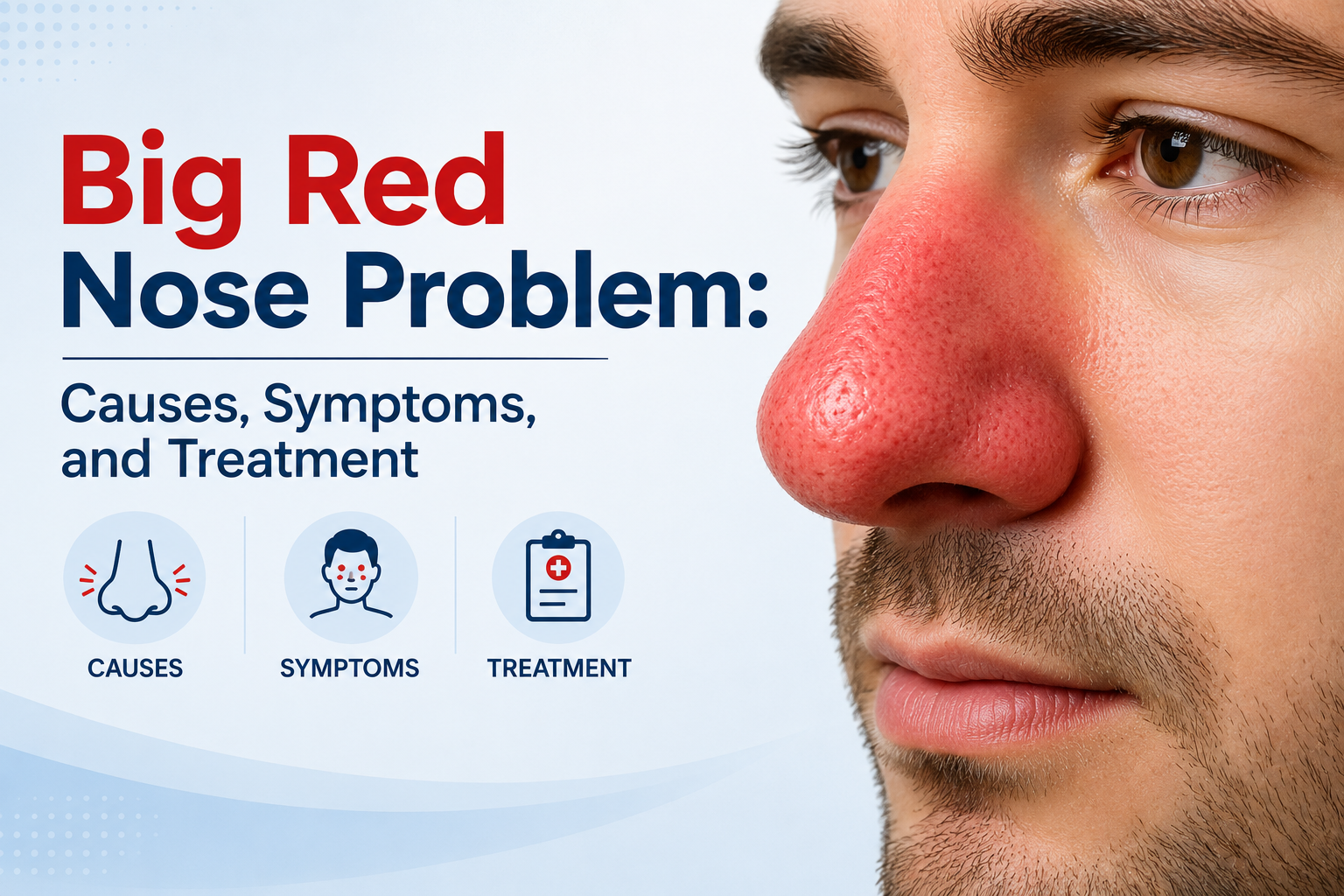
A big red nose problem often develops when the skin on the nose becomes thickened, swollen, enlarged, and visibly red due to chronic inflammation or an underlying skin condition. In many cases, Dr. Ashutosh Shah treats patients experiencing advanced nose skin changes caused by rhinophyma and related conditions at Elegance Clinic using modern reconstructive and cosmetic treatment techniques. Because untreated nose enlargement can worsen over time, early medical evaluation remains extremely important.
Dr. Ashutosh Shah’s Approach to Big Red Nose Treatment
Dr. Ashutosh Shah focuses on identifying the exact cause behind abnormal nose enlargement, skin thickening, and persistent redness before selecting treatment. Since every patient presents differently, a personalized approach helps achieve better cosmetic correction while preserving healthy surrounding tissue.
Additionally, early intervention can prevent progressive skin overgrowth and long-term facial disfigurement. Therefore, professional diagnosis becomes essential when symptoms continue worsening.
Understanding Big Red Nose Problem
A visibly enlarged red nose may develop gradually over months or even years. In many patients, the nose becomes swollen, bulbous, thickened, and irregular in shape.
This condition frequently develops because of long-standing inflammatory skin disorders affecting oil glands and connective tissue. Moreover, progressive tissue growth may eventually distort normal facial appearance.
Because facial appearance directly affects confidence, many patients seek treatment once symptoms become noticeable.
Causes of Big Red Nose Problem
Several underlying factors may contribute to nose enlargement and chronic redness.
Rhinophyma
Rhinophyma is one of the most common causes of severe nose enlargement. It causes progressive thickening of skin tissue and enlargement of sebaceous glands.
As a result, the nose gradually becomes bulky, red, and uneven.
Chronic Rosacea
Long-term untreated rosacea often causes persistent redness, facial flushing, and inflammatory skin changes.
Over time, repeated inflammation may trigger permanent skin thickening.
Excess Sebaceous Gland Growth
In some individuals, oil-producing glands become enlarged and contribute to abnormal skin thickening over the nose.
Consequently, surface texture becomes rough and irregular.
Chronic Skin Inflammation
Persistent inflammation may gradually damage normal skin structure and stimulate tissue overgrowth.
Because inflammation continues repeatedly, tissue thickening worsens over time.
Genetic Predisposition
Some individuals may naturally have a higher tendency toward inflammatory skin disorders affecting facial skin.
Therefore, family history can sometimes influence disease progression.
Symptoms That Need Medical Attention
Patients experiencing progressive nose changes often notice several visible symptoms.
Common Symptoms Include
-
Enlarged nose appearance
-
Persistent redness over the nose
-
Thickened skin texture
-
Enlarged visible pores
-
Uneven skin surface
-
Gradual change in nose shape
-
Facial skin inflammation
Although symptoms develop slowly, progression often continues without treatment.
Diagnosis Process
Accurate diagnosis helps determine whether rhinophyma or another skin disorder is causing the condition.
Physical Examination
The doctor examines skin thickness, redness pattern, tissue growth, and nose contour.
Medical History Review
Previous rosacea symptoms, skin irritation, inflammation history, and progression speed are reviewed carefully.
Skin Condition Evaluation
The severity of tissue overgrowth helps determine whether medical or surgical correction is necessary.
As a result, treatment planning becomes more accurate.
Treatment Options for Big Red Nose Problem
Treatment depends entirely on disease severity and tissue overgrowth level.
Early Medical Treatment
When redness develops early, treatment may focus on reducing inflammation and controlling skin irritation.
However, advanced tissue thickening usually requires procedural correction.
Rhinophyma Treatment
Rhinophyma treatment remains one of the most effective solutions for advanced tissue overgrowth, causing permanent nose enlargement.
Because the procedure removes excess tissue directly, it helps restore the natural nose contour.
Rhinophyma Surgical Procedure Explained
Surgical correction focuses on removing excess thickened skin and reshaping the nose.
Step 1: Pre-Treatment Evaluation
The doctor assesses tissue growth severity and determines surgical planning.
Step 2: Local or General Anesthesia
Appropriate anesthesia ensures patient comfort throughout treatment.
Step 3: Excess Tissue Removal
Specialized surgical instruments carefully remove thickened skin layers, causing nose enlargement.
Step 4: Nose Reshaping
The surgeon carefully reshapes nasal contours to restore a natural appearance.
Step 5: Bleeding Control
Precise surgical control minimizes unnecessary tissue trauma.
Step 6: Protective Dressing
The treated skin surface is protected to allow controlled healing.
As a result, gradual skin recovery begins immediately after surgery.
Recovery and Aftercare
Proper recovery care directly affects final cosmetic results.
Early Recovery
During the first several days:
-
Mild swelling is expected
-
Skin sensitivity may occur
-
Temporary redness remains normal
Aftercare Instructions
Patients should:
-
Avoid direct sun exposure
-
Keep the treated area clean
-
Avoid touching healing skin repeatedly
-
Follow prescribed medication instructions carefully
Healing Period
Gradually:
-
Swelling reduces steadily
-
Skin surface begins repairing
-
Final appearance improves over several weeks
Therefore, strict aftercare improves long-term outcomes significantly.
Risks and Benefits
Every medical procedure carries both advantages and possible risks.
Benefits
-
Improved facial appearance
-
Reduction in abnormal nose enlargement
-
Better skin contour
-
Removal of excess tissue growth
-
Improved confidence
-
Long-term structural correction
Possible Risks
-
Temporary swelling
-
Mild scarring
-
Skin redness during healing
-
Minor bleeding
-
Temporary sensitivity
However, proper surgical planning significantly reduces complications.
When Should You Seek Treatment?
Early evaluation becomes important when patients notice:
-
Progressive nose enlargement
-
Constant facial redness
-
Thickened skin over the nose
-
Rough, irregular skin texture
-
Bulbous or distorted nose appearance
Because progression often worsens gradually, delaying treatment may increase correction complexity.
Long-Term Results
Most patients experience noticeable improvement once excess tissue is removed successfully.
Additionally, restoring natural nose contour often improves overall facial balance and self-confidence.
Since early treatment prevents further tissue growth, long-term results generally remain highly satisfactory.
Conclusion
A big red nose problem often develops because of progressive skin thickening caused by rhinophyma, rosacea, or chronic inflammation affecting the nose tissue. Early diagnosis allows better correction before significant facial changes develop. At Elegance Clinic, advanced rhinophyma treatment performed by Dr. Ashutosh Shah focuses on restoring natural nose shape, improving skin texture, and helping patients regain facial confidence through safe modern surgical techniques.
Frequently Asked Questions
Why does the nose become large and red over time?
Is rhinophyma the same as rosacea?
Can medication alone reduce severe nose enlargement?
Does untreated rhinophyma continue progressing?
About the Author