
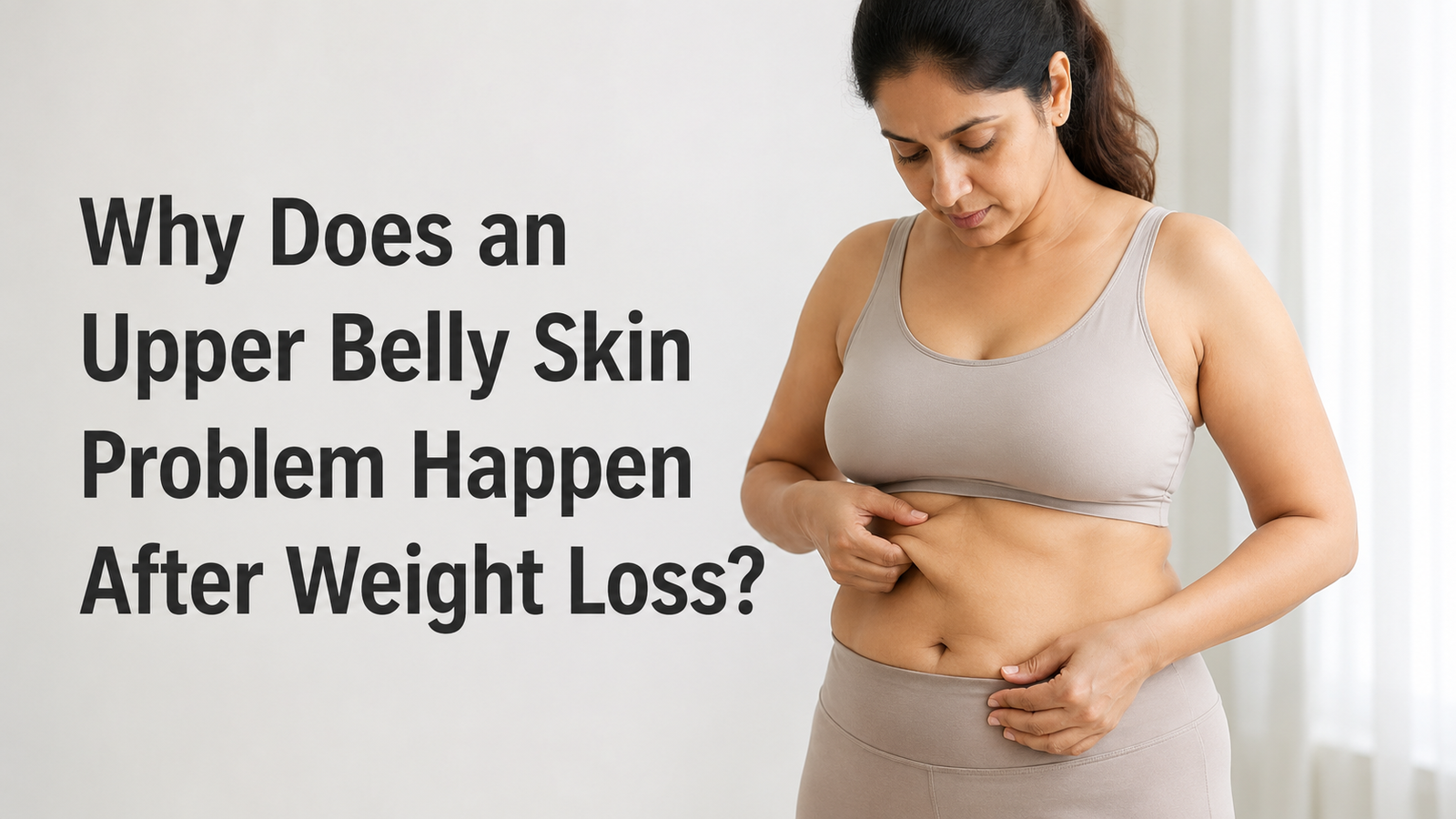
Why Does an Upper Belly Skin Problem Happen After Weight Loss?
✔ Medically reviewed by Dr. Ashutosh Shah - M.B., M.S., M.Ch., D.N.B., Board-Certified Plastic & Cosmetic Surgeon, Director of Elegance Clinic, Surat (22+ years’ experience).
Significant weight loss can be an important health achievement, but it does not always mean that the skin will return to its original shape. One common concern is an upper belly skin problem, where loose, stretched, or excess skin remains around the upper abdomen even after substantial weight reduction.
This can be particularly noticeable after bariatric surgery or major lifestyle-related weight loss. The amount of excess skin depends on factors such as the extent of weight loss, age, skin elasticity, genetics, pregnancy history, and how long the skin remained stretched.
For people in Surat looking for solutions to persistent loose abdominal skin, a consultation with a qualified plastic surgeon can help determine whether lifestyle measures, body-contouring procedures, or a surgical approach may be appropriate.
Important: The specific procedure needed depends on where the excess skin is located. A surgeon should assess the upper abdomen and overall abdominal contour before recommending a procedure.
What Causes an Upper Belly Skin Problem After Weight Loss?
The skin naturally stretches as the body gains weight. When the underlying fat volume decreases substantially, the skin may not contract enough to match the body's new shape.
Several factors can contribute to an upper belly skin problem:
1. Major or Rapid Weight Loss
Losing a significant amount of weight can leave behind folds or excess skin because the skin has been stretched for a prolonged period.
2. Reduced Skin Elasticity
Collagen and elastin help skin contract and maintain firmness. With increasing age, these structures gradually become less effective, making it harder for stretched abdominal skin to retract.
3. Bariatric Surgery
After bariatric procedures, patients may experience substantial weight loss over time. While the reduction in body fat can improve health, it can also reveal excess skin around the abdomen, waist, back, arms, or other areas.
4. Pregnancy and Previous Abdominal Stretching
Pregnancy can stretch both the abdominal skin and underlying tissues. Subsequent weight loss may make loose skin more apparent.
5. Genetics
Some people naturally have better skin elasticity than others. Genetics can therefore influence how much the skin contracts following weight loss.
Why Doesn't Exercise Always Remove Upper Belly Skin?
Exercise can strengthen the abdominal muscles and improve overall body composition, but it cannot directly remove a significant amount of excess skin.
For example, someone may have strong abdominal muscles but still notice a fold of loose skin when sitting, bending, or relaxing.
This distinction is important:
Fat reduction and excess-skin removal are not the same thing.
If the primary concern is residual fat, treatments such as liposuction may sometimes be considered. If the main concern is loose skin, a surgical skin-removal procedure may be more appropriate. In some patients, both issues may need to be addressed.
Can an Upper Belly Skin Problem Improve Naturally?
A small amount of loose skin may become less noticeable over time, particularly when weight remains stable and the skin still has reasonable elasticity.
However, significant excess skin is unlikely to disappear completely through:
- Exercise alone
- Abdominal workouts
- Creams or lotions
- Massage
- Weight-loss supplements
- Spot-reduction exercises
Maintaining a stable weight, eating a balanced diet, avoiding smoking, staying physically active, and protecting the skin from excessive sun exposure can support overall skin health. However, these measures cannot reliably remove established excess skin.
When Should You Consider Surgical Treatment?
Surgical treatment may be worth discussing when loose upper abdominal skin:
- Remains after achieving a stable weight
- Creates a persistent fold or overhang
- Makes clothing uncomfortable
- Causes difficulty with hygiene
- Produces recurrent irritation in skin folds
- Does not improve despite maintaining a healthy lifestyle
- Causes ongoing dissatisfaction with abdominal appearance
The decision should be based on an individual examination rather than the amount of weight lost alone.
What Is a Reverse Tummy Tuck?
A reverse tummy tuck is a specialized abdominal contouring technique in which excess skin is addressed predominantly from the upper abdomen, with the incision generally positioned in the upper abdominal or inframammary region depending on the patient's anatomy and surgical plan.
It is different from a conventional tummy tuck, which generally focuses on excess skin and muscle laxity of the lower abdomen.
A reverse tummy tuck may be considered for carefully selected patients whose primary skin excess is located above the belly button. However, it is not appropriate for everyone.
The surgeon must assess:
- Where the excess skin is located
- Skin quality and elasticity
- Amount of abdominal laxity
- Previous surgeries
- Body proportions
- Weight stability
- Overall health
- Desired aesthetic outcome
Important clarification about the linked page
The page you shared on Dr. Ashutosh Shah's website is titled “Reverse Tummy Tuck,” but its current written description describes a lower-body lift involving the back and hips.
Because your target keyword is “Upper Belly Skin Problem,” I recommend keeping the article focused specifically on upper abdominal loose skin and ensuring the destination page accurately describes the procedure being discussed. This can prevent keyword-to-page mismatch and improve both SEO relevance and medical accuracy.
Can Liposuction Fix an Upper Belly Skin Problem?
Not necessarily.
Liposuction primarily removes localized deposits of fat. It does not function as a skin-removal procedure.
If someone has good skin elasticity with excess localized fat, liposuction may sometimes improve abdominal contour. But if the main issue is substantial loose skin, removing additional fat without addressing the skin may not produce the desired result.
A plastic surgeon can determine whether the concern is primarily:
Excess fat → fat-reduction treatment may be considered
Loose skin → skin-tightening or skin-removal surgery may be considered
Fat + loose skin → a combination approach may sometimes be appropriate
Why Is Weight Stability Important Before Body-Contouring Surgery?
After major weight loss, it is generally important to reach and maintain a relatively stable weight before undergoing elective body-contouring surgery.
Continued major weight fluctuations can change the abdominal contour and potentially affect the long-term result.
A consultation should therefore consider not only how much weight has been lost but also whether the patient's current weight has remained stable.
How Is an Upper Belly Skin Problem Evaluated?
During a consultation, the surgeon may examine the abdomen while the patient is standing and sitting. The assessment can include the amount and distribution of excess skin, abdominal muscle condition, previous scars, fat distribution, and overall body proportions.
At Elegance Clinic in Surat, Dr. Ashutosh Shah evaluates individual body-contouring concerns and discusses suitable surgical options based on the patient's anatomy and goals. The clinic's website identifies Dr. Ashutosh Shah as a board-certified plastic and cosmetic surgeon and Director of Elegance Clinic.
What Can You Expect From Treatment?
The expected outcome depends on the procedure selected, the amount of excess skin, skin quality, and individual healing.
Patients should understand that body-contouring surgery is intended to improve shape and contour rather than create a completely “perfect” abdomen. Scarring is also an important part of the discussion because surgical skin removal requires incisions.
Your surgeon should explain:
- The recommended procedure
- Incision placement
- Expected scars
- Recovery period
- Possible complications
- Activity restrictions
- Expected contour changes
- Whether additional procedures may be appropriate
Key Takeaways
- An upper belly skin problem can develop after major weight loss because stretched skin may not fully contract.
- Bariatric surgery and substantial weight reduction can make excess abdominal skin more noticeable.
- Exercise can strengthen abdominal muscles but cannot remove significant excess skin.
- Creams and non-surgical measures cannot reliably eliminate established excess skin.
- A reverse tummy tuck may be considered in selected patients with predominant upper-abdominal skin excess.
- The correct procedure depends on the location and amount of excess skin.
- Stable weight and realistic expectations are important before elective body-contouring surgery.
- A qualified plastic surgeon should assess the abdomen before treatment is recommended.
Conclusion
An upper belly skin problem after weight loss is often related to stretched skin and reduced elasticity rather than a failure to exercise or maintain a healthy lifestyle. When excess skin remains despite stable weight and healthy habits, surgical body contouring may provide an option for selected patients.
The most appropriate treatment depends on whether the concern involves upper abdominal skin, lower abdominal skin, excess fat, muscle laxity, or a combination of these factors. A personalised examination is therefore essential before choosing a procedure.
If you are in Surat and concerned about loose or excess upper abdominal skin after weight loss, consult a qualified plastic surgeon to understand which treatment is appropriate for your anatomy and goals.
Concerned about an upper belly skin problem after weight loss?
Book a consultation at Elegance Clinic, Surat, to discuss your abdominal skin concerns and understand whether surgical body contouring may be suitable for you. Dr. Ashutosh Shah can assess your individual anatomy, explain the available options, and help you make an informed treatment decision.
Frequently Asked Questions
What is an upper belly skin problem?
Can weight loss cause loose skin on the upper stomach?
Can exercise tighten loose upper belly skin?
Can creams remove upper belly loose skin?
Is liposuction better for an upper belly skin problem?
Can bariatric surgery cause an upper belly skin problem?
About the Author