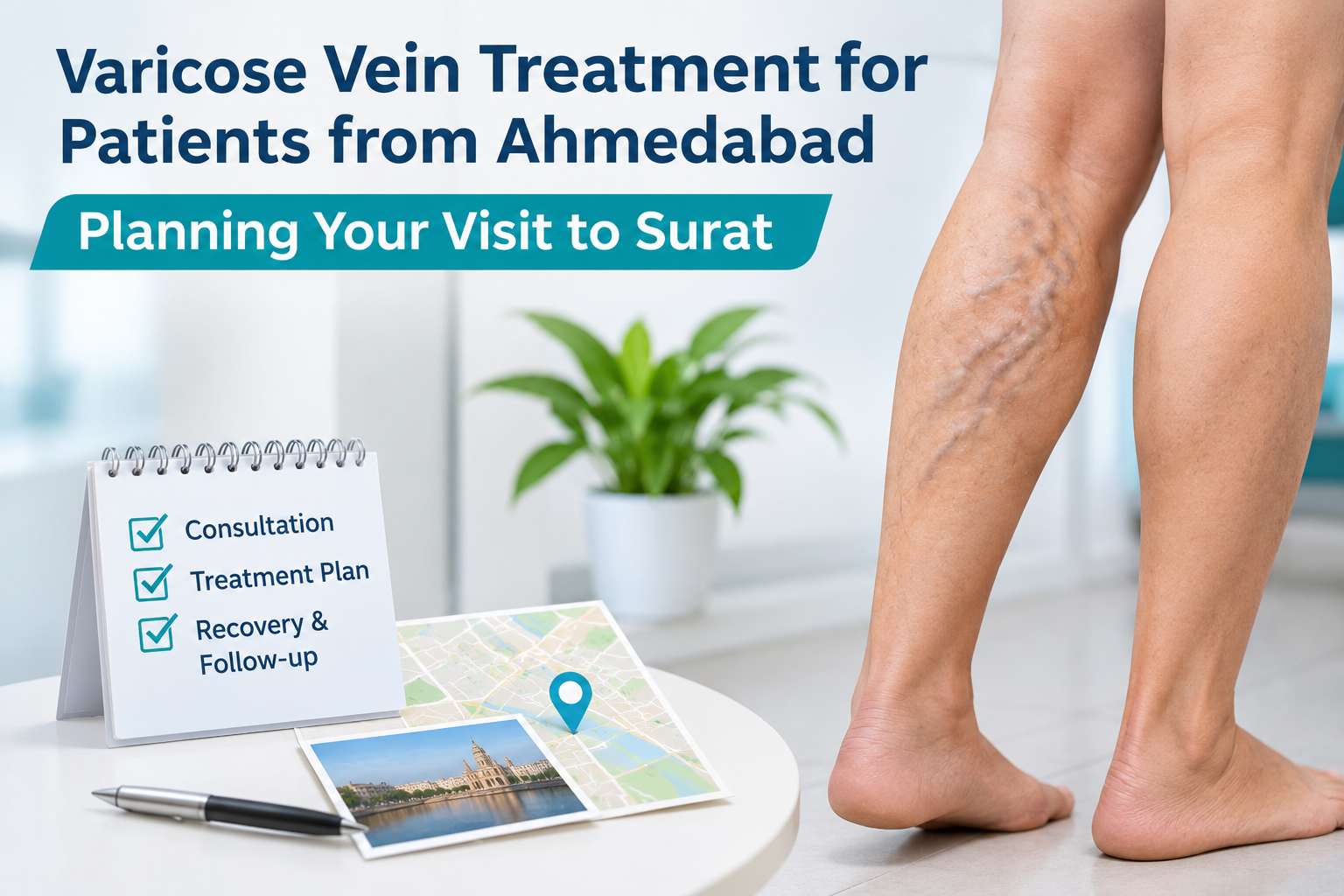
Varicose Vein Treatment for Patients from Ahmedabad: Planning Your Visit to Surat
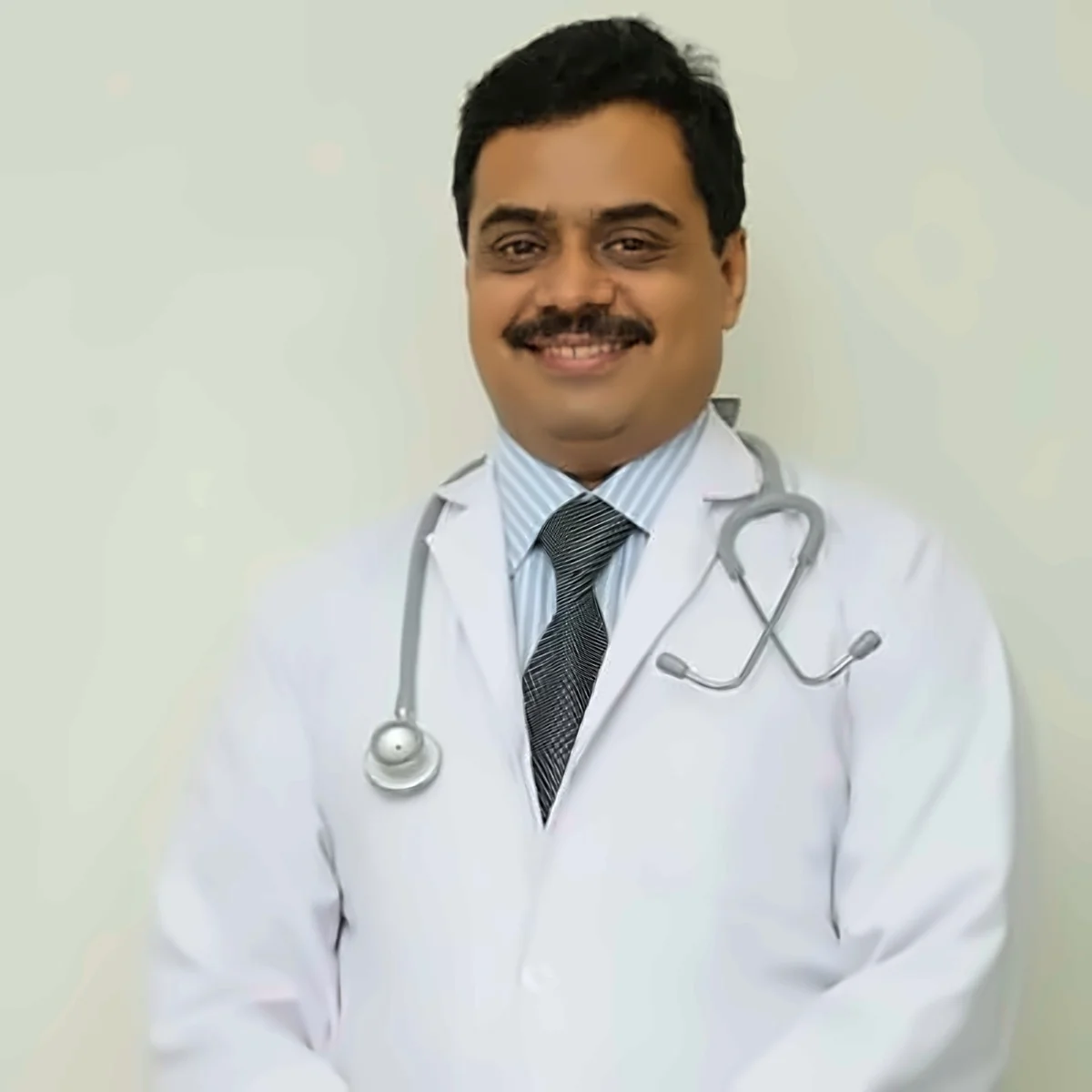
✔ Medically reviewed by Dr. Ashutosh Shah - M.B., M.S., M.Ch., D.N.B., Board-Certified Plastic & Cosmetic Surgeon, Director of Elegance Clinic, Surat (22+ years’ experience).
Varicose vein treatment involves assessing damaged vein valves, identifying abnormal blood flow and choosing a suitable procedure. Patients travelling from Ahmedabad to Surat usually begin with a consultation and Doppler ultrasound, followed by treatment planning. Recovery and follow-up requirements depend on the procedure, the number of affected veins and individual health conditions.
Enlarged, twisted veins can cause leg heaviness, aching, swelling and discomfort after prolonged standing. Some patients also experience itching, skin discolouration or recurring inflammation around the ankles.
People researching varicose vein treatment in ahmedabad may consider travelling for a specialist consultation when they want to explore minimally invasive treatment options or obtain another opinion.
However, not every patient needs surgery, and not every visible vein requires immediate treatment.
This guide explains the consultation process, procedure steps, recovery expectations, treatment costs and how to organise appointments when travelling for care.
Key Takeaways
-
A Doppler ultrasound helps identify faulty vein valves and abnormal blood flow.
-
Treatment may involve endovenous laser ablation, radiofrequency ablation, foam sclerotherapy or selected surgery.
-
Many minimally invasive procedures allow walking shortly afterward.
-
Some patients can return to light work within a few days, depending on the treatment.
-
Costs vary according to the procedure, affected veins and follow-up requirements.
-
Travel arrangements should account for the first consultation, treatment and postoperative review.
-
Long-distance travel after treatment should be discussed with the treating clinician.
What Is Varicose Vein Treatment and Who Is It For?
Varicose veins develop when valves inside superficial veins become weak or stop functioning correctly.
Healthy valves help blood travel upward toward the heart. When they fail, blood may flow backward and collect in the affected veins.
This process, called venous reflux, can cause enlarged or twisted veins beneath the skin.
Who May Need Treatment?
A specialist assessment may be appropriate for people experiencing:
-
Enlarged, bulging leg veins.
-
Persistent aching or heaviness.
-
Swelling around the ankles.
-
Itching or skin irritation.
-
Skin pigmentation or thickening.
-
Recurrent superficial vein inflammation.
-
Venous leg ulcers.
-
Symptoms that interfere with daily activities.
Not every patient with visible veins requires an operation.
For mild symptoms, conservative management may be reasonable. When significant reflux and troublesome symptoms are present, a procedure may offer better long-term symptom control.
Patients can explore the available approaches through Varicose and Vascular Surgery.
How Is Varicose Vein Treatment Done, Step by Step?
The treatment process usually begins with a clinical examination rather than directly scheduling surgery.
Step 1: Initial Consultation
The doctor reviews the patient's symptoms, medical history and previous vein treatments.
Important details include:
-
Duration of symptoms.
-
Previous blood clots.
-
Current medications.
-
Pregnancy history.
-
Existing medical conditions.
-
Previous vascular procedures.
-
Work and activity requirements.
The clinician also examines the affected legs for swelling, skin changes and visible abnormal veins.
Step 2: Duplex Doppler Ultrasound
A duplex Doppler scan helps assess blood flow through the superficial and deep veins.
It identifies which veins have reflux and whether the anatomy is suitable for a particular procedure.
This investigation is important because visible veins do not always reveal the underlying cause of symptoms.
Step 3: Selecting the Treatment
Depending on the scan findings, the doctor may recommend:
Endovenous laser ablation (EVLA): A thin catheter delivers laser energy inside an affected vein, causing it to close.
Radiofrequency ablation (RFA): Radiofrequency energy heats and closes a refluxing vein.
Foam sclerotherapy: A specialist solution is injected into selected abnormal veins to close them.
Ambulatory phlebectomy: Bulging superficial veins are removed through small skin openings.
Conventional surgery: Ligation or stripping may be considered when other approaches are unsuitable.
The choice depends on vein anatomy, symptoms, medical history and patient preferences.
For information about laser-based procedures, see Laser Varicose Vein Treatment.
Step 4: Preparing for the Procedure
The treating team explains the procedure, anaesthesia, expected recovery and possible complications.
Patients may receive instructions about:
-
Medicines.
-
Eating and drinking before treatment.
-
Compression stockings.
-
Transport arrangements.
-
Postoperative activity.
-
Follow-up appointments.
Do not stop prescribed medicines unless the treating clinician specifically advises it.
Step 5: Treatment Day
Many endovenous procedures are performed using local anaesthesia, sometimes with additional medication for comfort.
The doctor uses ultrasound guidance to position the treatment catheter.
The affected vein is then closed using the selected technique.
The duration varies according to the number of veins treated and the complexity of the procedure.
[Surgeon to confirm the typical procedure duration and observation period used in the clinic.]
Step 6: Postoperative Review
After treatment, patients receive instructions about walking, compression, medicines and wound care.
A follow-up examination or ultrasound may be recommended depending on the procedure and individual risk factors.
Patients travelling from another city should confirm these arrangements before scheduling treatment.
Quick Facts: Varicose Vein Treatment
| Detail | What patients should know |
|---|---|
| Procedure duration | Varies by technique and number of veins; [surgeon to confirm typical duration] |
| Anaesthesia | Often local for endovenous procedures; other techniques may differ |
| Hospital stay | Many procedures are outpatient or day-care; [surgeon to confirm clinic protocol] |
| Walking | Often encouraged soon after minimally invasive treatment |
| Back to desk work | Frequently within a few days, depending on the procedure and symptoms |
| Heavy physical work | May require additional restrictions |
| Follow-up visits | Depend on the treatment and clinical findings |
| Final appearance | Bruising and visible vein changes may take weeks or months to settle |
These are general expectations, not a guarantee of a particular recovery schedule.
What Does Recovery Look Like During the First Few Weeks?
Recovery depends on the treatment technique, the extent of venous disease and the patient's overall health.
First 24–48 Hours
After many minimally invasive procedures, walking is encouraged.
Patients may experience mild bruising, tightness or tenderness along the treated vein.
Compression stockings may be recommended depending on the procedure and clinician's assessment.
Days 3–7
Some patients return to routine desk work or light activities within a few days.
However, patients with extensive treatment, significant discomfort or physically demanding jobs may require additional recovery time.
The treating clinician should advise when to resume heavy lifting, strenuous exercise and prolonged standing.
Weeks 2–4
Bruising and local discomfort often continue to improve.
Some treated veins may feel firm or tender temporarily.
Follow-up may be required to assess healing and check for complications.
Following Months
The cosmetic appearance can continue improving as treated veins shrink or are gradually absorbed.
Residual superficial veins may sometimes require additional treatment.
Patients should understand that symptom relief and cosmetic improvement do not always occur at exactly the same time.
Which Factors Change the Cost of Varicose Vein Treatment?
The total cost depends on the type and extent of treatment required.
People comparing varicose vein treatment in ahmedabad with options elsewhere should request a written estimate based on Doppler findings rather than relying only on advertised package prices.
Main Cost Factors
1. Treatment technique
Laser ablation, radiofrequency ablation, foam sclerotherapy, phlebectomy and conventional surgery involve different equipment and procedural requirements.
2. One leg or both legs
Treating both legs or multiple abnormal veins can increase the total cost.
3. Severity of venous reflux
Complex or recurrent disease may require additional planning or treatment.
4. Diagnostic investigations
Duplex ultrasound and other tests may be billed separately.
5. Facility and anaesthesia charges
The procedure setting and anaesthesia requirements can affect the quotation.
6. Compression and follow-up
Stockings, medicines, follow-up scans and additional sessions may contribute to the final expense.
What Should Be Included in a Written Estimate?
Before confirming treatment, ask whether the quotation includes:
-
Consultation.
-
Doppler ultrasound.
-
Surgeon and procedure charges.
-
Anaesthesia.
-
Facility charges.
-
Compression stockings.
-
Medicines.
-
Follow-up visits.
-
Additional treatment sessions if required.
[Surgeon to provide a verified clinic-specific cost range, if approved for publication.]
An accurate quotation should be based on the recommended procedure and clearly identify any exclusions.
Varicose Vein Treatment in Ahmedabad: How Should Patients Plan Their Visit?
Patients considering treatment away from home should plan the consultation, procedure and recovery arrangements in advance.
A practical approach is to separate the process into three stages.
Before Travelling
Contact the clinic to confirm:
-
Whether an initial consultation can be arranged.
-
Whether existing Doppler reports can be reviewed.
-
Whether a fresh scan may be needed.
-
Which medical records to bring.
-
Whether treatment can be scheduled during the same visit.
-
Whether a companion is recommended.
An online consultation may help discuss symptoms and existing reports, but it cannot always replace a physical examination or an appropriate ultrasound assessment.
On the Consultation Day
The doctor may review the symptoms, examine the legs and recommend duplex Doppler ultrasound.
The treatment plan should be discussed only after the relevant findings are available.
If an intervention is appropriate, patients should ask whether it can be performed during the same trip or requires another appointment.
Before Returning Home
Patients should confirm:
-
When they are medically fit to travel.
-
Whether compression is required.
-
Whether prolonged sitting should be interrupted.
-
What symptoms require urgent attention.
-
Whether a follow-up scan is necessary.
-
Who to contact if a problem develops after returning home.
Long journeys after venous procedures require individual advice because immobility and patient-specific risk factors can increase concern about blood clots.
Can Treatment Be Completed in One Visit?
Sometimes, a consultation and procedure can be organised within a short treatment window.
However, same-day treatment is not guaranteed.
The need for investigations, procedure availability, medical fitness and follow-up requirements determines the schedule.
Patients should avoid making non-refundable travel arrangements until the clinic confirms the plan.
How Do You Know Whether a Vein Lump Is Really a Varicose Vein?
Not every bluish lump or enlarged vein is an ordinary varicose vein.
A swelling present since childhood may represent a vascular malformation rather than acquired venous reflux.
These conditions can require different investigations and treatments.
For more information, read Vascular Malformation or Varicose Vein?.
Correct diagnosis matters because standard varicose-vein treatment may not be suitable for a congenital vascular malformation.
Which Questions Should You Ask Before Deciding?
Patients considering varicose vein treatment in ahmedabad or travelling for specialist care should ask clear questions before booking a procedure.
Useful questions include:
-
Which veins are causing my symptoms?
-
What does my Doppler ultrasound show?
-
Is a procedure necessary, or can symptoms be managed conservatively?
-
Why is this treatment recommended over other options?
-
What are the possible risks and complications?
-
Will I need compression stockings?
-
How soon can I return to work?
-
When can I safely travel home?
-
How many follow-up visits are expected?
-
What is included in the written cost estimate?
A good consultation should explain both the benefits and limitations of treatment.
Consulting Dr. Ashutosh Shah at Elegance Clinic
Dr. Ashutosh Shah, MBBS, MS, MCh, DNB, is a Plastic, Reconstructive and Cosmetic Surgeon associated with Elegance Clinic.
Patients with visible vein concerns, leg swelling or suspected vascular abnormalities should receive an appropriate clinical evaluation and be directed to the relevant vascular expertise when required.
Before planning treatment, patients should confirm the availability of the proposed vein procedure, the qualifications of the treating clinician and the required imaging arrangements.
To enquire about consultation availability, visit the Elegance Clinic Contact Page.
The consultation should establish the diagnosis, review suitable options and clarify the expected recovery and follow-up schedule.
Conclusion
Varicose veins can cause discomfort, swelling and visible changes that affect everyday activities.
Treatment options include compression therapy, endovenous laser ablation, radiofrequency ablation, foam sclerotherapy and selected surgery.
For patients travelling for care, the most important steps are confirming the diagnosis, reviewing Doppler findings, understanding the recommended procedure and arranging safe follow-up.
Varicose vein treatment in ahmedabad should be compared on clinical suitability, specialist experience, treatment safety and continuity of care not price alone.
An informed decision begins with a proper assessment and a clear plan for treatment, recovery and travel.
Frequently Asked Questions
How Long Does Varicose Vein Treatment Take on the Day?
How Many Follow-Up Visits Are Needed?
Can the First Consultation Be Online?
When Can I Travel After Varicose Vein Treatment?
When Will the Final Result Show?
About the Author