
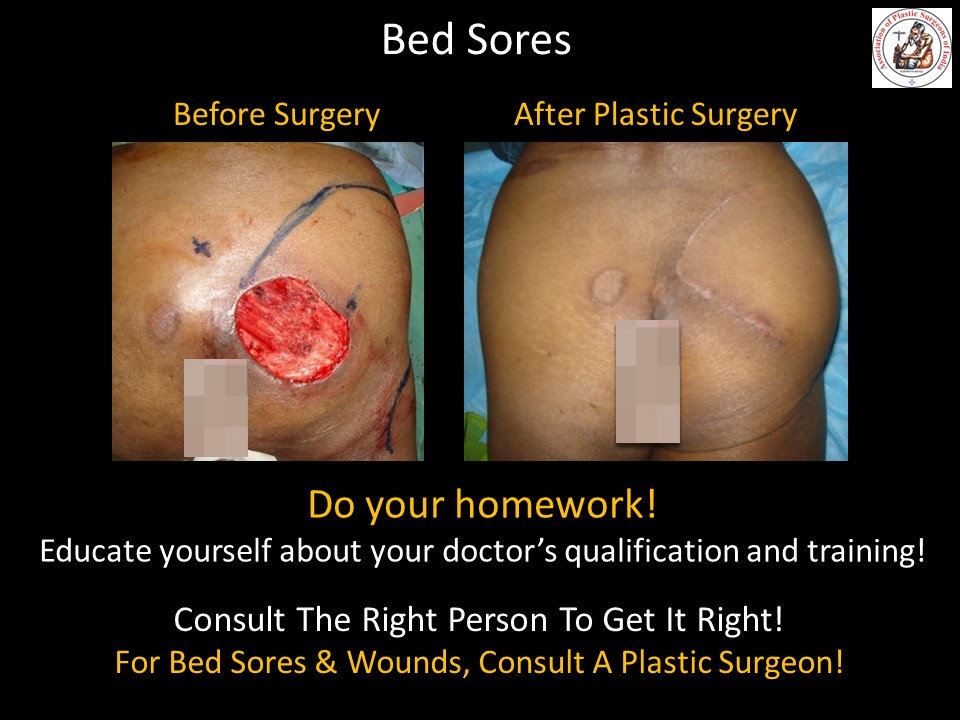
Bed Sores
Bed sores, also known as pressure sores, pressure ulcers, or decubitus ulcers, are injuries to the skin and underlying tissues caused by prolonged pressure over a particular area of the body. They commonly develop in patients who remain bedridden, wheelchair-bound, or unable to change their body position for long periods.
Bed sores are a serious medical condition because they can gradually worsen and become deep wounds involving muscles, fat, and even bones. In severe cases, advanced bed sores may require surgical treatment and reconstruction by a plastic surgeon.
What Causes Bed Sores?
Bed sores occur when continuous pressure reduces blood supply to the skin and surrounding tissues. Without proper blood circulation, the skin does not receive enough oxygen and nutrients, leading to tissue damage and skin breakdown.
These ulcers most commonly develop over bony prominences, where the skin is thinner and pressure is greater.
Common Areas Affected Include:
- Heels
- Ankles
- Hips
- Sacrum (lower back/tailbone area)
- Elbows
- Shoulder blades
- Back of the head
Patients who cannot move independently are at the highest risk because the same body areas remain under pressure for extended periods.
Who is at Risk of Developing Bed Sores?
Bed sores are commonly seen in:
- Elderly patients
- Paralysis patients
- Patients recovering after major surgery
- Stroke patients
- Spinal cord injury patients
- ICU patients
- People confined to bed or wheelchair for long durations
- Patients with severe weakness or chronic illness
Individuals with poor nutrition, diabetes, poor blood circulation, or reduced sensation are also more vulnerable to pressure ulcers.
Early Signs of Bed Sores
Early identification is very important because treatment becomes easier before the wound deepens.
Common Warning Signs Include:
- Redness over pressure areas
- Skin discoloration
- Swelling
- Tenderness or pain
- Warmth in the affected area
- Hardening or softening of skin
- Blisters or open wounds
In dark skin tones, the affected area may appear purple, blue, or darker than surrounding skin.
Ignoring early symptoms can allow the sore to progress into a severe wound.
Stages of Bed Sores
Bed sores are generally classified into different stages depending on the severity of tissue damage.
Stage 1
The skin remains intact but appears red or discolored. There may be pain, warmth, or irritation.
Stage 2
The outer skin layer breaks down, causing blisters, abrasions, or shallow ulcers.
Stage 3
The wound extends deeper into the fatty tissue beneath the skin.
Stage 4
The sore becomes very deep and may expose muscles, tendons, or bones. These wounds are serious and often require surgical management.
Why Bed Sores Should Not Be Ignored
Untreated bed sores can lead to major complications. As the wound deepens, the risk of infection increases significantly.
Possible Complications Include:
- Severe infection
- Pus formation
- Bone infection (osteomyelitis)
- Tissue death
- Fever and sepsis
- Delayed healing
- Chronic pain
- Foul-smelling wounds
Deep pressure sores can severely affect the patient’s overall health and quality of life.
Prevention of Bed Sores
Preventing bed sores is always better than treating them. Proper nursing care and regular movement play a very important role.
Important Prevention Measures:
- Changing body position frequently
- Using air mattresses or pressure-relief mattresses
- Keeping the skin clean and dry
- Maintaining proper nutrition and hydration
- Avoiding prolonged pressure on one area
- Using cushions or padding for support
- Daily skin inspection in high-risk patients
Caregivers and family members should remain alert to early skin changes in bedridden patients.
Treatment of Bed Sores
Treatment depends on the stage and severity of the pressure sore.
Conservative Treatment
Early-stage bed sores may improve with:
- Pressure relief
- Wound dressing
- Antibiotics if infection is present
- Proper nutrition
- Regular wound cleaning
- Special mattresses and positioning support
However, deep and advanced bed sores often do not heal with simple dressings alone.
Surgical Treatment for Deep Bed Sores
Severe bed sores may require surgical reconstruction. Deep ulcers with exposed tissues or recurrent infections are commonly treated by plastic surgeons using reconstructive procedures.
Flap Reconstruction Surgery
In advanced cases, the damaged tissue is cleaned surgically, and the wound is reconstructed using nearby healthy tissue called a flap cover.
Flap surgery helps:
- Cover exposed bone or deep tissue
- Improve blood supply to the area
- Promote faster healing
- Reduce chances of recurrent ulcers
- Improve patient comfort and mobility
Plastic surgeons carefully plan the flap depending on the size, location, and severity of the wound.
Recovery After Bed Sore Surgery
Recovery after flap reconstruction requires proper post-operative care and strict pressure management.
Patients may need:
- Special beds or mattresses
- Frequent repositioning
- Wound care follow-up
- Nutritional support
- Physiotherapy
- Infection monitoring
Healing time varies depending on the patient’s overall health and wound condition.
Importance of Proper Medical Care
Many people underestimate bed sores in the early stages. Small pressure injuries can quickly progress into large infected wounds if not treated properly.
Early consultation with a qualified doctor can help prevent serious complications. Patients with deep or non-healing bed sores should seek evaluation from a plastic surgeon experienced in wound reconstruction.
Emotional and Physical Impact
Bed sores not only affect physical health but also impact emotional well-being. Chronic wounds can cause discomfort, foul smell, limited mobility, and dependence on caregivers. This often creates stress for both patients and family members.
Timely treatment and proper wound management can significantly improve comfort, healing, and quality of life.
Final Words
Bed sores are a serious condition caused by prolonged pressure over the skin and underlying tissues. They commonly occur over bony areas such as the heels, hips, ankles, and sacrum in bedridden or immobile patients. Early detection and preventive care are extremely important to avoid complications.
While mild pressure sores may heal with conservative treatment, deep bed sores often require surgical reconstruction using flap cover techniques performed by a qualified plastic surgeon.
Proper care, regular repositioning, nutrition, and timely medical attention can help prevent severe complications and improve recovery outcomes.