
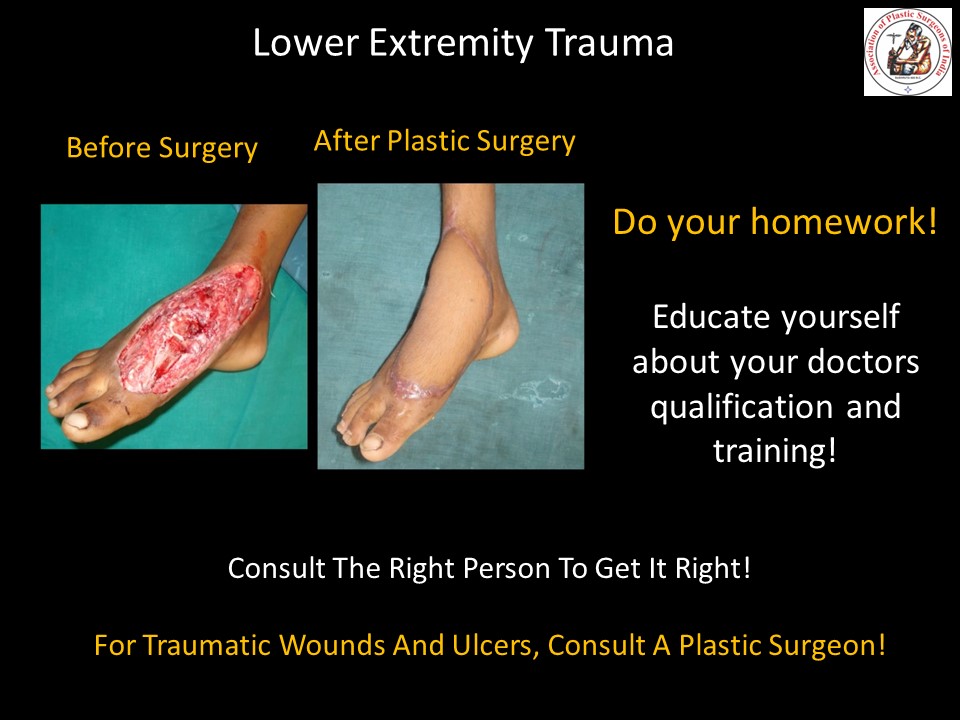
Lower Extremity Trauma
Lower extremity trauma refers to serious injuries involving the legs, knees, ankles, feet, and surrounding soft tissues. These injuries may occur due to road traffic accidents, industrial injuries, falls, sports injuries, crush trauma, burns, or high-energy accidents. Depending on the severity, lower limb trauma can involve skin, muscles, tendons, nerves, blood vessels, and bones.
Severe lower extremity injuries can lead to major functional problems, difficulty walking, infection, tissue loss, and even risk of amputation if not treated properly. Modern plastic and reconstructive surgery now plays a very important role in limb salvage and restoration of function after traumatic leg injuries.
What is Lower Extremity Trauma?
Lower extremity trauma includes injuries affecting:
- Thigh
- Knee
- Leg
- Ankle
- Foot
- Heel
These injuries may range from simple wounds to complex open fractures with extensive soft tissue loss.
Common traumatic injuries include:
- Open fractures
- Degloving injuries
- Crush injuries
- Tendon injuries
- Nerve injuries
- Skin and muscle loss
- Exposed bones or implants
- Vascular injuries
Because the lower limbs are essential for standing, walking, and weight-bearing, proper reconstruction is extremely important for restoring mobility and quality of life.
Common Causes of Lower Limb Trauma
Lower extremity injuries commonly occur because of:
- Road traffic accidents
- Motorcycle accidents
- Industrial machine injuries
- Heavy object crush injuries
- Falls from height
- Sports trauma
- Burn injuries
- Agricultural accidents
High-energy trauma can cause extensive damage to both bone and soft tissues simultaneously.
Why Lower Extremity Trauma Can Be Serious
The skin and soft tissues around the lower leg and ankle are relatively thin compared to other body areas. Because of this, severe trauma may easily expose:
- Bone
- Tendons
- Joints
- Blood vessels
- Orthopedic implants
Once bone or hardware becomes exposed, the risk of infection increases significantly. In severe untreated cases, chronic infection, non-healing wounds, or limb loss may occur.
Symptoms of Severe Lower Extremity Trauma
Symptoms vary depending on the severity and type of injury.
Common Symptoms Include:
- Severe pain
- Open wounds
- Bleeding
- Swelling
- Bone exposure
- Difficulty walking
- Loss of movement
- Numbness
- Tissue loss
- Deformity of the leg or foot
Some patients may also develop compartment syndrome, infection, or vascular compromise requiring emergency treatment.
Initial Management of Lower Extremity Trauma
Early treatment is extremely important to preserve limb function.
Initial management usually includes:
- Emergency stabilization
- Bleeding control
- Cleaning contaminated wounds
- Fracture stabilization
- Infection prevention
- Assessment of blood circulation and nerve function
Doctors carefully evaluate:
- Bone injury
- Soft tissue damage
- Blood vessel status
- Nerve function
- Viability of tissues
In complex trauma cases, plastic surgeons often work together with orthopedic and vascular surgeons as part of a multidisciplinary team.
Importance of Debridement
One of the most important steps in lower extremity trauma management is debridement, which means removal of:
- Dead tissue
- Contaminated tissue
- Foreign material
- Infected tissue
Proper debridement helps:
- Reduce infection risk
- Promote wound healing
- Prepare the wound for reconstruction
Some severe injuries may require multiple debridement procedures before definitive reconstruction is performed.
Role of Plastic Surgery in Lower Extremity Trauma
Plastic and reconstructive surgeons play a major role in:
- Soft tissue reconstruction
- Wound coverage
- Limb salvage
- Functional restoration
- Cosmetic improvement
Modern reconstructive techniques have greatly improved the ability to save injured limbs that previously required amputation.
Reconstruction Options in Lower Extremity Trauma
The type of reconstruction depends on:
- Size of the wound
- Tissue loss
- Bone exposure
- Blood supply
- Location of injury
- Presence of infection
Skin Grafting
Small wounds with healthy tissue may be treated using skin grafting.
Skin grafts help:
- Cover raw areas
- Promote healing
- Reduce infection risk
However, exposed bone or tendons usually require more advanced reconstruction.
Flap Reconstruction
Complex wounds often require flap surgery.
Flaps involve transferring healthy tissue with its blood supply to cover exposed structures.
Types of Flaps Include:
- Local flaps
- Muscle flaps
- Fasciocutaneous flaps
- Free flaps (microsurgical tissue transfer)
These procedures provide:
- Durable wound coverage
- Improved blood supply
- Protection for bones and implants
- Better healing
Microsurgical free tissue transfer has revolutionized limb salvage in severe lower extremity trauma.
Limb Salvage vs Amputation
One of the most important decisions in severe trauma is whether the limb can be salvaged.
Factors considered include:
- Blood supply
- Nerve injury
- Extent of tissue damage
- Infection severity
- Functional recovery potential
- Patient’s overall health
Modern reconstructive surgery has significantly improved limb salvage success in many severe injuries.
Recovery After Reconstruction
Recovery after lower extremity reconstruction may take weeks to months depending on injury severity.
Patients may require:
- Hospitalization
- Physiotherapy
- Wound care
- Multiple surgeries
- Walking support
- Rehabilitation
Physical therapy is very important for restoring:
- Muscle strength
- Joint movement
- Walking ability
- Balance
Recovery is gradual and requires patience and proper follow-up.
Complications of Lower Extremity Trauma
Severe lower limb injuries may lead to complications such as:
- Infection
- Delayed wound healing
- Chronic osteomyelitis
- Bone non-union
- Nerve damage
- Scarring
- Joint stiffness
- Functional disability
Early treatment and expert reconstructive care help reduce these complications.
Psychological Impact of Trauma
Traumatic leg injuries can affect emotional health in addition to physical function. Patients may experience:
- Anxiety
- Fear of disability
- Stress related to prolonged recovery
- Reduced confidence
- Difficulty returning to normal activities
Support from family, rehabilitation specialists, and surgeons is important during recovery.
Modern Advances in Lower Extremity Reconstruction
Recent advances in reconstructive surgery have improved outcomes significantly.
Modern techniques include:
- Microsurgery
- Perforator flaps
- Negative pressure wound therapy
- Advanced wound care
- Functional muscle transfer
- Vascularized bone grafts
These advancements help improve:
- Limb preservation
- Functional recovery
- Healing rates
- Overall quality of life
Final Words
Lower extremity trauma includes serious injuries affecting the legs, ankles, feet, and surrounding soft tissues. Severe trauma may result in exposed bones, tissue loss, infection, and difficulty walking. Early treatment and proper reconstructive surgery are extremely important for preserving limb function and preventing complications.
Plastic and reconstructive surgeons play a major role in limb salvage using advanced techniques such as skin grafts, flap reconstruction, and microsurgery. With timely treatment and proper rehabilitation, many patients can regain mobility, improve function, and return to daily activities successfully.