
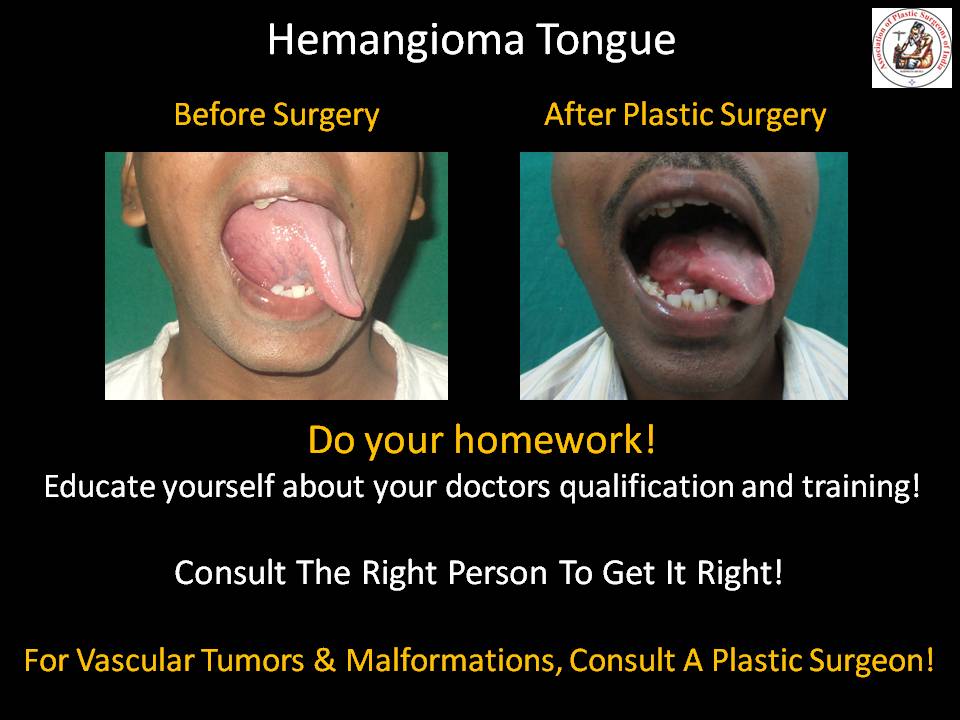
Hemangioma Tongue
Hemangioma of the tongue is a benign vascular lesion caused by an abnormal collection of blood vessels within the tongue tissue. Although hemangiomas are non-cancerous, they can create significant functional and cosmetic problems depending on their size and location. The tongue is one of the common sites for vascular lesions in the oral cavity because of its rich blood supply.
Tongue hemangiomas may be present since birth or may appear during infancy and childhood. Some lesions remain small and stable, while others may gradually enlarge over time. In certain cases, large hemangiomas can interfere with speaking, chewing, swallowing, and even breathing. Early evaluation and proper treatment are important to avoid complications and improve quality of life.
What is a Tongue Hemangioma?
A hemangioma is a vascular growth made up of abnormal blood vessels. In the tongue, these lesions usually appear as soft, bluish-red, purple, or dark-colored swellings.
The lesion may involve:
- The tip of the tongue
- The side borders
- The undersurface of the tongue
- The entire tongue in severe cases
Hemangiomas can vary greatly in size. Some are very small and cause minimal symptoms, while larger lesions may create functional difficulties and recurrent bleeding.
Types of Hemangioma
Tongue hemangiomas are commonly classified into:
Capillary Hemangioma
These are made up of small blood vessels and are usually more superficial.
Cavernous Hemangioma
These contain larger dilated blood vessels and may extend deeper into tongue tissues. Cavernous lesions are often larger and more complex.
Symptoms of Tongue Hemangioma
The symptoms depend on the size, depth, and location of the lesion.
Common Symptoms Include:
- Bluish or reddish swelling on the tongue
- Soft compressible mass
- Difficulty speaking
- Difficulty chewing food
- Swallowing discomfort
- Recurrent bleeding
- Pain or irritation after trauma
- Increase in lesion size over time
Some patients may accidentally bite the lesion while eating, leading to bleeding episodes.
Large tongue hemangiomas may also interfere with oral hygiene and normal tongue movement.
Why Tongue Hemangiomas Need Attention
The tongue is a highly active muscular organ involved in speech, swallowing, chewing, and taste. Because of constant movement and frequent contact with teeth, tongue hemangiomas are vulnerable to repeated trauma.
Untreated lesions may lead to:
- Recurrent bleeding
- Ulceration
- Difficulty eating
- Speech problems
- Cosmetic concerns
- Anxiety and embarrassment
In severe cases, large lesions may affect daily activities and reduce quality of life.
Diagnosis of Tongue Hemangioma
A proper medical evaluation is important because vascular lesions should be differentiated from other tongue swellings.
Doctors may perform:
- Clinical examination
- Doppler ultrasonography
- MRI scan
- Imaging studies for blood flow assessment
Color Doppler ultrasound is commonly used to evaluate the vascular nature of the lesion and guide treatment planning.
Treatment Options for Tongue Hemangioma
Treatment depends on:
- Size of the lesion
- Location
- Symptoms
- Patient age
- Functional problems
- Risk of bleeding
Small asymptomatic lesions may sometimes only require observation, while larger or symptomatic hemangiomas usually need active treatment.
Laser Treatment for Tongue Hemangioma
Laser therapy has become one of the most advanced and effective treatments for vascular lesions of the tongue.
Different laser systems such as:
- Nd:YAG laser
- Diode laser
- CO2 laser
- KTP laser
are used depending on the depth and size of the lesion.
Benefits of Laser Treatment:
- Minimal bleeding
- Better precision
- Reduced damage to surrounding tissues
- Faster healing
- Preservation of tongue function
- Improved cosmetic outcome
Nd:YAG laser is considered particularly effective for vascular lesions because it can coagulate blood vessels while preserving tongue tissue.
CO2 laser is also commonly used in oral soft tissue surgery because of its ability to provide excellent cutting and coagulation with reduced bleeding.
Sclerotherapy
Sclerotherapy involves injecting a medicine into the vascular lesion to shrink abnormal blood vessels.
It may be used:
- Alone
- Along with laser treatment
- In selected deeper lesions
This treatment can reduce lesion size and improve symptoms without major surgery.
Surgical Treatment
Surgical excision may be required in:
- Large lesions
- Localized vascular masses
- Recurrent lesions
- Cases not responding to conservative methods
Surgery aims to remove the lesion while preserving tongue function and appearance. Careful planning is important because the tongue contains important muscles and blood vessels.
Recovery After Treatment
Recovery depends on the treatment method used and the size of the lesion.
Patients may experience:
- Mild swelling
- Temporary discomfort
- Difficulty eating spicy or hot foods for a few days
- Mild soreness
Most patients recover gradually with proper post-treatment care and follow-up.
Doctors may advise:
- Soft diet temporarily
- Good oral hygiene
- Avoiding trauma to the treated area
- Regular follow-up visits
Importance of Early Treatment
Early diagnosis and treatment can help prevent complications such as:
- Progressive enlargement
- Recurrent bleeding
- Speech difficulty
- Swallowing problems
- Functional impairment
Timely treatment also improves cosmetic and psychological outcomes.
Emotional and Psychological Impact
Visible oral lesions can affect confidence and social interaction. Patients may feel uncomfortable while speaking or eating in public due to fear of bleeding or visible swelling.
Successful treatment often improves:
- Confidence
- Comfort during eating and speaking
- Social interaction
- Overall quality of life
Modern Advances in Treatment
Advancements in laser technology and minimally invasive vascular treatments have significantly improved outcomes for tongue hemangioma patients.
Modern laser procedures now offer:
- Better precision
- Less bleeding
- Faster healing
- Improved preservation of tongue movement and function
Several clinical reports have shown successful treatment of tongue hemangiomas using laser therapy with excellent functional and cosmetic outcomes.
Final Words
Hemangioma of the tongue is a benign vascular lesion that can cause cosmetic and functional problems depending on its size and location. Patients may experience swelling, bleeding, speech difficulty, and discomfort during eating or swallowing.
Modern treatment options such as laser therapy, sclerotherapy, and surgical excision can effectively manage tongue hemangiomas while preserving tongue function and appearance. Early diagnosis and treatment by a qualified plastic surgeon or vascular specialist are important for achieving safe and successful outcomes.