
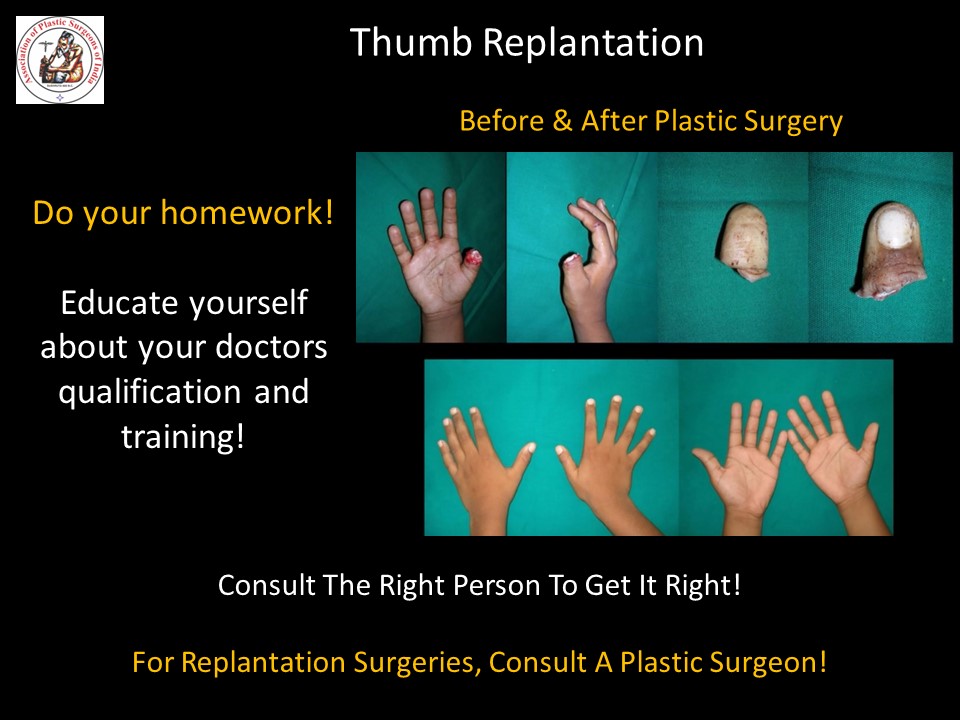
Thumb Replantation
Thumb replantation is a complex microsurgical procedure performed to reattach a completely amputated thumb after traumatic injury. The thumb plays a vital role in hand function, grip strength, pinch, and fine movements. Because of its importance, surgeons make every possible effort to save and reattach an amputated thumb whenever feasible.
Modern microsurgery has significantly improved the success rates of thumb replantation. With advanced surgical techniques, many patients can regain useful function, sensation, and appearance after successful thumb reattachment.
What is Thumb Replantation?
Thumb replantation refers to surgical reattachment of a completely severed thumb using microsurgical techniques. During the procedure, surgeons reconnect:
- Bones
- Tendons
- Arteries
- Veins
- Nerves
- Skin and soft tissues
The aim is not only survival of the thumb but also restoration of useful hand function.
Why is the Thumb So Important?
The thumb contributes significantly to hand function and daily activities.
It is essential for:
- Grasping objects
- Pinch movements
- Writing
- Holding tools
- Buttoning clothes
- Fine motor activities
Loss of the thumb can severely affect hand performance and independence. Because of this, thumb amputations are considered one of the strongest indications for replantation surgery.
Common Causes of Thumb Amputation
Thumb injuries may occur due to:
- Industrial machine accidents
- Road traffic accidents
- Crush injuries
- Sharp cutting injuries
- Agricultural injuries
- Power tool accidents
- Workplace trauma
The type of injury greatly affects the success of replantation.
Types of Thumb Injuries
Clean Cut Injuries
Sharp injuries caused by blades or machines usually have better outcomes because tissues remain relatively preserved.
Crush Injuries
Heavy crushing damages blood vessels, nerves, and soft tissues extensively, making surgery more difficult.
Avulsion Injuries
In avulsion injuries, tissues are pulled apart forcefully, causing severe vessel and nerve damage. These injuries are technically more challenging.
Emergency Care After Thumb Amputation
Proper handling of the amputated thumb is extremely important.
Immediate Steps Include:
- Control bleeding with clean pressure dressing
- Wrap the amputated thumb in moist sterile gauze
- Place it in a clean plastic bag
- Keep the bag on ice indirectly
- Avoid direct contact with ice
- Reach a microsurgical center quickly
Early transportation improves the chances of successful replantation.
Importance of Ischemia Time
The amputated thumb survives only for a limited time without blood supply.
Successful replantation depends on:
- Time since injury
- Amount of tissue damage
- Temperature preservation
- Mechanism of injury
Early surgery provides better chances of tissue survival and functional recovery.
Evaluation Before Surgery
Doctors evaluate:
- Level of amputation
- Tissue condition
- Blood vessel damage
- Bone injury
- Nerve injury
- Patient’s overall health
Not every amputated thumb is suitable for replantation. However, surgeons usually attempt thumb reattachment whenever technically possible because of its major functional importance.
Thumb Replantation Surgery
Thumb replantation is performed using advanced microsurgical techniques under magnification.
Surgical Steps May Include:
- Cleaning and debridement
- Bone shortening and fixation
- Tendon repair
- Artery repair
- Vein repair
- Nerve repair
- Skin closure or grafting
Tiny blood vessels and nerves are repaired using microsutures under an operating microscope.
Microsurgery in Thumb Replantation
Microsurgery is one of the most important parts of thumb replantation.
Surgeons use:
- Operating microscopes
- Specialized microsurgical instruments
- Fine sutures
- Delicate vascular techniques
These techniques help restore blood circulation and nerve continuity.
Recovery After Thumb Replantation
Recovery after replantation takes time and requires patience.
Patients may need:
- Hospital monitoring
- Blood circulation checks
- Medications to improve blood flow
- Physiotherapy
- Splinting
- Rehabilitation exercises
Swelling, stiffness, and temporary numbness are common during recovery.
Rehabilitation and Physiotherapy
Rehabilitation is extremely important after thumb replantation.
Therapy helps improve:
- Thumb movement
- Grip strength
- Joint flexibility
- Sensation
- Hand coordination
Recovery may continue for several months or longer depending on injury severity.
Possible Complications
Like all major microsurgical procedures, thumb replantation may have complications such as:
- Blood vessel blockage
- Infection
- Poor circulation
- Tissue loss
- Stiffness
- Reduced sensation
- Delayed healing
Close monitoring after surgery is very important.
Functional Outcomes
The success of thumb replantation is measured not only by survival of the thumb but also by functional recovery.
Many patients regain:
- Useful pinch function
- Ability to hold objects
- Protective sensation
- Improved hand appearance
However, recovery varies depending on:
- Injury type
- Age
- Tissue damage
- Rehabilitation efforts
When Replantation May Not Be Possible
In some severe injuries, replantation may not be feasible because of:
- Extensive crushing
- Severe contamination
- Long ischemia time
- Massive tissue destruction
- Life-threatening associated injuries
In such cases, reconstructive alternatives may be discussed.
Alternatives if Replantation Fails
If thumb replantation is not possible, reconstructive procedures may include:
- Toe-to-thumb transfer
- Pollicization procedures
- Prosthetic reconstruction
- Soft tissue reconstruction
Modern reconstructive microsurgery offers several options for restoring hand function.
Emotional and Psychological Impact
Thumb amputation can affect both physical and emotional well-being.
Patients may experience:
- Anxiety
- Fear about hand function
- Loss of confidence
- Difficulty returning to work
Successful reconstruction often improves confidence and quality of life significantly.
Importance of Specialized Microsurgical Centers
Thumb replantation should ideally be performed at centers with:
- Microsurgical expertise
- Specialized hand surgeons
- Advanced operating microscopes
- Dedicated rehabilitation support
Experienced microsurgical teams improve the chances of successful outcomes.
Final Words
Thumb replantation is an advanced microsurgical procedure performed to reattach a severed thumb after traumatic injury. Because the thumb contributes greatly to hand function, surgeons usually attempt replantation whenever possible.
Modern microsurgical techniques now allow successful restoration of blood supply, nerve function, and hand utility in many patients. Early medical attention, proper preservation of the amputated thumb, timely surgery, and dedicated rehabilitation are essential for achieving the best functional outcomes.