
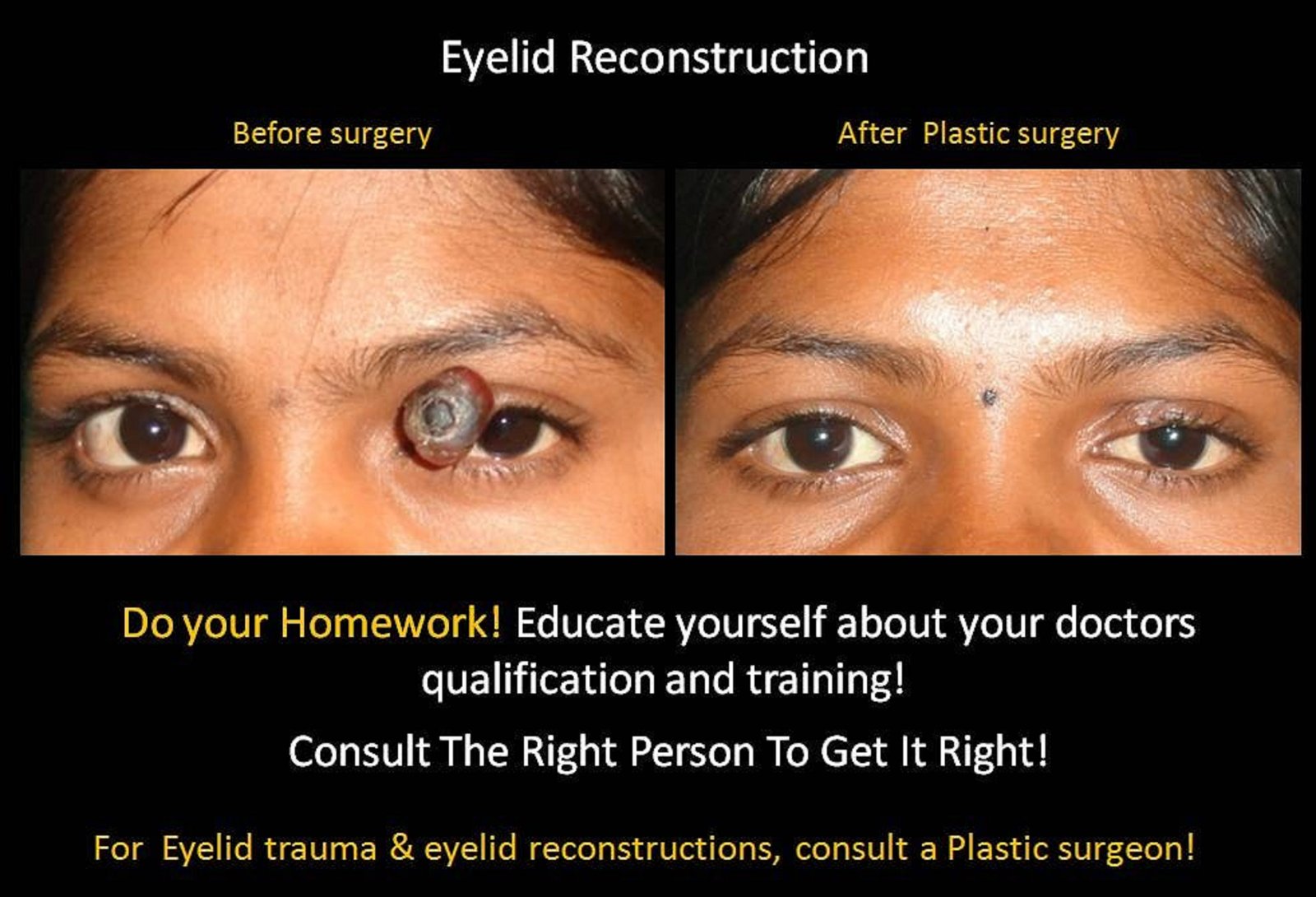
Eyelid Reconstruction
Eyelid reconstruction surgery in Surat is a specialised plastic surgery procedure that rebuilds part or all of an eyelid after it has been damaged or removed because of skin cancer, injury, burns or a birth defect. Its first aim is to protect the eye and keep vision safe; its second aim is to restore a natural appearance. Dr. Ashutosh Shah performs eyelid reconstruction at Elegance Clinic, Surat.
Why Is Eyelid Reconstruction Important?
The eyelids are not just about appearance. They close to protect the eye, spread tears across its surface with every blink, and keep the cornea (the clear front of the eye) moist. When part of an eyelid is missing or pulled out of position, the eye can become dry, irritated, infected and, in severe cases, the cornea can be damaged permanently.
Each eyelid has two layers: an outer layer of skin and muscle, and an inner layer of firm support tissue (the tarsal plate) lined by a moist membrane (conjunctiva). A successful reconstruction rebuilds both layers so the new eyelid is stable, moves properly and sits correctly against the eye.
When Is Eyelid Reconstruction Needed?
- After skin cancer removal: basal cell carcinoma is the most common eyelid cancer. Once the tumour is removed with a safe margin, the eyelid needs to be rebuilt-see post-cancer reconstruction and facial tumour removal.
- After injury: cuts and tears from road accidents, falls, dog bites or industrial injuries, especially those involving the eyelid margin or tear duct.
- After burns: scarring that pulls the eyelid outward (cicatricial ectropion) and stops the eye from closing.
- Eyelid malposition: lids that turn outward (ectropion) or inward (entropion), or that sag after ageing, facial palsy or previous surgery.
- Birth defects: such as eyelid coloboma, where part of the lid is missing from birth.
Related eyelid problems are covered in our guides on droopy eyelids (ptosis) and baggy eyelids.
How Is an Eyelid Reconstructed?
The technique depends mainly on how much of the eyelid is missing, whether it is the upper or lower lid, and the quality of the surrounding skin.
| Size of defect | Common approach |
|---|---|
| Small (up to about one-quarter to one-third of the lid width) | Edges brought together and stitched directly in layers |
| Moderate | Local flaps that move nearby skin and tissue into the gap, such as a semicircular rotation flap |
| Large or full-thickness | Two-layer reconstruction using flaps from the opposite eyelid or cheek, combined with grafts of skin or support tissue |
| Skin-only loss or burn scarring | Release of scar tissue and a skin graft, often taken from the upper eyelid, behind the ear or the inner arm |
Some large defects need a two-stage operation, where a flap is kept attached for a few weeks to supply blood before it is divided in a second, shorter procedure. Dr. Shah will explain whether this is needed in your case.
When the reconstruction follows cancer removal, it is important that the tumour margins are confirmed clear before or during reconstruction, so the cancer is not left behind under the new eyelid.
What to Expect: Surgery and Recovery
- Assessment: eyelid examination, photographs and, for cancers, review of the biopsy report
- Anaesthesia: local anaesthesia for smaller repairs; general anaesthesia for larger reconstructions
- Surgery time: usually about 1-3 hours, depending on complexity
- Stay: most patients go home the same day
- Stitches: usually removed in about 5-7 days
- Swelling and bruising: settle over about 1-2 weeks
- Eye care: lubricating drops or ointment to protect the eye while healing
- Final appearance: scars and lid position continue to improve over several months
Risks of Eyelid Reconstruction
Like any surgery, eyelid reconstruction carries risks. These include infection, bleeding, a notch or irregularity at the lid edge, the eyelid turning slightly in or out, eyelash problems, dryness of the eye and visible scarring. Some patients need a minor second procedure to fine-tune the result. When reconstruction follows cancer surgery, regular follow-up is also needed to check that the cancer has not returned.
Why See a Plastic Surgeon for Eyelid Reconstruction?
Dr. Ashutosh Shah, plastic surgeon for eyelid reconstruction in Surat- Reconstructive training: Dr. Ashutosh Shah (M.B., M.S., M.Ch., D.N.B. - Plastic Surgery) is trained in flap and graft techniques used to rebuild the face after cancer, trauma and burns.
- 22+ years of experience: practising in Surat since 2004.
- Function first, then appearance: protecting the eye comes first, followed by symmetry and a natural look.
- Coordinated care: works alongside eye specialists and cancer surgeons when needed.
- Two Surat locations: Adajan (Trinity Business Park, LP Savani Road) and Vesu (Times Square, Canal Road).
Need Advice About an Eyelid Problem?
Meet Dr. Ashutosh Shah at our Adajan or Vesu clinic in Surat for an assessment and a clear treatment plan.
Book Consultation WhatsApp UsCall: +91 83205 00350