
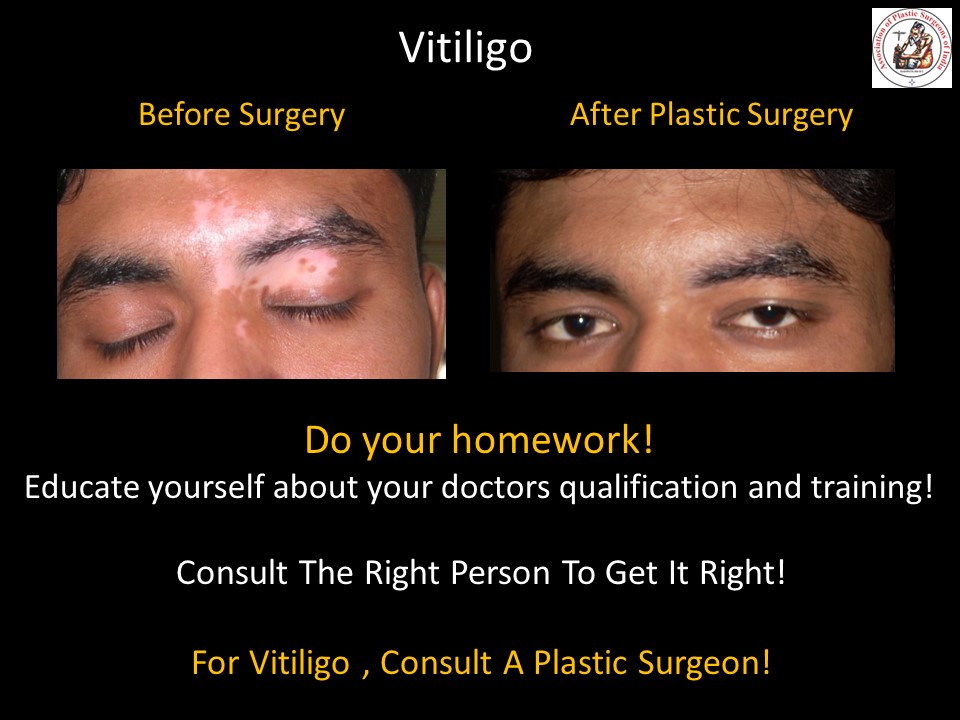
Vitiligo
Vitiligo is a skin condition in which white patches develop on different parts of the body due to loss of skin pigment. The condition occurs when melanocytes, the cells responsible for producing melanin (skin pigment), stop functioning or are destroyed. As a result, affected areas of the skin lose their natural color and appear white or lighter than the surrounding skin.
Vitiligo can affect people of all ages, genders, and skin types. Although it is not dangerous, contagious, or life-threatening, it can cause emotional stress and affect self-confidence because of its visible appearance.
What is Vitiligo?
Vitiligo is a chronic pigment disorder that causes patchy loss of skin color. The white patches may appear gradually or suddenly and can remain stable or spread over time.
The condition may affect:
- Skin
- Hair
- Lips
- Mouth lining
- Eyebrows
- Eyelashes
- Genital areas
In some patients, hair growing in affected areas may also become white or gray.
Causes of Vitiligo
The exact cause of vitiligo is not completely understood. However, it is commonly considered an autoimmune condition in which the body’s immune system attacks pigment-producing cells.
Possible contributing factors include:
- Autoimmune disorders
- Family history
- Genetic factors
- Stress
- Skin injury or trauma
- Chemical exposure
- Severe sunburn
- Emotional stress
In many patients, vitiligo develops without any obvious trigger.
Symptoms of Vitiligo
The main symptom is loss of skin color in patches.
Common Symptoms Include:
- White patches on the skin
- Premature whitening of hair
- White eyebrows or eyelashes
- Loss of pigment around lips or mouth
- Symmetrical or asymmetrical patches
- Slow spread of depigmented areas
Vitiligo commonly affects:
- Face
- Hands
- Feet
- Around eyes and mouth
- Elbows and knees
- Genital region
The patches are usually painless but may become cosmetically distressing.
Types of Vitiligo
Generalized Vitiligo
This is the most common type. White patches appear on both sides of the body symmetrically.
Segmental Vitiligo
Patches occur only on one side or one segment of the body. This type often develops earlier and may stabilize after some time.
Focal Vitiligo
Only one or a few isolated areas are affected.
Universal Vitiligo
Extensive depigmentation affects most parts of the body.
Emotional and Psychological Impact
Vitiligo is not physically harmful, but it can affect emotional well-being significantly.
Patients may experience:
- Low confidence
- Anxiety
- Social embarrassment
- Emotional stress
- Self-consciousness about appearance
The psychological impact may be especially significant in visible areas such as the face and hands.
Diagnosis of Vitiligo
Diagnosis is usually based on:
- Clinical examination
- Medical history
- Wood’s lamp examination
- Skin biopsy in selected cases
- Blood tests for autoimmune disorders
Doctors evaluate:
- Pattern of pigment loss
- Extent of involvement
- Disease progression
- Stability of patches
Early diagnosis helps in planning suitable treatment.
Treatment Options for Vitiligo
Although vitiligo has no permanent universal cure, several treatments can help:
- Slow progression
- Restore pigmentation
- Improve cosmetic appearance
- Stabilize disease activity
Treatment depends on:
- Type of vitiligo
- Extent of skin involvement
- Disease stability
- Patient age
- Location of patches
Medical Treatment
Topical Medications
Doctors may prescribe:
- Corticosteroid creams
- Calcineurin inhibitors
- Immunomodulators
These medications may help restore pigmentation in some patients.
Phototherapy
Phototherapy is one of the commonly used vitiligo treatments.
Narrow Band UVB Therapy
This treatment exposes affected skin to controlled ultraviolet light to stimulate melanocyte activity and repigmentation.
Phototherapy may be useful for:
- Widespread vitiligo
- Progressive disease
- Facial lesions
Multiple sessions are usually required.
Excimer Laser Treatment
Excimer laser treatment delivers focused ultraviolet light to localized vitiligo patches.
Benefits Include:
- Targeted treatment
- Precision for small areas
- Reduced exposure to normal skin
- Useful for stable vitiligo
This treatment is commonly used for facial and localized patches.
Surgical Treatment for Vitiligo
Surgical procedures may be considered in stable vitiligo cases where the disease has stopped progressing.
Surgical Options Include:
- Skin grafting
- Suction blister grafting
- Melanocyte transfer
- Cellular grafting
These procedures aim to transfer pigment-producing cells into depigmented areas.
Surgical treatment is usually recommended only for carefully selected patients with stable disease.
Micropigmentation
Micropigmentation, also known as medical tattooing, may help camouflage certain vitiligo patches, especially around:
- Lips
- Areola
- Small localized areas
This technique can improve cosmetic appearance in selected cases.
Skin Care Tips for Vitiligo Patients
Patients are commonly advised to:
- Use sunscreen regularly
- Avoid excessive sun exposure
- Prevent skin injury
- Maintain healthy skin care
- Use cosmetic camouflage if desired
Sun protection is especially important because depigmented skin is more sensitive to sunburn.
Can Vitiligo Spread?
Vitiligo progression varies greatly among individuals.
In some patients:
- Patches remain stable for years
In others:
- New patches may develop gradually
- Existing patches may enlarge
The course of the disease is unpredictable.
Importance of Early Treatment
Early medical attention may help:
- Slow disease progression
- Improve treatment response
- Reduce spread of depigmentation
- Improve cosmetic outcomes
Patients noticing white patches should consult a qualified dermatologist or plastic surgeon for evaluation.
Final Words
Vitiligo is a pigment disorder that causes white patches on the skin due to loss of melanocytes. Although the condition is not contagious or life-threatening, it can significantly affect appearance and emotional well-being.
Modern treatment options such as topical medications, phototherapy, excimer laser, surgical grafting, and micropigmentation can help improve pigmentation and cosmetic appearance in selected patients. Early diagnosis and individualized treatment planning are important for achieving the best possible outcomes.