
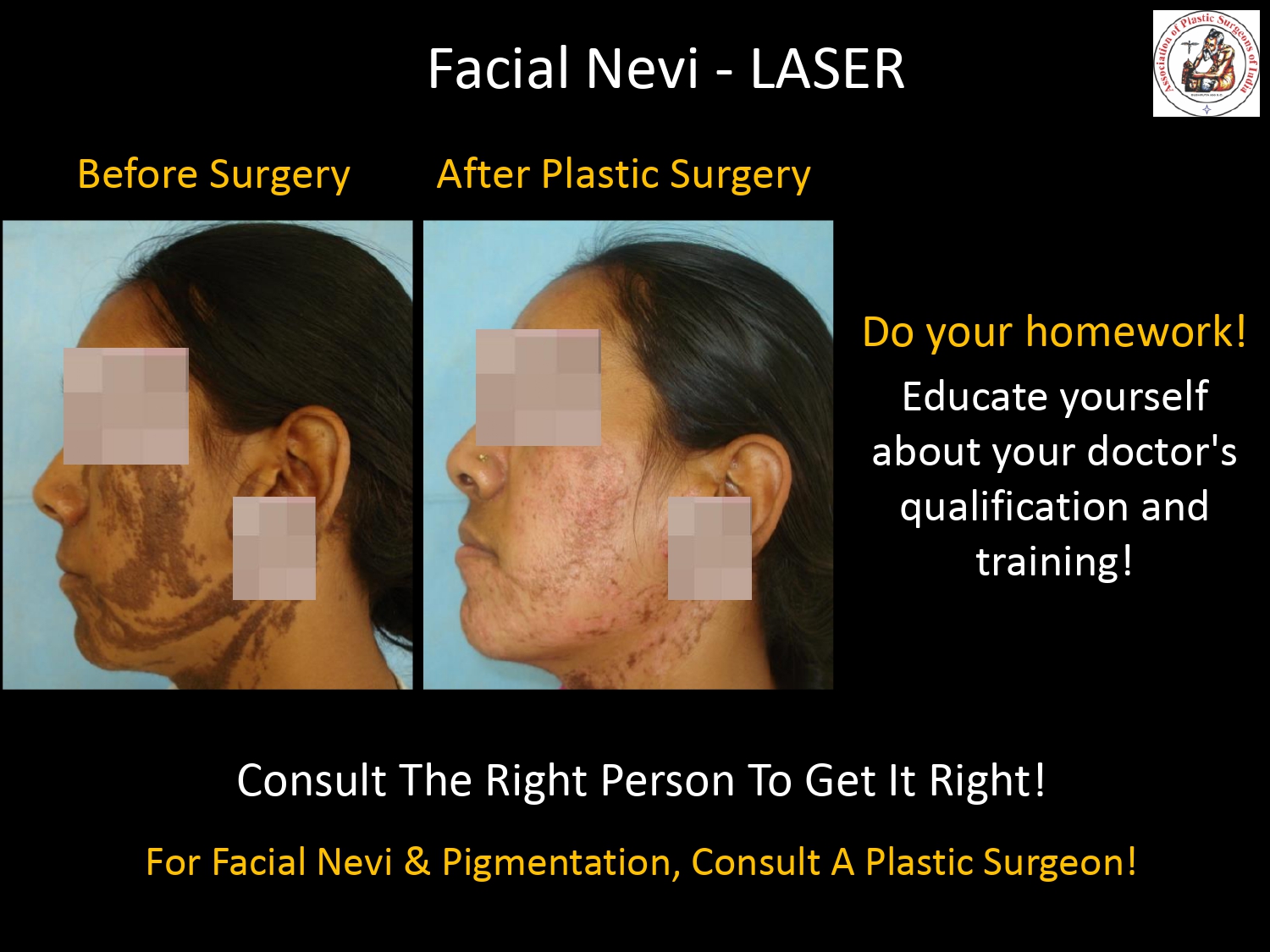
Facial Nevi - Laser
Facial nevi, commonly known as moles or birthmarks, are pigmented skin lesions that appear due to an increased concentration of melanocytes, the cells responsible for skin color. These lesions can be present since birth or may develop gradually over time. While many facial nevi are harmless, some people feel uncomfortable because of their appearance, especially when the mole is large, dark, raised, or located on a prominent area of the face.
Modern laser technology has made facial nevus treatment safer, more precise, and cosmetically effective. Laser treatment helps reduce or remove selected pigmented lesions with minimal damage to surrounding skin and improved aesthetic outcomes.
What are Facial Nevi?
A nevus is a localized pigmented growth on the skin. Facial nevi may appear:
- Flat or raised
- Light brown, dark brown, or black
- Small or large in size
- Smooth or irregular in texture
Some nevi remain stable throughout life, while others may gradually enlarge or become more noticeable with age.
Common types of facial nevi include:
- Junctional nevi
- Compound nevi
- Intradermal nevi
- Congenital melanocytic nevi
The exact type and depth of pigmentation help determine the most suitable treatment option.
Why Do People Seek Treatment for Facial Nevi?
Most facial nevi are medically harmless, but many individuals seek treatment for cosmetic reasons.
Common Concerns Include:
- Mole located in a highly visible facial area
- Dark pigmentation affecting facial appearance
- Raised lesions interfering during shaving or makeup
- Large congenital birthmarks
- Uneven skin texture
- Self-consciousness or reduced confidence
Some patients also seek medical evaluation if the lesion changes in:
- Size
- Color
- Shape
- Surface texture
A proper examination by a qualified plastic surgeon or skin specialist is important before deciding treatment.
What is Laser Treatment for Facial Nevi?
Laser treatment uses concentrated light energy to target pigment within the nevus while minimizing injury to surrounding tissues. Different laser technologies are used depending on the type, depth, and pigmentation of the lesion.
Laser therapy works through selective targeting of melanin pigment in the skin. The pigment absorbs laser energy and gradually breaks down, after which the body naturally clears the fragmented pigment particles.
Common Lasers Used for Facial Nevi
Several advanced laser systems are used for pigmented lesion treatment.
Q-Switched Nd:YAG Laser
One of the most commonly used lasers for pigmented lesions and melanocytic nevi. It delivers high-intensity short pulses that specifically target melanin pigment.
Er:YAG Laser
Useful in selected superficial lesions and skin resurfacing procedures.
CO2 Laser
Sometimes used for raised or protruding moles where tissue vaporization is required.
The choice of laser depends on:
- Depth of pigmentation
- Skin type
- Mole thickness
- Color of lesion
- Cosmetic goals
How is Laser Treatment Performed?
The procedure is usually performed as an outpatient treatment.
Basic Steps Include:
- Skin examination and diagnosis
- Cleansing of the treatment area
- Application of numbing cream or local anesthesia if required
- Laser application over the lesion
- Post-treatment soothing care
Most sessions are relatively quick and may take only a few minutes depending on the size and number of lesions being treated.
Patients may feel mild warmth or a slight snapping sensation during the procedure.
Recovery After Laser Treatment
Recovery is generally mild compared to surgical excision.
Common Temporary Effects Include:
- Mild redness
- Swelling
- Crusting or scab formation
- Temporary darkening of treated area
The skin gradually heals over days to weeks depending on the depth of treatment.
Patients are usually advised to:
- Avoid direct sun exposure
- Apply sunscreen regularly
- Avoid scratching the treated area
- Follow post-laser skin care instructions
Proper aftercare is very important to reduce pigmentation changes and support smooth healing.
Benefits of Laser Treatment for Facial Nevi
Laser treatment offers several cosmetic advantages in selected patients.
Common Benefits Include:
- Minimal scarring
- Better cosmetic appearance
- Precision treatment
- Reduced damage to surrounding skin
- Faster recovery compared to surgery
- Improved facial aesthetics
For superficial and selected pigmented lesions, laser therapy can provide very satisfactory cosmetic improvement.
Are Multiple Sessions Required?
Some facial nevi may improve after a single session, while others require multiple sittings depending on:
- Pigment depth
- Lesion size
- Skin type
- Laser response
Deeply pigmented or congenital lesions may need staged treatment for optimal results.
Is Laser Treatment Suitable for Everyone?
Not all moles are ideal candidates for laser treatment. Certain suspicious or deeply pigmented lesions may require biopsy or surgical removal instead.
A proper medical evaluation is important before starting laser treatment, especially if the mole:
- Changes rapidly
- Bleeds
- Becomes painful
- Develops irregular borders
- Shows color variation
The doctor will decide whether laser treatment or surgical excision is more appropriate.
Risks and Limitations
Although laser treatment is generally safe, some temporary side effects may occur.
Possible Risks Include:
- Temporary redness
- Swelling
- Hyperpigmentation
- Hypopigmentation
- Mild scarring
- Incomplete removal
- Recurrence in some lesions
Results depend greatly on proper patient selection, laser technology, and professional expertise.
Importance of Qualified Treatment
Facial skin is delicate and cosmetically important. Therefore, treatment should always be performed by a qualified and experienced plastic surgeon or laser specialist.
Improper laser settings or untrained handling can increase the risk of burns, pigmentation changes, or scarring, especially in Indian skin types.
Final Words
Facial nevi are common pigmented skin lesions that may affect appearance and confidence, especially when present on visible areas of the face. Modern laser technology offers an advanced and minimally invasive option for reducing or removing selected facial nevi with improved cosmetic outcomes.
Different laser systems such as Q-Switched Nd:YAG, Er:YAG, and CO2 lasers are used depending on the type and depth of the lesion. Proper evaluation, expert treatment planning, and post-procedure care are essential for safe and effective results.
Consultation with a qualified plastic surgeon helps determine the most suitable treatment option for facial nevi and ensures safe cosmetic improvement.