
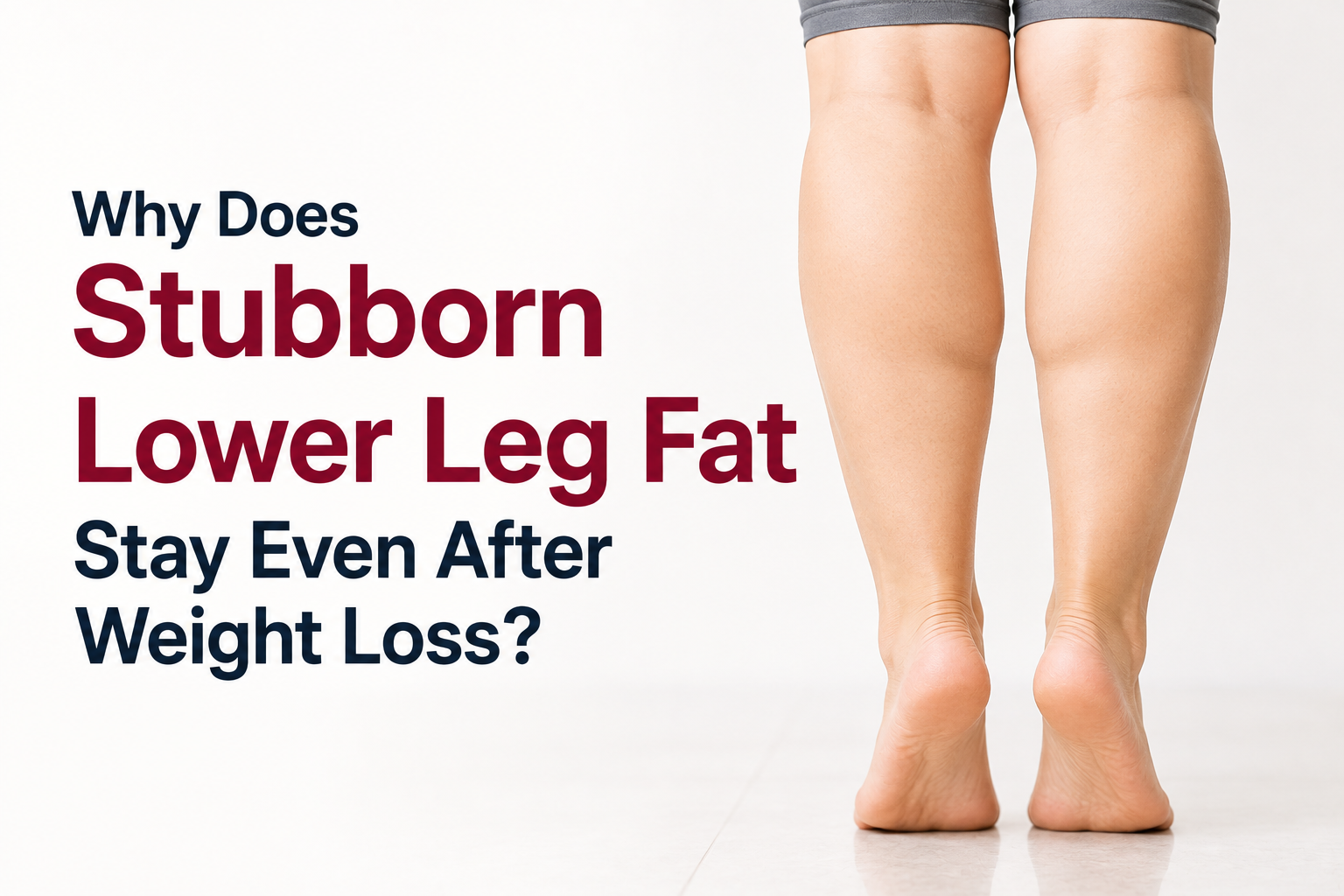
Why Does Stubborn Lower Leg Fat Stay Even After Weight Loss?
✔ Medically reviewed by Dr. Ashutosh Shah - M.B., M.S., M.Ch., D.N.B., Board-Certified Plastic & Cosmetic Surgeon, Director of Elegance Clinic, Surat (22+ years’ experience).
Losing overall body weight does not always mean that every area of the body becomes slimmer at the same rate. For some people, the calves, ankles, knees, or lower legs continue to look fuller even after following a healthy diet and regular exercise routine. This is often because stubborn lower leg fat is influenced by genetics, individual fat distribution, body structure, and the amount of superficial fat beneath the skin.
If you have noticed that your lower legs remain bulky despite maintaining a stable weight, you may wonder whether there is a specific solution. In carefully selected patients, leg and ankle liposuction can be considered to remove localized fat and improve the overall contour of the lower legs. The procedure is designed for body shaping rather than general weight loss.
What Is Stubborn Lower Leg Fat?
Stubborn lower leg fat refers to localized fat deposits around areas such as the calves, ankles, knees, and lower legs that may remain noticeable despite weight loss and lifestyle changes.
Unlike generalized weight gain, this type of localized fat may be more closely related to your natural body shape. The distribution of fat in the legs and ankles can be genetically influenced, which is one reason some people naturally have fuller lower legs even when they are otherwise fit.
Common areas where stubborn fat may appear include:
- Calves
- Ankles
- Inner or outer knee area
- Lower legs
- Areas around the transition between the calf and ankle
The appearance of the lower leg can also be influenced by muscle development, bone structure and fluid retention. Therefore, not every large-looking calf or ankle is caused by excess fat.
Why Does Lower Leg Fat Stay After Weight Loss?
1. Genetics Can Influence Fat Distribution
One of the most important reasons is genetics. Some people naturally store a greater proportion of their body fat in the lower body.
Research on calf and ankle contouring notes that fat distribution in the lower legs can be genetically predetermined and relatively resistant to diet and exercise.
This means that losing weight may reduce your overall body size while leaving certain areas comparatively unchanged.
2. Weight Loss Does Not Allow Precise Spot Reduction
Exercise can improve muscle tone and contribute to overall fat loss, but it cannot reliably instruct the body to burn fat from one specific location.
For example, doing calf exercises does not necessarily cause the body to remove fat specifically from the calves. Overall fat loss is influenced by genetics, hormones, energy balance and individual physiology.
3. The Lower Legs Have a Different Fat and Muscle Structure
The appearance of your calves is not determined by fat alone. Muscle volume, bone structure and the thickness of the subcutaneous fat layer all contribute to the shape of the lower leg.
This distinction is particularly important when considering cosmetic treatment. If most of the calf size comes from muscle rather than superficial fat, liposuction may not provide the desired reduction. Proper assessment is therefore essential before treatment.
4. The Fat Layer May Be Superficial
The fat around the legs and ankles is predominantly superficial. This makes lower-leg liposuction technically different from treating some other body areas.
Because the fat layer can be relatively thin and important vascular structures are present nearby, careful surgical planning and conservative contouring are important.
5. Swelling Can Sometimes Mimic Fat
Not every thick-looking ankle or lower leg is caused by fat. Fluid retention, venous problems, lymphatic issues or other medical conditions can cause swelling.
If one leg suddenly becomes swollen, painful, or noticeably different from the other, it should be medically evaluated rather than treated as a cosmetic fat problem.
Can Exercise Remove Stubborn Lower Leg Fat?
Exercise remains important for maintaining a healthy weight and improving overall body composition. Walking, cardiovascular activity and resistance training can help reduce overall body fat and strengthen the legs.
However, exercise cannot guarantee targeted fat loss from the calves or ankles. If localized fat remains after achieving a stable weight, a cosmetic consultation may help determine whether the fullness is caused by superficial fat, muscle, bone structure or another factor.
Can Liposuction Treat Stubborn Lower Leg Fat?
For an appropriate candidate, leg and ankle liposuction can remove selected localized fat deposits and refine the contour of the lower legs.
The goal is not simply to make the legs smaller. Good lower-leg contouring aims to create a natural transition between the calf, ankle and surrounding areas while maintaining proportion.
The procedure can be considered for localized fat around areas such as:
- Calves
- Ankles
- Knees
- Lower legs
Dr. Ashutosh Shah's leg and ankle liposuction service in Surat specifically addresses localized fat in the legs and ankles that may remain resistant to diet and exercise.
Who May Be Suitable for Lower Leg Liposuction?
Liposuction is generally considered a body-contouring procedure rather than a weight-loss treatment.
A consultation may be appropriate if you:
- Are close to your healthy or stable body weight
- Have localized, pinchable fat deposits
- Have realistic expectations about the outcome
- Want improved leg or ankle proportions
- Have sufficient skin quality for the planned contouring
- Do not have an untreated medical cause for lower-leg swelling
A surgeon needs to determine whether the visible fullness is actually caused by removable fat before recommending treatment.
Why Careful Assessment Matters for Calf and Ankle Contouring
The lower leg is an anatomically sensitive area. There is less room for aggressive fat removal, and contour irregularities can become noticeable if the procedure is not carefully planned.
Recent literature emphasizes creating a gradual taper and preserving an appropriate layer of subcutaneous tissue rather than uniformly reducing the entire calf. The ankle also requires particular caution because of its thin soft-tissue coverage and nearby veins.
This is why treatment should be individualized according to:
- Fat distribution
- Calf muscle size
- Skin quality
- Leg proportions
- Ankle structure
- Overall body shape
What Results Can You Expect?
The objective of lower-leg liposuction is contour improvement, not dramatic weight reduction.
After appropriate fat removal and healing, the treated area may appear more refined and proportionate. The final appearance depends on the amount and location of removable fat, skin characteristics, anatomy and the individual's healing response.
It is also important to understand that results vary between patients. Liposuction does not prevent future weight gain, so maintaining a stable weight and healthy lifestyle remains important.
Is Stubborn Lower Leg Fat a Sign That Something Is Wrong?
Not necessarily.
In many people, fuller calves or ankles are simply part of their natural anatomy. Genetics can influence where the body stores fat, and the lower legs can be particularly resistant to conventional weight-loss efforts.
However, persistent or unexplained swelling should not automatically be assumed to be fat. A medical evaluation is advisable when the appearance changes suddenly or is associated with pain, redness, significant swelling or other symptoms.
Stubborn Lower Leg Fat Treatment in Surat
If diet and exercise have helped you lose weight but localized fullness remains around your calves or ankles, a personalized assessment can help determine the cause.
At Elegance Clinic in Surat, leg and ankle liposuction is offered as a cosmetic body-contouring option for suitable patients. The treatment plan is based on individual anatomy, fat distribution and desired proportions rather than using the same approach for every patient.
Key Takeaways
- Stubborn lower leg fat can remain after weight loss because fat distribution is strongly influenced by genetics and individual anatomy.
- Exercise supports overall fat loss but cannot reliably target fat specifically from the calves or ankles.
- Lower-leg fullness can result from fat, muscle, bone structure or fluid retention.
- Liposuction may help suitable patients with localized, superficial fat deposits.
- Calf and ankle liposuction requires careful planning because these areas have relatively thin soft-tissue coverage and important vascular structures.
- The goal of treatment is improved contour and proportion, not general weight loss.
- A professional examination is necessary to determine whether liposuction is appropriate.
Conclusion
Stubborn lower leg fat can persist even after successful weight loss, and this does not necessarily mean that your diet or exercise routine has failed. Genetics, fat distribution, muscle structure and individual anatomy can all influence the appearance of the calves and ankles.
When localized superficial fat is the main concern, leg and ankle liposuction may provide a way to refine the lower-leg contour for appropriately selected patients. Because the calves and ankles require precise treatment, an individualized surgical assessment is essential.
If you are searching for stubborn lower leg fat treatment in Surat, consult Elegance Clinic and discuss your concerns with Dr. Ashutosh Shah to determine whether leg and ankle liposuction is suitable for your anatomy and aesthetic goals.
Want to know whether your lower-leg fullness is caused by fat or another factor? Book a consultation in Surat for a personalized evaluation and treatment plan.
Frequently Asked Questions
Why does stubborn lower leg fat remain after weight loss?
Can exercise get rid of stubborn lower leg fat?
Can liposuction remove stubborn lower leg fat?
Can ankle fat be treated with liposuction?
Is stubborn lower leg fat always actually fat?
About the Author