
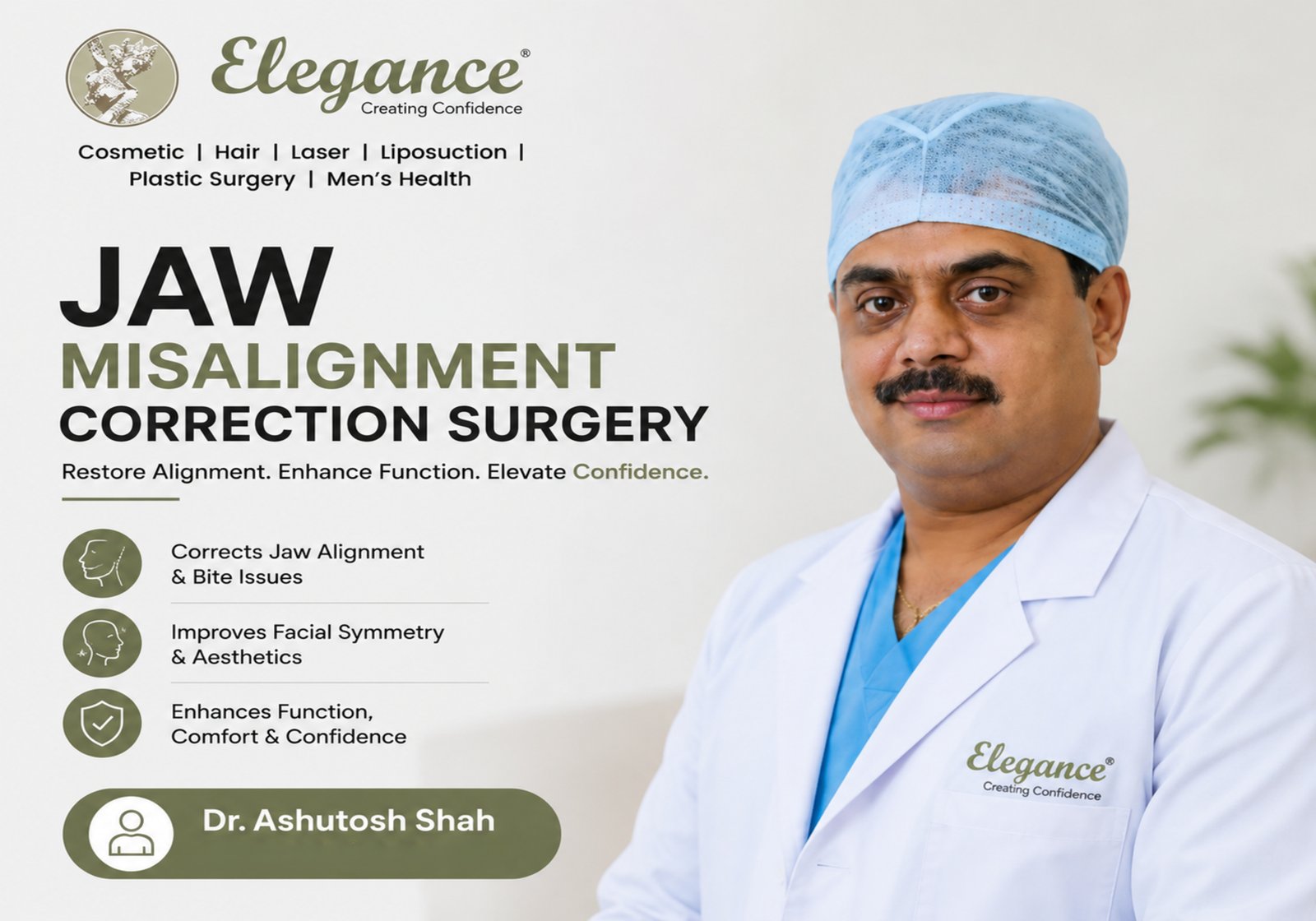
Jaw Bite Not Aligned Try Dental Occlusion Treatment by Dr. Ashutosh Shah
✔ Medically reviewed by Dr. Ashutosh Shah - M.B., M.S., M.Ch., D.N.B., Board-Certified Plastic & Cosmetic Surgeon, Director of Elegance Clinic, Surat (22+ years’ experience).
At Elegance Clinic, under the expertise of Dr. Ashutosh Shah, the Dental Occlusion Changes treatment focuses on correcting improper bite alignment and restoring proper contact between upper and lower teeth. This condition can affect chewing, jaw function, facial balance, and long-term dental health.
Dental occlusion refers to how the teeth meet when the jaws close. When this alignment is disturbed due to trauma, jaw misalignment, dental issues, or developmental problems, it can lead to discomfort and functional difficulties. Therefore, timely correction is important for both oral health and facial harmony.
What Are Dental Occlusion Changes?
Dental Occlusion Changes refer to alterations in the normal bite pattern where the upper and lower teeth do not align properly. This can cause uneven pressure on teeth and jaw joints, leading to pain and functional issues.
At Elegance Clinic in Surat, Dr. Ashutosh Shah evaluates jaw structure, bite pattern, and facial symmetry to determine the exact cause of occlusion imbalance and design a personalized treatment plan.
Causes of Dental Occlusion Changes
Dental occlusion problems can develop due to several reasons:
- Jaw misalignment (skeletal imbalance)
- Missing or damaged teeth
- Trauma or facial injury
- Abnormal tooth growth or positioning
- Improper dental restorations
- Temporomandibular joint (TMJ) disorders
- Genetic or developmental factors
Because multiple factors can contribute, proper diagnosis is essential before treatment.
Symptoms of Improper Dental Occlusion
Patients with occlusion issues may experience:
- Difficulty in chewing food
- Jaw pain or stiffness
- Headaches or facial pain
- Uneven wear of teeth
- Clicking or popping sounds in the jaw
- Difficulty closing the mouth properly
- Facial asymmetry
- Bite discomfort or pressure imbalance
If these symptoms persist, evaluation by a specialist is recommended.
Why Dental Occlusion Correction Is Important
Correct dental occlusion is essential for proper jaw function and long-term oral health. Without treatment, imbalance can lead to worsening jaw problems and tooth damage.
At Elegance Clinic, the Dental Occlusion Changes treatment aims to:
- Restore proper bite alignment
- Improve chewing efficiency
- Reduce jaw strain and pain
- Enhance facial symmetry
- Prevent long-term dental complications
How Dental Occlusion Changes Are Treated
Treatment depends on the severity and cause of the occlusion issue. At Elegance Clinic, Dr. Ashutosh Shah follows a detailed diagnostic approach.
1. Clinical Evaluation
A complete examination of teeth, jaw alignment, and facial structure is performed.
2. Diagnostic Imaging
X-rays or advanced imaging may be used to analyze bone structure and bite alignment.
3. Treatment Planning
Based on findings, a personalized plan is created. Treatment options may include:
- Orthodontic correction (braces or aligners)
- Bite adjustment procedures
- Dental restorations
- Jaw alignment surgery (in severe cases)
- TMJ management therapy
4. Correction Phase
The selected treatment is performed to restore proper occlusion and jaw function.
Surgical Treatment for Severe Cases
In cases of severe jaw misalignment, surgical correction may be required. This is typically known as orthognathic or jaw alignment surgery.
At Elegance Clinic, surgical planning focuses on:
- Correcting jaw position
- Restoring bite harmony
- Improving facial balance
- Enhancing functional movement
The goal is to achieve both functional improvement and natural facial aesthetics.
Benefits of Dental Occlusion Correction
Patients undergoing treatment can experience:
- Improved bite alignment
- Better chewing and digestion
- Reduced jaw pain and tension
- Enhanced facial symmetry
- Prevention of tooth wear
- Improved speech clarity
- Long-term jaw stability
Who Needs Dental Occlusion Treatment?
You may require treatment if you have:
- Uneven bite or misaligned teeth
- Jaw pain while chewing
- Difficulty closing mouth properly
- Facial imbalance
- TMJ-related discomfort
- Teeth wear due to bite pressure
- History of jaw injury
Early diagnosis helps prevent complications and improves treatment outcomes.
Recovery and Results
Recovery depends on the type of treatment performed:
- Orthodontic treatments show gradual improvement over months
- Surgical correction requires a healing period of weeks
- Functional improvement continues as the jaw adapts
Patients often notice improved comfort, better chewing ability, and enhanced facial balance after treatment.
Why Choose Elegance Clinic for Dental Occlusion Changes?
At Elegance Clinic, Dr. Ashutosh Shah provides comprehensive evaluation and advanced treatment planning for jaw and bite-related disorders.
Patients choose the clinic for:
- Expert diagnosis of jaw and bite issues
- Personalized treatment planning
- Advanced surgical and non-surgical options
- Focus on function and facial aesthetics
- Long-term treatment success
The goal is to restore proper occlusion while improving overall quality of life.
Conclusion
Dental Occlusion Changes can significantly affect jaw function, oral health, and facial appearance. With proper diagnosis and treatment, these issues can be effectively corrected.
At Elegance Clinic, Dr. Ashutosh Shah provides advanced, patient-specific solutions for Dental Occlusion Changes, ensuring improved bite function, facial harmony, and long-term stability.
Frequently Asked Questions
What are Dental Occlusion Changes?
What causes dental occlusion problems?
What are the symptoms of bad dental occlusion?
How are dental occlusion problems treated?
About the Author