
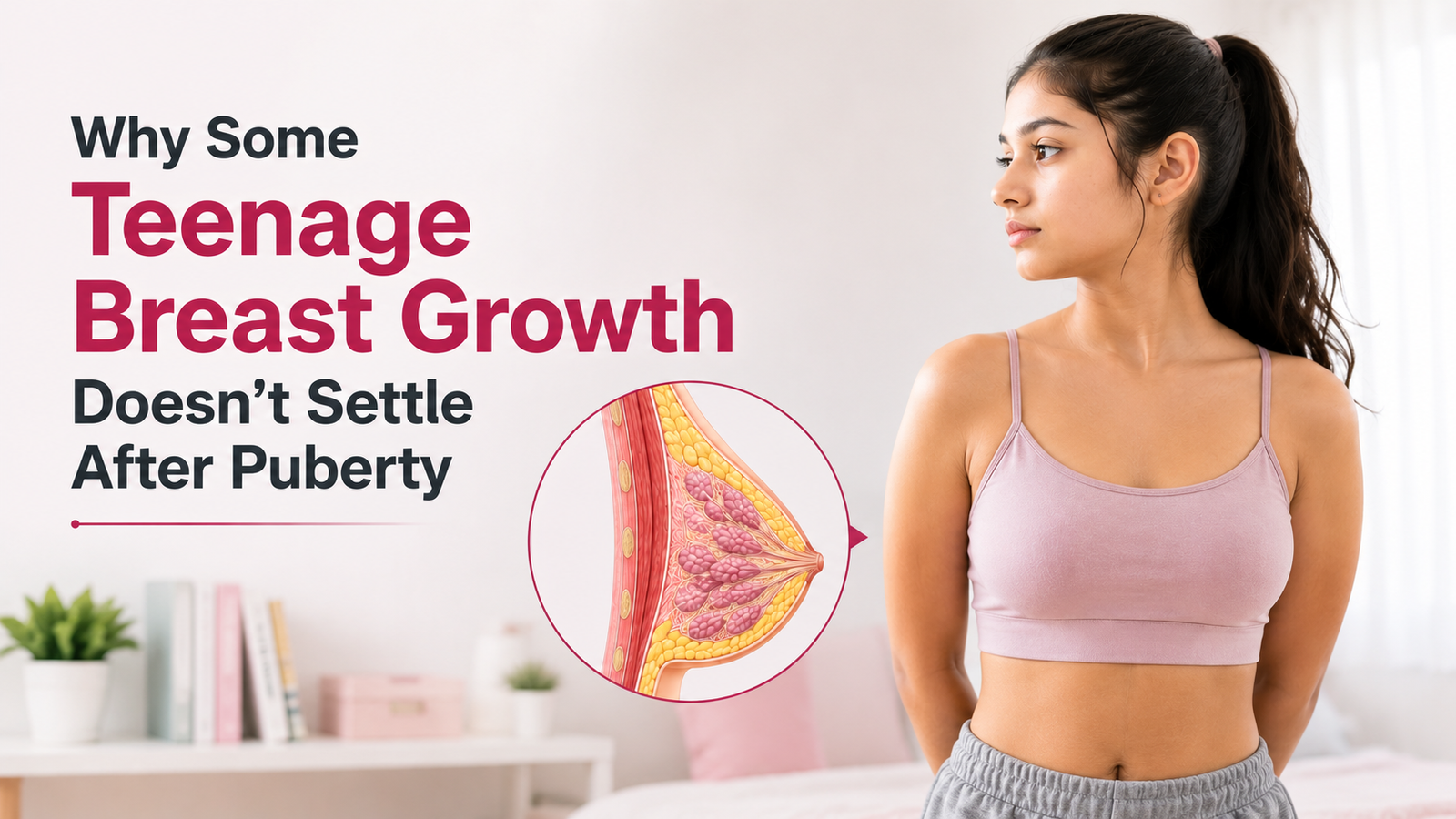
Why Some Teenage Breast Growth Doesn’t Settle After Puberty
✔ Medically reviewed by Dr. Ashutosh Shah - M.B., M.S., M.Ch., D.N.B., Board-Certified Plastic & Cosmetic Surgeon, Director of Elegance Clinic, Surat (22+ years’ experience).
Breast development is a normal part of puberty, but not every change follows the same pattern. In some teenagers, breast tissue may continue growing rapidly or become disproportionately large even after other signs of puberty have stabilized. When this happens, it can cause more than concerns about appearance it may lead to back and shoulder discomfort, skin irritation, difficulty exercising, and emotional distress.
For families searching for a Teenage Breast Problem Solution, the first step is understanding whether the breast enlargement represents normal development, significant breast hypertrophy, or a condition such as juvenile breast hypertrophy.
Why Does Breast Growth Continue in Some Teenagers?
During puberty, breast development is influenced by hormonal changes, genetics, body composition and individual growth patterns. Breast size can continue changing for some time as the body matures.
However, occasionally, the growth can be unusually rapid or excessive. This is sometimes described as juvenile or virginal breast hypertrophy, a rare condition involving marked breast enlargement during adolescence.
The important point is that large breasts during the teenage years do not automatically mean there is a medical problem. What matters is the pattern of growth, associated symptoms and the overall development of the teenager.
When Is Teenage Breast Growth More Than Normal Puberty?
There is no single breast size that determines whether teenage breast growth is abnormal.
Doctors may become more concerned when enlargement is:
- Very rapid or disproportionate
- Associated with persistent back, neck or shoulder discomfort
- Making physical activity difficult
- Causing recurrent skin irritation beneath the breasts
- Creating problems with clothing or supportive bras
- Affecting posture or everyday activities
- Causing significant emotional or social distress
A teenager experiencing these problems may benefit from a professional evaluation rather than simply waiting for breast development to stop.
The Hidden Problem: Breast Size Can Affect Daily Life
One aspect that parents may not immediately recognize is how excessive breast growth can affect a teenager's routine.
A teenager may avoid sports because movement is uncomfortable. She may experience shoulder pressure from bra straps or struggle to find appropriately fitting clothing. Persistent moisture and friction beneath the breasts can also contribute to skin irritation.
The emotional impact can be equally important.
Teenagers are already navigating major physical and social changes. Noticeably larger breasts can sometimes lead to unwanted attention, embarrassment, reduced confidence or avoidance of social and physical activities.
This is why treatment discussions should consider quality of life, not appearance alone.
What Is Juvenile Breast Hypertrophy?
Juvenile breast hypertrophy refers to unusually pronounced breast enlargement occurring during adolescence. It is uncommon and may develop rapidly.
The exact cause is not always clear. Hormonal sensitivity, genetic factors and individual biological differences may contribute.
Because several conditions can cause breast enlargement or breast-related symptoms, diagnosis should be made by a qualified medical professional rather than based solely on breast size.
Does Excessive Breast Growth Stop After Puberty?
Sometimes breast growth naturally stabilizes as puberty progresses. In other cases, significant enlargement may persist or continue.
This is one reason why assuming that all teenage breast problems will disappear after puberty may not always be appropriate.
A doctor can assess the teenager's stage of development, growth pattern, symptoms and overall health to determine whether observation is appropriate or whether further evaluation is needed.
What Is the Teenage Breast Problem Solution?
There is no single solution for every teenage breast problem.
The appropriate approach depends on the underlying cause and how severely the condition affects the teenager.
1. Observation and Monitoring
If breast development appears consistent with normal puberty and there are no concerning symptoms, monitoring may be all that is necessary.
Breast size can change during adolescence, so unnecessary treatment should generally be avoided.
2. Supportive Measures
For teenagers experiencing discomfort because of larger breasts, properly fitted supportive garments, appropriate physical activity and measures to reduce skin friction may help manage symptoms.
These approaches do not reduce breast tissue, but they can improve comfort while development is being monitored.
3. Medical Evaluation
When growth is unusually rapid, symptoms are persistent or there are other concerning findings, a doctor may recommend an examination and, when appropriate, further investigation.
The purpose is to understand the cause before deciding on treatment.
4. Breast Reduction in Selected Cases
For adolescents with significant breast hypertrophy and persistent physical or psychological difficulties, breast reduction surgery may sometimes be considered.
The decision is highly individualized. A healthcare professional may consider:
- Physical maturity
- Ongoing breast growth
- Severity and duration of symptoms
- Overall health
- Emotional readiness
- Expectations about surgery
- Potential benefits and risks
Breast reduction should therefore not be presented as an automatic treatment for teenage breast enlargement.
Why Timing Matters
One of the lesser-known considerations is whether breast growth is still continuing.
If significant growth is ongoing, the timing of any surgical intervention requires careful consideration. This does not mean surgery is automatically inappropriate for teenagers. Rather, it means the decision should be made after assessing the individual's development and symptoms.
A personalized consultation can help families understand whether monitoring, symptom management or a surgical option is appropriate.
Is Breast Reduction Only About Appearance?
No.
When breast hypertrophy causes persistent physical symptoms, reduction surgery may be considered as a way to address functional and quality-of-life concerns.
For example, a teenager may have difficulty participating in exercise because of breast weight or experience chronic discomfort in the neck, shoulders or back.
The objective should be appropriate symptom relief and improved quality of life, rather than achieving a particular breast size.
What Should Parents Look For?
Parents should consider arranging a medical consultation if a teenager develops:
Rapid enlargement
Breast size increases noticeably over a short period.
Persistent pain or discomfort
The teenager regularly complains of breast, neck, shoulder or back discomfort.
Skin problems
There is repeated irritation, redness or discomfort beneath the breasts.
Activity limitations
Breast size interferes with exercise, sports or normal daily activities.
Emotional distress
The teenager becomes unusually self-conscious, withdrawn or distressed about breast development.
Significant asymmetry or another new change
A noticeable change should be assessed rather than assumed to be normal puberty.
Choosing the Right Specialist
Teenage breast concerns require a sensitive approach. The consultation should give the teenager an opportunity to discuss her concerns privately and comfortably, while also involving parents or guardians appropriately.
At Elegance Clinic, the focus should be on understanding the individual's concerns and discussing suitable options based on clinical assessment rather than recommending treatment simply because of breast size. Dr. Ashutosh Shah can evaluate the concern and help determine whether observation, symptom management or further treatment should be considered.
Key Takeaways
- Breast growth during puberty is normal and varies considerably between teenagers.
- Excessive or rapidly progressive enlargement can sometimes indicate juvenile breast hypertrophy.
- Large breasts are not automatically a medical condition.
- Persistent pain, skin irritation, activity limitations or emotional distress may justify professional evaluation.
- The best Teenage Breast Problem Solution depends on the cause, symptoms and stage of development.
- Treatment can range from observation and supportive measures to surgery in carefully selected cases.
- Breast reduction should be considered only after an individualized assessment of benefits, risks and readiness.
Conclusion: Finding the Right Teenage Breast Problem Solution
Not every teenage breast concern requires treatment, but unusually rapid or excessive breast growth should not be dismissed simply as a normal part of puberty.
The right Teenage Breast Problem Solution begins with identifying the cause and understanding how the breast development is affecting the teenager's physical comfort, activities and emotional wellbeing. For some, reassurance and monitoring may be enough. For others with significant and persistent breast hypertrophy, additional treatment may be appropriate.
Considering an evaluation for excessive teenage breast growth in Surat? Consult Elegance Clinic for a personalized assessment and discuss the available options with Dr. Ashutosh Shah.
Frequently Asked Questions
What is the solution for excessive breast growth in teenagers?
Is excessive breast growth during puberty normal?
What is juvenile breast hypertrophy?
Can large breasts in teenagers cause back pain?
Can teenagers undergo breast reduction surgery?
About the Author